



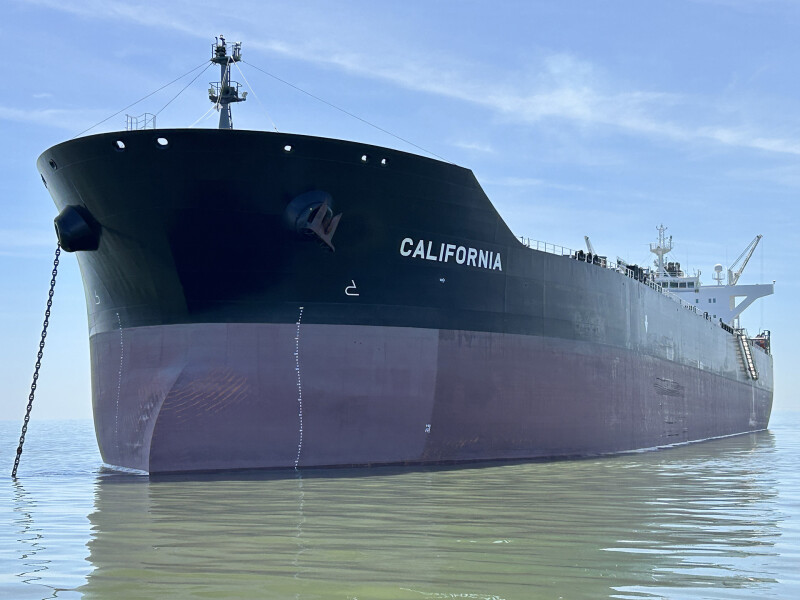
President Donald Trump extended the Jones Act waiver for another 90 days Nov. 13, continuing to allow foreign-flagged vessels to transport oil, fertilizer and other commodities between U.S. ports as the war with Iran disrupts energy supplies, according to reports from Reuters and Bloomberg.
The extension takes effect at 12 a.m. ET Nov. 16, preventing a lapse when the current waiver expires, a White House official told Bloomberg.
The renewed exemption retains the case-by-case vessel availability reviews introduced in August. Under that process, the Maritime Administration must be consulted about the availability of U.S. vessels before individual voyages can proceed under the waiver.
The Jones Act requires cargo transported between U.S. ports to move on U.S.-built, U.S.-flagged and U.S.-owned vessels crewed by American mariners. The administration first waived the requirements in March, expanding the pool of ships available to carry domestic cargoes.
The latest extension continues the longest waiver in the law’s history. The administration says the additional shipping flexibility is intended to ease transportation bottlenecks and help contain gasoline, diesel, and fertilizer prices.
Shipbuilders and congressional supporters of the Jones Act opposed another extension, arguing that the exemptions undermine protections needed to sustain domestic shipbuilding capacity, Bloomberg reported. Oil and chemical companies, meanwhile, said the waiver has allowed them to move crude oil, fertilizer and other commodities more efficiently and at lower cost.
The American Maritime Partnership called for the waiver to end and urged the administration to closely review individual voyage requests.
“AMP calls for a prompt end to the waiver and looks forward to working with the Administration to advance our shared goal of restoring American maritime dominance by unleashing investment in rebuilding and growing the U.S. domestic fleet,” the group said in a statement.
“Meanwhile, we urge the Administration to continue scrutinizing all waiver requests under the case-by-case process to ensure that any approved waivers meet the statutory standard of military necessity and are not used to displace American vessels and American workers for routine commercial moves.”
AMP also emphasized that the exemption does not waive other legal obligations.
“As both the Administration and Congress have made clear, a Jones Act waiver does not relieve users of the responsibility to comply with applicable U.S. laws, including tax, immigration and employment standards.”
Government data analyzed by the Cato Institute and cited by Bloomberg showed foreign vessels had completed 338 voyages under the waivers since March. Those movements included Texas crude shipped to Pennsylvania and propane delivered to Puerto Rico.
Use of the waiver has declined since the administration narrowed its scope in August. Roughly 300 waivers were granted under the earlier blanket exemptions in March and May, compared with 48 under the individual approval process introduced in August, according to government figures cited by Reuters.
The current waiver has supported the movement of about 13 million bbls. of products, the White House official told Bloomberg. Gasoline accounted for more than one-third of that volume, while crude oil represented about 28%.
Fuel prices remain above prewar levels. According to AAA figures cited in the additional report, U.S. gasoline averaged $3.91 per gallon Nov. 12, compared with $2.98 before the war. Diesel averaged $6.10 per gallon, up from $3.76.
Products eligible for the exemption include gasoline, jet fuel, crude oil, naphtha, liquefied natural gas, soy oil, and fertilizers.
