



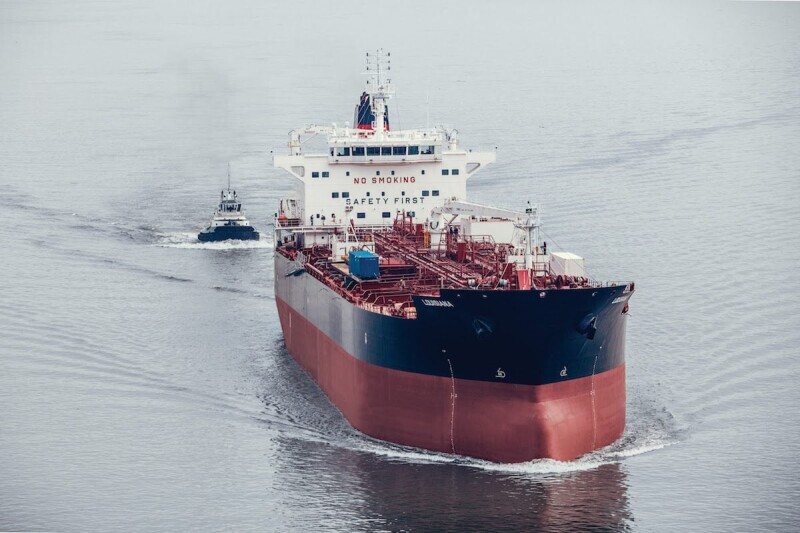
The Trump administration on Wednesday approved a 60-day waiver of the Jones Act, temporarily allowing foreign-flagged vessels to transport oil and other commodities between U.S. ports as part of a broader effort to ease rising fuel prices tied to geopolitical tensions in the Middle East.
The waiver comes as global oil markets face disruption following the effective closure of the Strait of Hormuz during ongoing conflict involving Iran. The White House said the move is intended to mitigate short-term supply shocks and improve the flow of energy products domestically.
“President Trump’s decision to issue a 60-day Jones Act waiver is just another step to mitigate the short-term disruptions to the oil market as the U.S. military continues meeting the objectives of Operation Epic Fury,” White House press secretary Karoline Leavitt said in a statementon X. “This action will allow vital resources like oil, natural gas, fertilizer, and coal to flow freely to U.S. ports for sixty days.”
Under the waiver, foreign-flagged tankers and other vessels can participate in domestic coastwise trade, a market typically reserved for U.S.-built, -owned, and -crewed vessels under the rules of the Jones Act. The policy shift effectively opens U.S. coastal energy transportation to international operators through mid-May.
The American Maritime Partnership (AMP), an industry coalition, said it is "deeply concerned” about the waiver, stating it displaces U.S. workers and companies "unnecessarily."
“The law sets a high bar: this waiver exists solely to address an immediate threat to military operations, not to displace American workers or reward foreign operators," AMP said in a statement. "Every vessel movement under this waiver must be publicly disclosed and justified according to federal law. We will be watching closely — and so will the American public.”
The American Waterways Operators (AWO), representing the tugboat, towboat, and barge industry, also criticized the decision.
“The Jones Act is fundamental to America’s supply chain reliability and national security, and this broad 60-day waiver of this vital law puts both at risk. The breadth of this waiver is especially concerning, as it will unnecessarily impact transportation markets where domestic vessel capacity is not lacking. Allowing foreign vessels to transport cargo on U.S. waterways will introduce the price volatility of today’s international market into our domestic commerce, creating instability in our thriving domestic supply chain and undermining American jobs while having no appreciable effect on the price of gasoline.
“At a time of heightened concern about terrorist threats on American soil, the Jones Act also serves as a security bulwark against foreign-flag vessels with foreign crews transporting critical cargo between America’s inland and coastal ports, and ensures that American mariners remain the indispensable eyes and ears supporting the U.S. Coast Guard’s homeland security mission.
“Our nation counts on the Jones Act mariners of the American tugboat, towboat and barge industry to power the American economy and help keep our communities and waterways safe. Waiving the Jones Act does not serve those interests.”
The decision lands amid pushback from domestic maritime stakeholders, including maritime labor unions and U.S.-flag operators, who had urged the administration not to move forward with the waiver, arguing it would provide limited consumer benefit while undercutting the domestic fleet.
“We also reiterate that this waiver will not reduce gas prices. The maximum potential impact of domestic shipping on the cost of gasoline nationwide is less than one penny per gallon," the AMP statement read.
A recent analysis by Navigistics Consulting supports AMP’s claim, finding oceangoing tankers account for a relatively small portion of U.S. gasoline distribution (~6.5%), with the majority transported via pipelines, barges, and trucks. As a result, the study estimated that even a full pass-through of cost savings from foreign-flag participation would reduce gasoline prices by less than one cent per gallon.
Gasoline prices have risen sharply in recent weeks, averaging $3.84 per gallon nationally, according to AAA, up roughly 80 cents from a month ago.
While the Jones Act waiver is framed as a short-term supply chain measure, its direct impact on fuel prices and its implications for the U.S. maritime industry are expected to remain points of contention as the 60-day window unfolds.
