



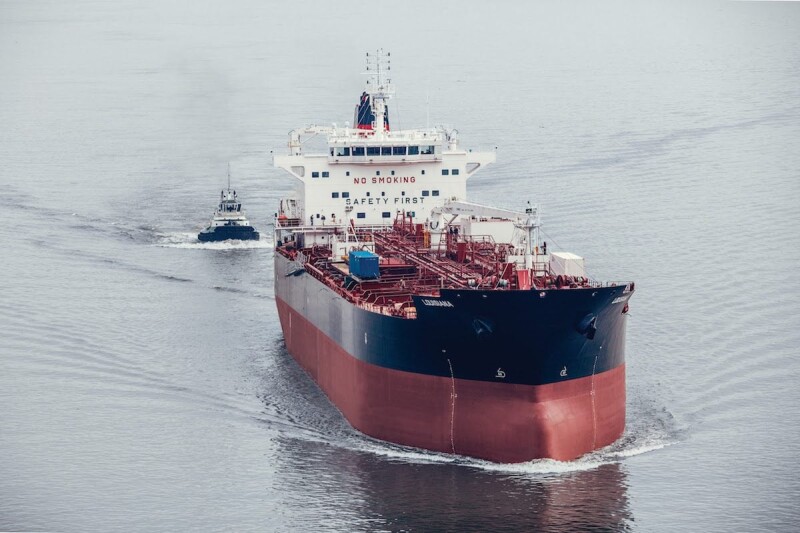
Amid political pressure over rising fuel prices and supply disruptions tied to the ongoing war in Iran, the Trump administration is considering a temporary waiver of the Jones Act that would allow foreign-flag vessels to transport fuel between U.S. ports.
The Jones Act requires cargo transported between U.S. ports to move on vessels that are built, owned, and flagged in the United States. Waivers are rare and typically issued only on national security grounds.
In a statement, White House press secretary Karoline Leavitt said, "In the interest of national defense, the White House is considering waiving the Jones Act for a limited period of time to ensure vital energy products and agricultural necessities are flowing freely to U.S. ports.” The measure has not been finalized.
A new analysis released March 12 by Navigistics Consulting, Boxborough, Mass., suggests such a waiver would have little measurable impact on gasoline prices. The report estimates that allowing foreign-flag tankers into domestic fuel trades would reduce the national average gasoline price by only about $0.0027 per gallon, an amount the study describes as negligible for consumers.
The Navigistics report examined how gasoline moves through U.S. coastal tanker markets and evaluated the potential cost impact of replacing Jones Act vessels with foreign-flag tankers.
According to the study, U.S. consumers purchased about 8.91 million barrels of gasoline per day in 2025, or roughly 136.6 billion gals. annually, based on U.S. Energy Information Administration data.
Only a small portion of that fuel moves by Jones Act tanker. The study estimates that about 8.9 billion gals., roughly 6.5% of total U.S. gasoline consumption, are transported by Jones Act vessels, primarily supplying coastal markets without pipeline access.
The structure of the Jones Act tanker market also limits the potential effect of a waiver.
The study notes that the 43 medium-range product tankers serving Jones Act trades are largely under long-term charter agreements, with rates around $90,000 per day. Those contracts must be paid regardless of whether the vessels are actively transporting cargo.
As a result, allowing foreign-flag vessels to enter domestic trades under a temporary waiver would not necessarily reduce transportation costs for refiners that already have shipping capacity secured.
Foreign tanker freight not necessarily cheaper
The report also cites freight comparisons between Jones Act tankers and foreign-flag vessels using the Worldscale freight benchmark system.
In a recent industry analysis, Overseas Shipholding Group CEO Sam Norton estimated that transporting gasoline from Houston to New York on a foreign-flag tanker at current market rates would cost about 14.5 cents per gal., compared with roughly 13.5 cents per gallon on a Jones Act tanker.
A similar comparison for shipments between Houston and Port Everglades, Fla., showed foreign-flag shipping costing about a penny more per gallon than the Jones Act alternative.
Navigistics estimates that gasoline traders could capture about $371 million in potential savings if lower freight rates were realized across applicable trades.
Spread across total U.S. gasoline consumption, however, the study calculates that those savings would reduce the national average gasoline price by only about $0.0027 per gal.
Even if traders achieved the often-cited five-cent-per-gallon shipping savings on all gasoline carried by Jones Act tankers, the national average price would decline by only about $0.0033 per gal., according to the analysis.
The report concludes that any economic benefit from a Jones Act waiver would likely accrue to intermediaries in the fuel market rather than directly to U.S. consumers.
