



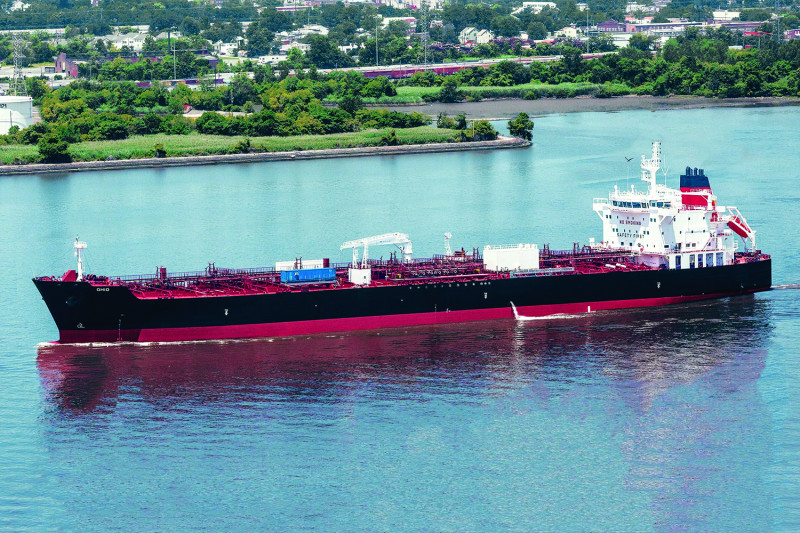
Seven U.S. maritime unions urged President Trump not to allow “any administrative waivers granted under the Jones Act in response to rising energy price concerns.”
The Trump administration, which is facing political pressure over rising oil and gas prices, is considering waiving the statute to help combat supply disruptions amid the ongoing war in Iran.
"In the interest of national defense, the White House is considering waiving the Jones Act for a limited period of time to ensure vital energy products and agricultural necessities are flowing freely to U.S. ports," press secretary Karoline Leavitt said on Thursday. "This action has not been finalized."
The Jones Act requires cargo being moved by water between U.S. ports to be shipped on vessels that are built, owned, and registered in the U.S. Waivers to the statute are rare and typically granted only on national security grounds.
Historically, maritime unions and industry groups have strongly opposed any waiver, arguing that such exemptions undermine American workers and domestic shipping.
“Jones Act waivers are granted only in rare, exceptional circumstances, typically on national security grounds where U.S.-flag vessel capacity is unavailable,” union leaders wrote in a March 12 letter. “Should concerns exist regarding tanker capacity, Congress has already addressed this through the Tanker Security Program, which ensures the availability of U.S.-flag vessels crewed by American mariners to move critical energy supplies when needed.”
“A Jones Act waiver would instead create opportunities for foreign-flag operators that avoid paying U.S. taxes, rely heavily on low-wage labor, and operate under regulatory regimes that circumvent international labor and vessel safety standards in direct conflict of America’s national security and economic interests,” the letter states.
“At a time when the administration is working to strengthen our nation’s shipyards and expand the international U.S.-flag fleet under the recently unveiled Maritime Action Plan (MAP), a Jones Act waiver would undermine these core policy objectives.”
A recent analysis by Navigistics Consulting found that waiving the Jones Act would reduce gasoline prices by just $0.0027 per gallon, having effectively no impact on consumers.
"While we genuinely share the collective goal of lowering
The letter is signed by Willie Barrere, American Maritime Officers;
Like the unions, the Offshore Marine Service Association representing U.S. operators contended “that waiving the Jones Act will not lower costs for American consumers but will undermine American jobs and long-term investment in the U.S. maritime industry."
“Waiving the Jones Act in an attempt to address raising fuel prices won’t work, and it will jeopardize American jobs, U.S. tax revenue, and the future of the American maritime industry,” said OMSA president Aaron Smith. “Even Jones Act opponents are questioning if a waiver will lower gas prices, which underscores their real objective here: not to reduce costs for consumers, but to advance a long-standing effort to replace hardworking U.S. workers with foreign crews in our own domestic trade.”
In September 2017, under intense pressure to speed Puerto Rico relief efforts after Hurricane Maria, President Trump in his first presidential term granted a 10-day waiver of the Jones Act to allow foreign flag vessel deliveries of fuel and supplies.
Longtime advocates of Jones Act reform including the late Sen. John McCain, R-Az., saw Puerto Rico’s rebuilding needs as an opportunity to push for permanent change to the cabotage laws.
But lawmakers from maritime industry states prevailed in Congress and the 1920 law survived intact.
