


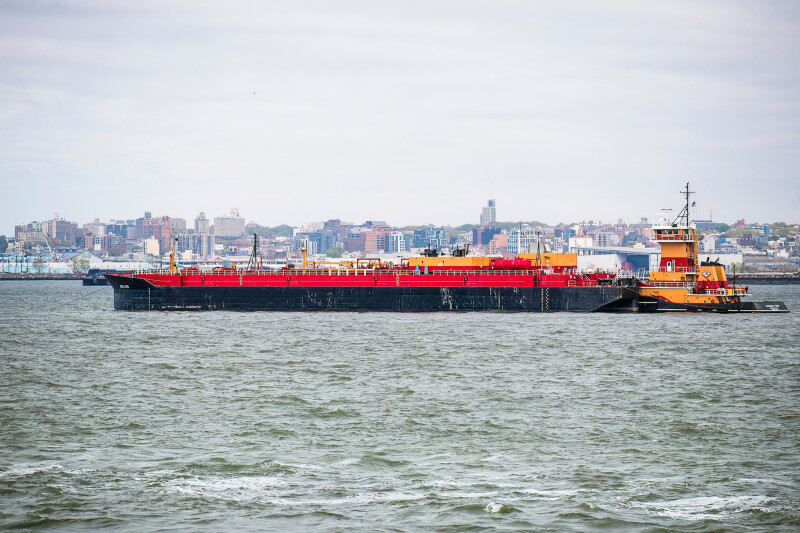
Learning how to operate a tug or towboat is not easy. Learning how to handle barges is orders of magnitude more difficult. I’m referring to the actual boat- and barge-handling, the throttle and rudder actions that make things happen, and nothing else. For a trainee, it is usually a formidable and overwhelming experience, especially early on. And it’s not exactly easy for the trainer.
At first, virtually all mental bandwidth is used just to handle the basics: moving the boat, steering, and navigating the waterways. For that reason, I handle all radio communications in the beginning, gradually allowing trainees to take on more and more as they build skills and confidence. It takes time, and there is no substitute.
I’ve told numerous trainees that I can teach them the local and regional geography, and I can teach them how to drive the boat, but I can’t teach them both at the same time. They simply can’t absorb all that information at once, let alone retain it, and attempting to do so significantly compromises both efforts. It’s very difficult at best in most places. Amid the geographical and hydrological complexity of New York Harbor? Not possible.
It’s a lot easier for everyone if you learn the geography, on land and underwater, first. That is, while you’re still a deckhand.
Geographic knowledge and literacy, for wherever you operate, rank right up there with boat-handling and situational awareness as critical skills. In fact, you will never have the level of situational awareness you need without that geographic knowledge.
This problem began, and has been steadily worsening, with the advent of the smartphone. Most humans have outsourced most of their navigational capabilities to their phones, tablets, or the built-in navigation systems in their cars. It’s super-convenient, and really unwise. In that regard, we ask far less of our brains than we used to, and it shows.
