



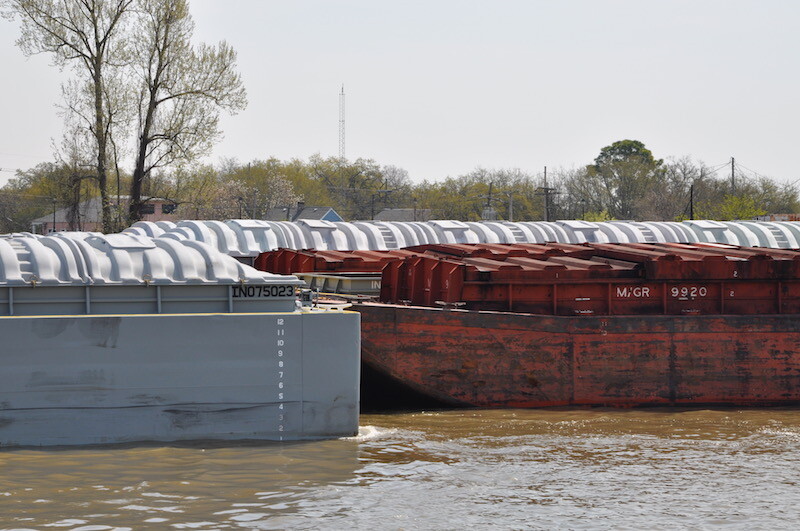
The U.S. inland hopper barge fleet could shrink more than 17% by 2035 as rising construction costs discourage replacement of aging vessels, according to a Nov. 10 CoBank report.
The report outlines a widening gap between new construction and retirements, with potential consequences for barge operators, grain shippers and U.S. agricultural exports.
The fleet totals 19,668 barges, down 1,617 vessels, or 7.6%, over the past decade, according to Current Data LLC figures cited by CoBank. Average fleet age has increased from 13.8 years in 2016 to 17.6 years. Inland hopper barges generally have a useful life of 25 to 30 years.
At an estimated construction rate of 410 barges annually and retirements of roughly 500 to 1,000 a year, Current Data projects the fleet will decline to 16,240 barges by 2035. That forecast assumes current trends in retirements, replacement and demand for barge capacity continue.
“While freight rates have increased in recent years, they have not risen to levels that fully justify large-scale fleet replacement,” the report said.
New inland hopper barges now cost roughly $1 million or more, according to industry estimates cited in the report. Steel, the largest construction input, remains expensive, while labor, fiberglass and financing costs have also increased. CoBank identified strong domestic steel demand and Section 232 steel tariffs as factors keeping U.S. steel plate prices above global alternatives.
Those costs present a challenge for operators competing in a freight market that still reflects the economics of older equipment.
“Many operators are also pricing transportation services based on older, fully depreciated barges purchased years ago at substantially lower costs,” the report said. “As a result, many barge operators continue focusing investment on extending the life of existing assets rather than expanding their fleets.”
Replating can add 12 to 15 years to a barge’s service life, but only about 100 to 200 barges undergo the work annually, according to Current Data figures cited by CoBank. That pace is insufficient to meaningfully offset fleet aging, the report said.
New construction also offers cargo benefits. Older barges are more susceptible to leaks through damaged hulls and covers, increasing the risk of grain spoilage and quality discounts. Newer equipment can reduce cargo losses and quality-related rejections, according to the report.
For operators considering newbuilds, however, freight volatility complicates the investment decision. CoBank reported a three-month average barge rate of $20.04 per ton at the Cairo-Memphis location on the Mississippi River, compared with a three-year average of $18.37 per ton for the same point in the year, based on USDA Agricultural Marketing Service data.
Crop volumes, export demand, domestic demand, fuel costs and river conditions can outweigh replacement costs in determining rates in any given year, the report said.
“As older, lower-cost barges leave service and more expensive replacement vessels enter the market, transportation costs will increasingly reflect today’s higher construction costs,” the report said.
The implications extend beyond the fleet. Inland hopper barges move roughly half of U.S. corn and soybean exports and one-third of wheat exports through the Mississippi Gulf region, according to USDA figures cited by CoBank. Railroads could absorb only a limited share of that traffic because of equipment constraints, terminal bottlenecks and export facility capacity.
Low water adds pressure by forcing operators to reduce barge loads and tow sizes. Aging locks and dams introduce additional risks of delays and service disruptions.
Meanwhile, USDA projects U.S. grain and oilseed exports will increase 9% by 2035, largely through growth in corn and soybean shipments, according to the report. Higher transportation costs could reduce the prices elevators offer farmers and weaken U.S. export competitiveness.
CoBank cautioned that fleet age alone will not determine the outcome.
“The timing and magnitude of that pressure will depend on commodity demand, river conditions, operating costs, infrastructure reliability and the pace of fleet replacement and life-extension investment,” the report said.
