


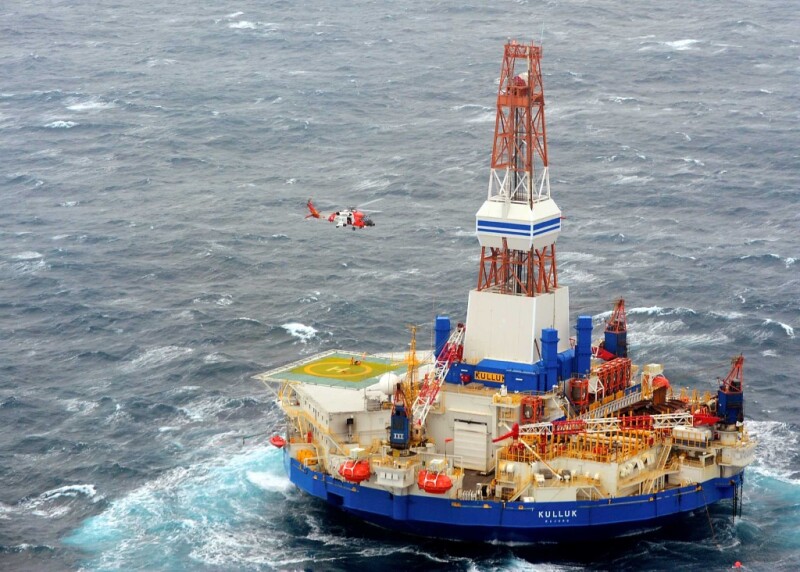
The Marine Minerals Administration is reopening the public comment period for a proposed rule to update federal regulations governing exploratory oil and gas drilling on the Arctic Outer Continental Shelf.
It’s a renewed effort by the Trump administration to make changes to the 2016 Arctic Exploratory Drilling Rule, undertaken in the last months of the Obama administration. The Marine Minerals Administration says its plan is “to reduce unnecessary regulatory burdens, clarify requirements, improve operational efficiency and reflect technological advances and lessons learned since the rule was issued.”
The new 30-day comment period opens Friday, Nov. 13, and closes Monday, Dec. 14, 2026.
“We received several requests for more time to review and comment on the proposed rule,” MMA Acting Director Mike Olsen said in announcing the comment schedule. “We value stakeholder feedback and want to allow time for thoughtful consideration of the proposed changes. Feedback helps us develop a clear, practical and responsible regulatory update.”
Proposed changes would address blowout preventer real-time monitoring, Arctic source-control and containment equipment, relief-rig capability, subsea isolation devices, mudline cellars, oil spill response plan-holder reviews, crane operations on artificial islands, and suspensions of operations and production, among other topics.
“As MMA works to update these requirements, it remains focused on safe offshore operations and responsible stewardship of the Arctic marine environment,” according to an agency statement.
MMA published the proposed rule Aug. 6, 2026, and initially provided a 60-day comment period that closed Oct. 5, 2026. The bureau received thousands of comments during that time and will review them along with feedback submitted during the reopened comment period.
The existing 2016 Arctic Exploratory Drilling Rule was finalized during the Obama administration after a long campaign by environmental groups for stricter safeguards. Then-President Barack Obama had used a provision in the Outer Continental Shelf Lands Act, which had previously been applied only to protect smaller marine wildlife habitats, to take areas in the Chukchi and Beaufort seas off the table from offshore oil and gas leasing.
The rule then “established a burdensome regulatory framework for exploratory drilling and related operations on the Alaska Outer Continental Shelf,” Department of Interior officials said when first introducing the would-be reforms in August.
“The proposed rule is designed to provide operators with clearer, more flexible compliance options while preserving federal authority to review, approve, condition or require additional safeguards for proposed Arctic Outer Continental Shelf activities,” according to the agency. However, it “does not approve any specific lease sale, exploration plan, permit or drilling activity.”
The U.S. Arctic is estimated to hold 27 billion barrels of oil and 132 trillion cubic feet of natural gas, but energy companies have struggled to tap resources buried below icy waters at the top of the globe.
Royal Dutch Shell backed out of the region in 2015, citing high costs and the “challenging and unpredictable federal regulatory environment in offshore Alaska” in its decision to abandon the project. Industry experts then estimated the company had spent more than $7 billion on Arctic continental shelf exploration, including $2.1 billion for leases in Alaska’s Chukchi Sea.
