


The Trump administration's decision to issue and later extend Jones Act waivers allowing foreign-flagged vessels to transport oil and other commodities between U.S. ports has sparked debate throughout the U.S. maritime industry.
The waiver, initially issued for 60 days and later extended to 150 days, was presented as part of a broader effort to ease fuel price pressures and address energy supply disruptions tied to instability in the Middle East and the effective closure of the Strait of Hormuz.
"President Trump's decision to issue a 60-day Jones Act waiver is just another step to mitigate the short-term disruptions to the oil market as the U.S. military continues meeting the objectives of Operation Epic Fury," White House Press Secretary Karoline Leavitt said in a statement. "This action will allow vital resources like oil, natural gas, fertilizer, and coal to flow freely to U.S. ports for sixty days."
The waiver temporarily suspends Jones Act requirements that domestic waterborne transportation be conducted by U.S.-built, U.S.-owned, and U.S.-crewed vessels. Industry groups, including the American Maritime Partnership, have criticized the move, arguing it unnecessarily displaces American mariners and vessel operators.
The waiver and its extension has drawn opposition from nearly every major segment of the U.S. maritime industry, including vessel operators, labor unions, and maritime trade associations. Critics argue the policy undermines American jobs and national security while failing to achieve its stated goal of reducing fuel prices.
Jennifer Carpenter, president and CEO of the American Waterways Operators, called the extension "a gut punch to American workers" and said it "throws open America's maritime borders to foreign vessels and crews and puts American workers last."
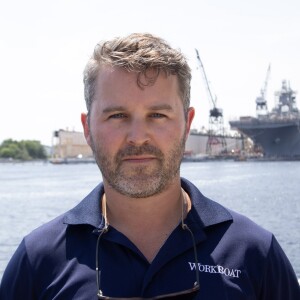
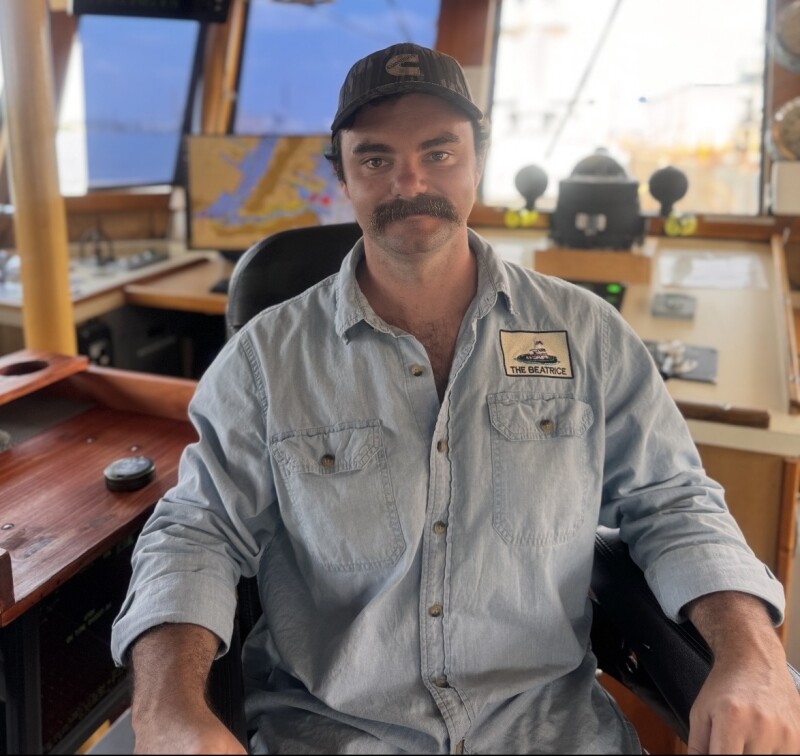
For Capt. Reed Richardson, who lives in Murrells Inlet, S.C., and works aboard a U.S.-flag articulated tug-barge, the debate is about far more than transportation costs.
A career built under the Jones Act
Richardson said the Jones Act helped create a career path that allowed him to advance from entry-level deckhand to captain in roughly a decade.
“I started from the bottom,” Richardson said. “Right out of high school, I went and took my six-pack and 100-ton. At first, I had planned to go do charters and stuff from home. We don't have any tugboats or anything in Murrells Inlet. Too shallow.”
A family friend working aboard tugboats in New York encouraged him to enter the industry. Richardson started as an ordinary seaman in 2015, hawsepiped from OS to AB, earned his mate's license, sailed as mate, and eventually became captain.
“We all kind of started from the bottom and worked our way up,” he said. “It's been a great career for us.”
Today, Richardson works aboard an offshore ATB that carries products including ethanol, diesel, and jet fuel between ports from Houston to Maine.
Industry Concerns
Richardson worries that expanded use of foreign-flag vessels in domestic trade could threaten opportunities for American mariners.
“I really think what would happen if we got rid of the Jones Act is we'd probably really all lose our jobs,” he said. “They can pay a foreign worker what we make in a day for a month.”
But he argues the implications extend beyond employment.
“It's not only a job, it's about our security,” he said.
According to Richardson, the Jones Act helps sustain a domestic maritime workforce that could be called upon during national emergencies or military conflicts.
"If you lost American mariners, you don't have any of that anymore," Richardson said, referring to programs that allow credentialed mariners to support military sealift operations. "You'd have a bunch of foreign boats doing your work. And then what happens if we go to war with them? They're either going to leave or sabotage us, and we won't have an American workforce working for America."
Waiver Use
While the administration has characterized the waivers as a temporary response to energy market disruptions, Richardson questioned whether some approved voyages meet that intent.
"I've looked at the sheet of ships exercising the waiver, and I've seen a bunch on there," he said. "In my opinion, it's being abused.
"I've seen ships going from Texas to Texas to Florida, and I can't understand how that's a supply chain issue, especially with my boat. We could have done that job. Moving ethanol from within Texas, that's an eight-hour trip. We could have easily moved it."
"It's not gone. It's just waived," he added. "But it's definitely hurting us and the industry."
Training and Safety
Richardson said policymakers often underestimate the training and experience required to safely operate vessels in U.S. waterways.
“Probably our skill set, our training,” he said when asked what is often overlooked. “We go through rigorous training for security and environmental protection. We have all the local knowledge of each harbor.”
Hawsepiping to his current role, Richardson said earning that captain's license required years of sea time, background checks, Transportation Worker Identification Credential requirements, and specialized courses covering navigation, radar operations, firefighting, and other competencies.
He pointed to the challenges mariners face when moving between operating regions.
"I've seen mariners from Philly come up to New York and their heads almost explode," he said. "They can't get a feel for it. They don't know the docks, the currents. You throw a foreign crew into New York Harbor and they would have no clue, and then you add a language barrier on top of it. It would be a disaster. I've seen it with American workers. It would be tenfold with someone foreign."
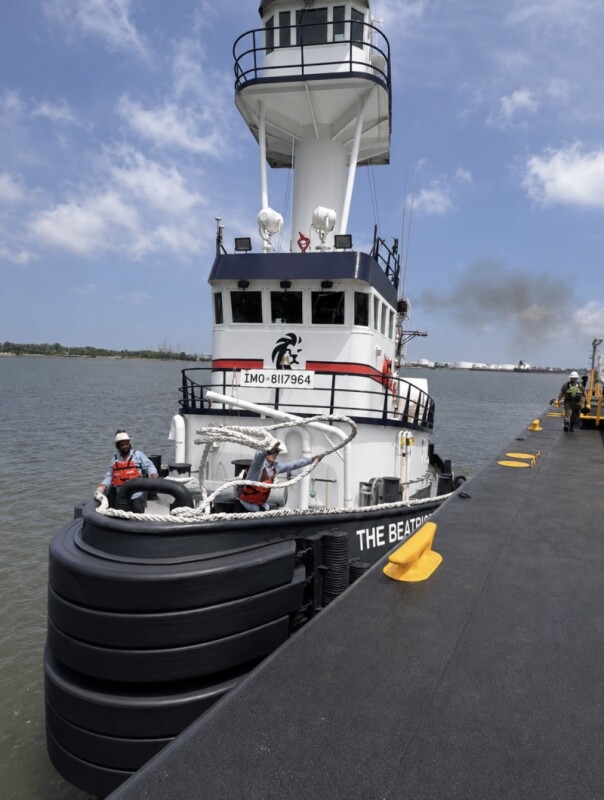
Richardson also emphasized the informal cooperation that exists among mariners working in congested waterways.
"We all help each other out," he said. "How are they going to help each other out?"
Lessons from Baltimore
Richardson also pointed to the March 2024 allision involving the containership Dali and Baltimore's Francis Scott Key Bridge as an example of the operational standards he believes distinguish U.S.-flag Jones Act vessels from foreign-flag ships.
According to Richardson, the Dali's engineering crew relied on a fuel-system configuration that used a flushing pump, which is equipment normally intended to clear heavy fuel oil from fuel lines before entering U.S. waters on diesel fuel, to supply diesel to standby generators. He said the arrangement reduced redundancy within the vessel's emergency power system and contributed to the second blackout that occurred before the vessel struck the bridge.
"I think a more accurate short version of all that is the shortcuts and lack of redundancy on the standby generator fuel system would not have happened on an American Jones Act vessel," Richardson said. “That wouldn't fly on an American vessel. We go through all kinds of Coast Guard inspections, checking all of our equipment.”
Richardson noted vessels operating under foreign flags are subject to a variety of regulatory regimes. He said the allision reinforced his belief that the level of oversight, training, and inspection standards required of Jones Act operators provides an added layer of accountability. The United States has limited visibility into how foreign operators maintain vessels and crews compared with the rigorous inspection and credentialing requirements imposed on U.S.-flag operators, he said, noting concerns about consistency and safety as more foreign-flag vessels enter domestic trades.
He also highlighted the role of American pilots.
"Luckily, they had an American pilot on that boat," Richardson said. "That probably wouldn't be the case if we start filling our waterways with foreign-flagged vessels, especially inland, where you don't have enough pilots as it is.
"When something goes wrong, we lose a generator, an engine, we can call out, talk to each other, and help save each other," he added. "You start adding foreign vessels into the mix and you lose that. You lose the network."
Beyond Costs
Richardson believes discussions about Jones Act waivers should extend beyond transportation costs and fuel prices.
“A lot of people, especially business people, are probably looking at this like, ‘Oh, we can do this a lot cheaper,’” he said. “But in the long run, it's going to trash our waterways, cause damages, and especially when it comes to national security, I think it's very overlooked what could happen.”
When asked whether his concerns are shared by other mariners, Richardson said they are.
“Oh, 100%,” he said. “We've talked about it before.”
For Richardson, the debate ultimately comes down to maintaining an American maritime workforce that provides both economic and strategic value to the country.
