



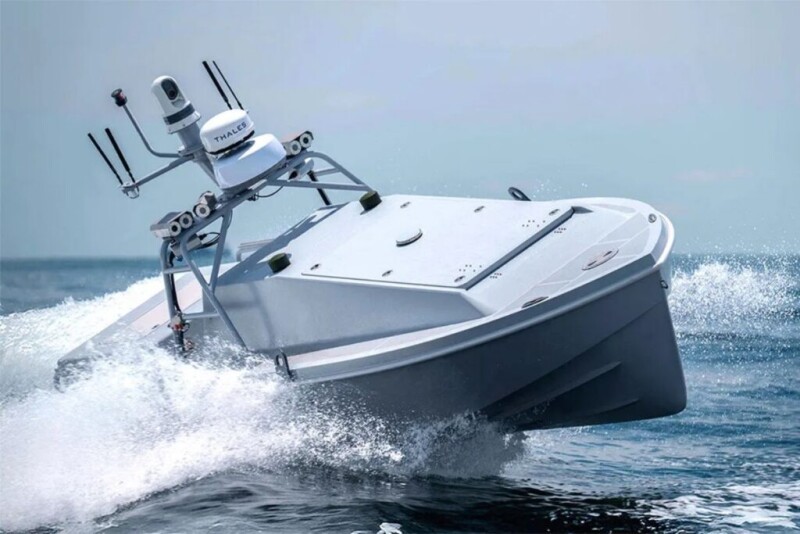
The U.S. Central Command has released video confirming that three Saronic Corsair unmanned surface vessels struck a submarine and a ship maintenance facility at Iran’s Bandar Abbas Naval Base on July 12, in what CENTCOM says marks the first time American forces have employed sea drones in combat operations. The footage, distributed through the Defense Visual Information Distribution Service, shows a low, thermal-camera approach to the pier, followed by multiple detonations along the waterline.
Key takeaway
Three Saronic Corsair unmanned surface vessels were used in the July 12 strikes at Iran’s Bandar Abbas Naval Base, marking what CENTCOM described as the first American use of sea drones in combat operations.
Saronic used its own social media account to confirm the platform’s role, specifying that the strikes involved military-variant Corsairs, distinct from the commercial-facing versions of the 24' ASV the company also markets. “We are proud that our technology supported this mission,” the company said, adding that it remains focused on delivering autonomous maritime systems for U.S. and allied security. The post confirmed the strikes were intended to degrade Iran’s ability to continue attacking commercial shipping.
The U.S. military confirmed multiple military variant Saronic Corsairs, our 24ft ASV, were used in strikes to degrade Iran’s ability to continue attacking commercial shipping — marking the first time American forces have employed sea drones in combat operations.
— Saronic (@Saronic) July 13, 2026
We are proud… https://t.co/T7Kg1cGuRz
The U.S. Navy awarded Saronic a $392 million production contract for the Corsair line, with the service noting it moved from prototype to production in under 12 months. The company backed that pace with a weeklong endurance exercise, running a fleet of eight Corsairs beyond line of sight, logging transits of more than 92 continuous hours and a five-day autonomous loiter in sea states with waves topping 5', with no reported degradation in mission execution. That scale-up has been funded aggressively. A $600 million Series C round and a $1.75 billion Series D since have pushed Saronic’s valuation to $9.25 billion, financing expansion of its Franklin, La., shipyard toward a target of 20 vessels a year by the end of 2026.
