



The U.S. Transportation Department has completed a new version of its National Freight Strategic Plan, which updates the government’s roadmap for modernizing freight transportation and highlights the importance of inland waterways to this national network.
Renewed every five years, the newest report was released on May 18. It offers insights into national trends and provides a framework for billions of dollars in federal, state, and local investments to improve the movement of freight, especially farm products, across the country.
Trucks transport most of the nation’s agricultural goods, moving 2.2 billion tons in 2025, followed by rail with 265 million tons and barge with 126 million tons.
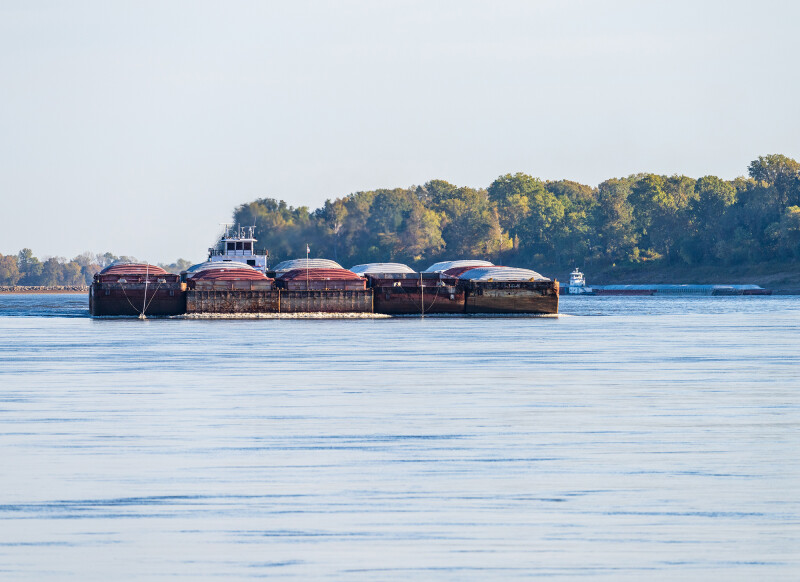
The report underscores the importance of the inland waterways and rail networks, citing that 60% of U.S. grain exports (primarily corn and soybeans) move by barge on the Mississippi River System to the Gulf, while 60% of wheat exports pass through the Columbia-Snake River System in the Pacific Northwest. Rail transports 24% of U.S. grain shipments and 39% of grain exports.
Weather plays a big role in barge transportation, the NFSP notes. Low water on the Mississippi River in 2022, for example, forced barges to light-load, which reduced capacity by up to 27% and spiked barge rates. Meanwhile, seasonal surges from the fall corn and soybean harvests put pressure on rural roads and barge availability, which raises costs and increases the risk of accidents on rural highways.
The report says that an efficient and reliable freight system must improve the flow of freight, which means reducing congestion and bottlenecks, “which act as a recurring surcharge on the cost of moving goods.”
Extended closures at a major inland waterways lock can cause massive diversions, forcing thousands of truck trips onto highways and adding over $1 billion in shipper costs of agricultural goods. Similar problems occur with trucks on narrow roads and restricted bridges.
The plan suggests improvements to real-time shipment visibility, such as providing a dashboard for participants to see near-term demand and asset availability up to 90 days out. DOT plans to expand such data coverage to exports of bulk cargo that will help ports, shippers, and carriers anticipate volumes, improve operations, and align their equipment.
In addition, DOT will support multimodal, across-jurisdiction integration that depends on smooth connections between truck, rail, and barges for goods to reach both domestic and global markets.
To keep freight moving during disruptions, the report recommends addressing single points of failure in the network and increasing rerouting capabilities. This would include maintaining inland waterway channel depths and widths and making locks and dams more reliable. The plan noted that as of 2024, 80% of all navigable lock and dam structures had exceeded their design life, risking unplanned closures. “In cases where locks fail and there are not parallel locks available, waterborne freight would switch to alternate modes of travel. Just one 14-barge tow carries the equivalent of 1,050 trucks or 216 rail cars,” the report states.
Over the past few years, the plan estimates that each dollar invested in inland waterways has returned $1.39 to $1.83 in economic benefits by shifting in part traffic away from congested highways.
To make the system more resilient during bad weather, the plan suggests that direct funding from the U.S. Army Corps of Engineers be used to keep river segments navigable during a broader range of weather conditions. This could be done through federal competitive grant programs, such as the Port Infrastructure Program. Progress toward this goal would be measured by tracking trends in unscheduled closures, recovery times after disruptions, and integrating resilience into freight planning.
DOT projects a moderate 1.5% annual growth in farm freight over the next two decades, and from 2025-2050 agriculture’s modal tonnages are expected to increase by44 % for trucks, 50% for rail, and 49% for barge. For inland waterways, growth will be shaped by infrastructure reliability, water conditions, and global market demands.
The report also says that barging carries many safety risks and “collisions between barges or tankers and recreational boats remain a recurring concern, particularly on shared channels and near popular marinas. Channel obstructions, outdated navigational aids and surveys, and limited visibility can increase the likelihood of incidents.”
