



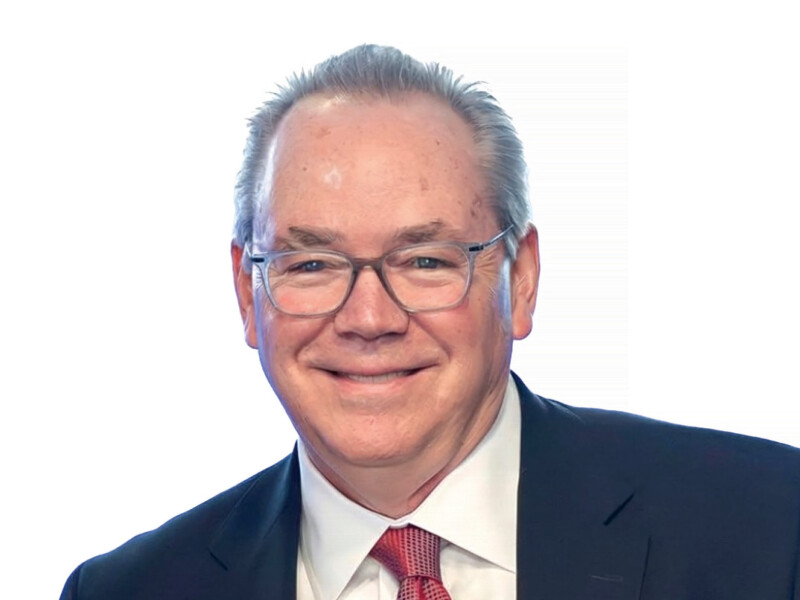
WorkBoat sat down with Patrick V. Kelly, CEO of Fraser Industries LLC, to discuss how the 138-year-old Superior, Wis., shipyard is positioning itself for growth as the United States looks to expand domestic shipbuilding capacity. Kelly discusses Fraser’s recent shipyard modernization memorandum of understanding with HD Korea Shipbuilding & Offshore Engineering, the Great Lakes Alliance of Shipyards’ pursuit of the Coast Guard’s Homeland Security Cutter-Light program, workforce development, and the role the Great Lakes could play in a broader maritime resurgence.
Please give an overview of Fraser Industries and the markets it serves.
Fraser is a very diversified shipyard. We repair lakers, including vessels up to 1,000 feet long, and build new vessels for commercial and military customers. We work in aluminum and steel. The combination of repair and new construction makes us a pretty unique shipyard.
Our location in the Duluth [Minn.]-Superior [Wis.] Harbor complex, a top 20 North American port by tonnage, makes us a great location for repair work. Lakers come in and out almost by the hour, moving taconite, grain, coal, other commodity products, and wind turbine components, to name a few. That leads to work from long-term customers as well as vessels moving through the harbor that need repairs.
We are busiest in January, February, and March, when the Great Lakes ships come off the water because of winter ice and weather. We are like an Indianapolis pit crew.
Year-round, we employ about 200 people, but we ramp up to 600 people during the winter months. Outside of that season, I do not have enough repair work to keep all of those people working. We are trying to fill that gap with new construction through Lake Assault Boats, Northern Engineering, and Fraser Shipyards.
How do you see the Great Lakes shipyard market?
The strongest demand, I believe, comes from the movement of taconite for steel manufacturing. As the United States ramps up its industrial base, steel manufacturing becomes critically important, and more iron ore will move from the Duluth-Superior Harbor complex to mills throughout the Great Lakes.
That is just the beginning. As we talk about reindustrializing North America, the Great Lakes is a fabulous place to do business. The Great Lakes system, the St. Lawrence Seaway, maritime operators, ports, and terminals are all roughly 50% utilized. We are significantly underutilized, which makes the region an ideal place to bring new business and new ways of doing business. The Great Lakes is open and ready to go.
How does Fraser’s recent agreement with HD Korea Shipbuilding & Offshore Engineering fit into its broader growth plans?
If you compare U.S. shipbuilders with our Korean counterparts, we have a lot to learn. Fraser is a terrific shipyard. We have operated continuously for 138 years, and you do not set that kind of longevity record by doing things poorly. However, we recognize that we have a lot to learn, and we are working to leapfrog existing shipbuilding technologies and bring the best available technology into the yard.
Larger coastal yards are receiving major contracts, developing extended backlogs, and taking longer to turn vessels around. That creates opportunities for smaller yards like Fraser to take on larger projects.
We doubled our output of vessels delivered from 2023 to 2026, and we are working to double it again in 2027 and 2028. We currently use about 15 acres of the 100 acres we own, so we can add significant production capacity. We also have a strong workforce, inexpensive electricity, and readily available natural gas. HD Hyundai sees the same opportunity to bring a shipyard of the future to the Great Lakes for additional commercial and military work.
What led to the formation of the Great Lakes Alliance of Shipyards?
We are extremely excited about the Great Lakes Alliance of Shipyards. Our government could not be clearer. This is about delivering boats, vessels, and ships, and accelerating the timeline to delivery.
Three yards working together can deliver vessels faster than one shipyard can on its own. We are initially focused on the Coast Guard’s Homeland Security Cutter-Light program. These are icebreaking tugboats about 65 or 70 feet long, and the Coast Guard is looking for seven vessels under the full contract.
We believe we can deliver all seven in about one-third the time it would take an individual shipyard. We hope that gets noticed by the Coast Guard and that we are the winning group. It would bring more work to the Great Lakes and make all three yards better for the next opportunity. It is all about the pace of delivery.
How would the work be divided among the alliance yards?
Each shipyard would build complete vessels. We will share the design and engineering work, and much of the procurement will be handled centrally.
We will do everything possible to standardize the process and will make certain that each shipyard is building the same vessel for the Coast Guard. Our goal is that you would not be able to tell which yard built which vessel, other than the stamp and nameplate. We are ruthlessly standardizing to meet the Coast Guard’s requirements.
What are the biggest constraints on U.S. shipyards’ ability to increase production?
Most shipyards are constrained by acreage. Communities have grown around them, and they have fully utilized the land available. Coastal shipyards are also constrained by workforce, with many other industries competing for people.
Fraser does not have those same constraints. We have space to expand in Superior, and we have a great workforce. We could hire more people if we had the opportunity to put them to work.
How serious is the skilled-labor challenge for Fraser?
I will not say it is easy to find a skilled or trained workforce, but there are great people in the technical and community college programs around us. We support six different colleges and programs with surplus equipment that is still good for training, scrap steel and aluminum, and employees who teach classes after their shifts.
We support those programs and hire their graduates. In some cases, we are hiring 80% of a graduating class. With additional funding, those programs tell us they could accept more students.
As more work comes to the yard, we can hire more people and invest through grants and other support in the training programs around us. It becomes a virtuous loop. HD Hyundai sees the same opportunity.
Looking five to 10 years ahead, what would success look like?
In Superior, it would mean better utilizing our 100-acre campus, completing expansion projects, adding production space, increasing employment, and bringing new technologies into the yard.
We also see opportunities to expand shipbuilding and repair elsewhere around the Great Lakes. Other locations make sense, including Lake Erie, Lake Ontario, and the St. Lawrence Seaway. We would like to participate in those expansions and buildouts.
The Great Lakes have unique geographic advantages. Lake Michigan is the only large body of water surrounded completely by U.S. states, making it an ideal test bed for airborne, surface, and subsurface drone arrays where outside parties could not listen in or gain access. It is a bit like Area 51 for the Air Force. Some people already refer to Lake Michigan as Area 52.
The Great Lakes provide deepwater, ocean-like conditions, severe sea states, and winter ice. As Arctic work becomes more important, learning to operate in and under ice will become increasingly valuable. There are all sorts of maritime opportunities to do more on the Great Lakes.
This interview has been edited for length and clarity.
