



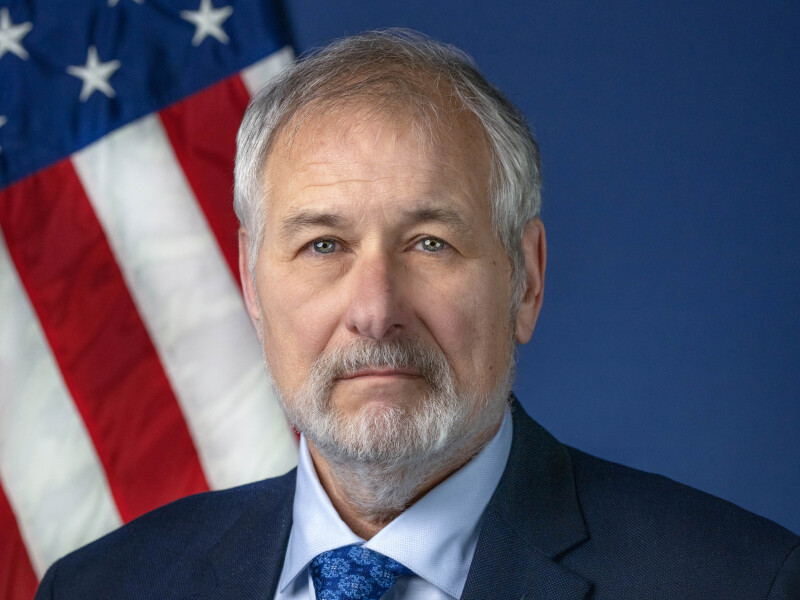
WorkBoat sat down with Capt. Stephen Carmel, Administrator of the Maritime Administration (Marad) at the U.S. Department of Transportation, to discuss a rare moment of political momentum for American maritime. A career mariner and former shipping executive, Carmel brings an operator’s perspective to one of Washington’s most consequential maritime posts in decades. He lays out what the Maritime Action Plan (MAP) means for the entire maritime ecosystem — from inland waterways to deepsea shipping — and makes the case that rebuilding America’s maritime industry is both necessary and achievable.
You spent decades in the industry, both at sea and ashore, before taking the helm at Marad. How does that industry perspective shape the way you are approaching the role?
The easy answer is that I didn’t need to be convinced this industry is important. I lived it. It’s been my whole life, and I believe in it passionately. I walked through the door without needing a deep briefing on what maritime is or why it matters, which I think is different from some past administrators who came from outside the industry.
I also have a personal relationship and a genuine level of trust with the CEOs of most of the major shipping companies. When people come in and describe the problems they’re dealing with, those are issues I’ve lived myself. I don’t just understand them quickly, I often come to those conversations already armed with ideas on how to fix them.
One of the biggest challenges for anyone in a leadership position is making sure the people around you tell you what you need to hear, not what you want to hear. Because I’ve known so many in this industry for so long, and we trust each other, I’m confident they won’t hesitate to give it to me straight.
By any measure, with the Maritime Action Plan, bipartisan support for the SHIPS Act, and renewed industry engagement, this feels like a significant inflection point. How would you describe this moment, and what do you see as the single greatest opportunity it presents?
You’re right. This is a moment I’ve been waiting for my whole career. We finally have an administration that understands how important the maritime industry is, both to the economic vitality and to the national security of this country. Our challenge now is to not squander it. We need to make change that endures — change that puts the industry back on the right trajectory.
Our industry started to fall apart well over a century ago. The Lynch Commission in 1878 was, I believe, the first formal inquiry into why the merchant marine was declining. We’ve had commissions and studies and cycles ever since but have never managed to produce lasting solutions. I believe we have the opportunity to do that now.
And the broader point that needs to be made to the American public is this: Maritime is part of every American’s life. Every time a truck pulls up to a store, that truck connected to a ship somewhere. Every time a farmer’s crop gets exported or a factory makes something sold overseas, it’s likely moving on the inland waterways to a port before it leaves the country. We are part of the entire conveyor of commerce, and we haven’t done a particularly good job of connecting those dots — inland and deepsea together. This is an extraordinary time to make that case.
The Maritime Action Plan tasks Marad with being the federal government’s primary execution arm for restoring maritime dominance. What does that mean in concrete terms for the commercial maritime industry, especially the workboat community?
In the past, Marad was often viewed as a passive organization — essentially a grant-dispensing office. We need to be much more than that. We need to be an active participant in shaping the direction the industry is going.
I’ll be direct. The inland waterways and Great Lakes have not gotten the attention they deserve. That changes. For those operators, the MAP means, among other things, ensuring that port development infrastructure grants, Title XI financing, and small shipyard grants are accessible and actually get used. It also means having a different conversation about labor. The workforce pipeline for the inland waterways is not the same as it is for deepsea. That conversation had never really been had at the federal level before we got here. It was always about academies, and that’s simply not where inland waterways mariners come from.
We’re also going to take a systems-oriented view of grant applications. It won’t just be about whether a project works in isolation. It’s going to be about how it works together with the rest of the maritime system to produce a bigger whole.
Most of the MAP is focused on the bluewater fleet and ocean shipping. Can you speak to how that trickles down and impacts coastal and inland operators?
It’s not 100% focused on bluewater. I want to be clear about that. The MAP focuses significantly on shipbuilding, and that doesn’t mean only big ships. Small shipyards building tugs and barges are a vital part of the maritime ecosystem, and we need to continue to support them. Port development and small shipyard grants remain an important part of the agenda.
But to your broader question, what I’ve said many times is that we have a system here, and you simply cannot separate the parts. There’s no such thing as focusing on deepwater and ignoring the inland waterways, or vice versa. When we apply resources to the deepwater sector, the inland waterways benefit because tugs and barges are moving the commodities we’re going to export. As we expand shipbuilding generally, even for deepsea vessels, we’re going to use the inland waterways to move raw materials. The system has to be able to support all of its own parts. Expanding any one piece of it ultimately lifts the rest.
The MAP aims to reverse the fact that the U.S. currently builds less than 1% of the world’s commercial fleet. What is a realistic timeline for meaningful movement on that number, and what are the biggest chokepoints?
The biggest chokepoint, truthfully, is cargo. It does no good to think about building ships unless we have something for them to do. We currently carry less than 1% of our own international trade under the U.S. flag. Until we fix that, we’re not going to build ships for international trade. Expanding access to cargo is the foundational prerequisite.
After that, in terms of building for international trade, we frankly don’t have the shipyards capable of doing it. The largest containership we’ve ever built here were the Matson vessels — around 3,500 TEU. Those are feeders. The idea that we could build a 22,000- or 23,000-TEU containership today is not realistic. We don’t have yards capable of it, and we don’t have a domestic supply chain for the critical components — deepsea main engines, for instance. None of the major engine manufacturers produce here, because the throughput hasn’t existed to justify the investment.
So the sequencing is this: First, we generate sustainable cargo demand, initially through re-flags. Concurrently, we begin addressing the shipbuilding industry itself, which likely means some greenfield yards — at least two that can actually build the ships our nation’s commerce requires. We also cannot forget the ship repair industry. The fleet needs maintenance, and right now we don’t have yards with the capacity or scheduling reliability to handle that work. And we have to develop a workforce across all of this without cannibalizing the small shipyard labor base that keeps the workboat community running. That would be a serious mistake.
This is a 10-year project, at minimum, to get to where we need to be. But we have to start somewhere, sometime. And I believe fervently that we can do it. We are absolutely capable of building a competitive shipbuilding industry and a competitive U.S.-flag merchant marine when the government does what it does best, which is to ensure Americans are competing on a level playing field.
The MAP calls for expanding the Title XI federal ship financing program by broadening eligibility and cutting red tape. What types of vessels or operators does Marad most want to see take advantage of that program?
Whoever wants to contribute to the maritime industry. It’s not Marad’s job to pick winners or favorites. We want to help everyone who wants to build workboats or ships here.
That said, the Title XI program itself has a lot of work to be done. We have an initiative underway to transform it from what it is now — a bureaucratically clunky, relatively modest loan guarantee program — into a true maritime financing tool. Personally, I’d love to see it applied to things like building ship-to-shore gantry cranes domestically. I want it accessible to the workforce community, the Great Lakes community, the inland waterways — everyone.
We’re also in the process of automating the entire application experience. We’re close to a beta test on an online system that is far easier to navigate, requires far less legal help to complete, and produces answers much more quickly. The goal is simple. We want people to use this program, and we don’t want the application process itself to be the obstacle.
Many shipyards as well as towboat, tugboat, and ferry operators are struggling to find and retain qualified workers. What workforce initiatives do you see as most promising for these sectors specifically?
The inland waterways community gets its labor through very different avenues than the deepsea sector, and we have to account for that. Deepsea folks tend to recruit through academies. That’s generally not where inland waterways mariners come from.
We’re developing a program specifically focused on inland waterways labor recruitment. One initiative we’re rolling out is a video aimed at high school guidance counselors — something that can help them direct students toward maritime as a legitimate, well-paying career path that most of them have simply never considered. We need to reach these kids before they make career decisions. We have to get out of the idea that academy pipelines are the only way to develop people for this industry.
At your confirmation hearing, you said, “We will not be the generation that stood on the sidelines and passively watched our noble industry die.” What would success look like to you personally at the end of your tenure, and what metric are you watching most closely?
Success comes in two forms for me: strategic and tactical.
Strategically, success means we have changed the narrative, that maritime is now a prominent part of conversations about trade negotiations and national infrastructure. That the average American has some idea of what this industry does and why it matters. That’s a win in itself.
On the tactical side, I’m watching the amount of cargo moving on U.S.-flag assets. Whether that’s growth on the inland waterways, the Great Lakes, or the share of our foreign commerce we’re carrying, that number needs to be trending in the right direction. It won’t happen overnight, but we need to see the trajectory moving. Once the cargo trend is moving, we’ll look at whether we’re actually starting to build ships — and eventually whether we’re building ships not just for the domestic trade, but for export too. The Koreans don’t just build ships for the Korean flag. We need to get our shipbuilding industry there.
And I’d add one more metric that doesn’t get enough attention: data. International commerce in data and digital services is a critical component of trade. We don’t have cable repair ships or cable layers. We need to rebuild that entire section of the industry as well.
Is there anything you’d like to add for our readers?
Just this: Our maritime industry is a system. We all have to have each other’s backs. Too often, the industry has been stovepiped and put at odds with itself. We can’t afford that. We survive or fail together.
I reject the notion that we’re too far behind, or that this is too hard, or that it’s impossible. America has rebuilt its maritime industry before, and we’re going to do it again. I’m proud to have been offered the opportunity to be part of it. And we are going to succeed.
This interview has been edited for length and clarity.
