


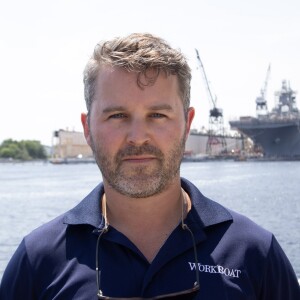

WorkBoat spoke with Morgan Fanberg, CEO of Seattle-headquartered naval architecture firm Glosten, on what it will take to reestablish American commercial shipbuilding — and why, without a serious investment in domestic naval architecture, initiatives like the SHIPS Act risk becoming another failed promise. Fanberg discusses the role of early-stage vessel design in shaping project outcomes, the growing gap between demand and available engineering talent, and how current projects are reflecting broader shifts in propulsion, operations, and fleet requirements across the U.S. maritime sector.
What are you seeing in terms of demand these days?
We’ve generally had a fairly steady level of demand from our long-term clients. That being said, many operators have been slow to pull the trigger due to the same factors you’re hearing about across the industry: interest rates, inflation, tariffs. It’s made it harder to know when to say yes and move forward.
What we’re starting to see now is that backlog beginning to break free; the faucet is opening. Clients are getting to the point of, “Okay, we can move forward,” and the challenge is shifting to how we schedule the work so we can support them effectively.
Earlier in the year, we weren’t lacking opportunities, but we had capacity. Now there’s a sense of pent-up demand for naval architecture as our clients recognize that while the uncertainty hasn’t gone away, delaying projects isn’t a viable option anymore.
We typically handle between 150 and 200 projects a year, and we’re at about 65 [as of April].
Your social media post stating that America needs more naval architects struck a chord in the industry and was well received. Could you elaborate on that?
I was a little fired up that day. When President Donald Trump mentioned our industry at the joint session of Congress last year and talked about bringing back U.S. shipbuilding, it caught my attention. It’s not often you hear a president reference our industry, so there was a sense of optimism that we might finally get some serious attention.
I was hopeful that the focus would be on the commercial side, because that’s where we need the most support. We have a tremendous ability to build naval vessels. We have the infrastructure, demand, and funding to produce the best Navy ships in the world. What we don’t have are those same elements on the commercial side.
When the SHIPS Act came out, I appreciated the intent. It says the right things. But it’s missing a fundamental piece: demand. What’s actually going to drive shipyards to build a commercial fleet? That’s the part I want to be in the conversation, not just reacting to another initiative that falls short.
There’s also the workforce side. Even if we do build more ships, who is going to crew them? The pipeline for licensed officers is relatively strong thanks to great maritime academies. Where we’re really short is on the unlicensed side. Most high school graduates aren’t considering maritime careers, especially careers that are going to pull them away from their homes for three, four months at a time.
On the naval architecture side, it all starts with engineering. Clients need capital and a reason to build, but nothing moves forward without the ability to design. What we’re seeing more of is a willingness to go overseas for that expertise, and the primary driver is cost. Just as we need domestic capability for commercial shipbuilding in times of national conflict or need, we can’t afford to lose that same capability on the engineering side. If this trend continues, I’m concerned we’ll see an erosion of technical know-how in this country.
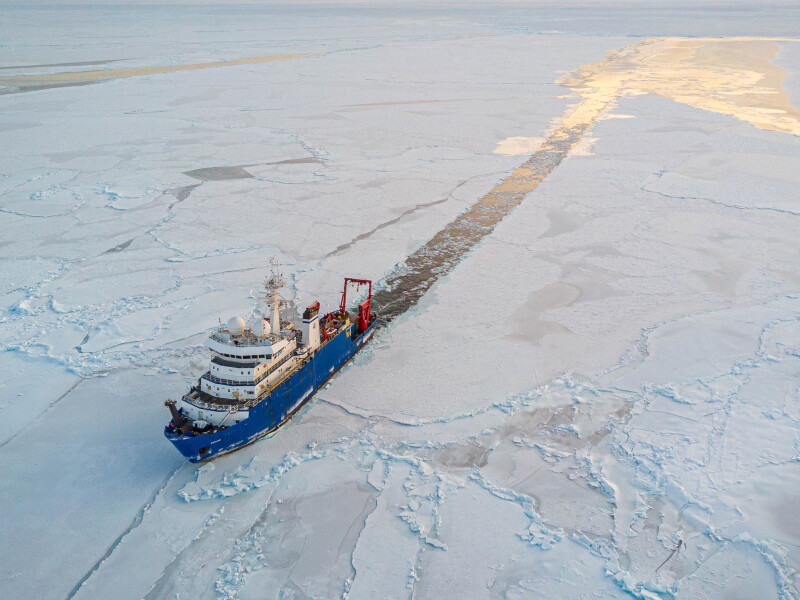
This is where the research vessel Sikuliaq is a good example. When people say the U.S. hasn’t designed an icebreaker in decades, they tend to forget about this boat. We began work on Sikuliaq in the early 2000s, and it demonstrates that we do have the domestic capability to design ice-capable vessels. Sikuliaq isn’t a heavy icebreaker like Polar Star, but that’s not the point. The point is that the expertise is here and should be acknowledged.
Before we default to outsourcing design, we need to recognize what we already have. Because once that capability is gone, it will be very difficult to rebuild.
Glosten has been involved in many unique builds. How are you seeing the market today?
There’s been a subtle shift. Clients and operators are definitely feeling the pressure around timing — when they can move forward and how quickly they need to act once they do. What we’re seeing more of is demand for adaptable, pre-developed concepts that can be tailored to specific needs, rather than starting from a blank sheet of paper.
That puts more responsibility on us to anticipate where the market is going and do a bit of crystal-ball gazing — investing internally in developing concepts we think clients will need — and hope an operator shows up needing something very close to what we’ve developed. Increasingly, they don’t have the time to start from scratch, but they still want solutions that are purpose-built. Even getting to a preliminary design can take months, so having a foundation in place helps accelerate the process.
At the same time, the earlier we can get involved, the better the outcome. The sooner naval architects and marine engineers are part of the conversation, the smoother the whole project will go. Shipyards will tell you the same thing. More engineering upfront leads to better pricing, more realistic schedules, and fewer surprises during construction.
From a cost perspective, that early engineering investment is small relative to the overall build, but it can have a significant impact over the life of a vessel. And in the U.S., we’re designing ships expected to last 40 to 50 years, so that long horizon matters.
To your point about unique builds, we’ve seen some of the more advanced designs pause in the near term. For example, we designed a hydrogen hybrid research vessel for Scripps Institution of Oceanography, but when the funding sources fell apart, the project shifted back to a diesel-fueled platform. It was a disappointing outcome, but also a valuable experience. We were able to work through many of the real challenges associated with hydrogen as a marine fuel.
Alternative fuel projects have slowed, but that work has kept our engineering mindset sharp. It’s allowed us to pivot to autonomy, hybrid-electric, and even nuclear without missing a beat.
In the meantime, the focus is on being ready — having strong concepts, the right design capability, and the ability to move quickly when clients decide it’s time to act.
The interview has been edited for length and clarity.
