



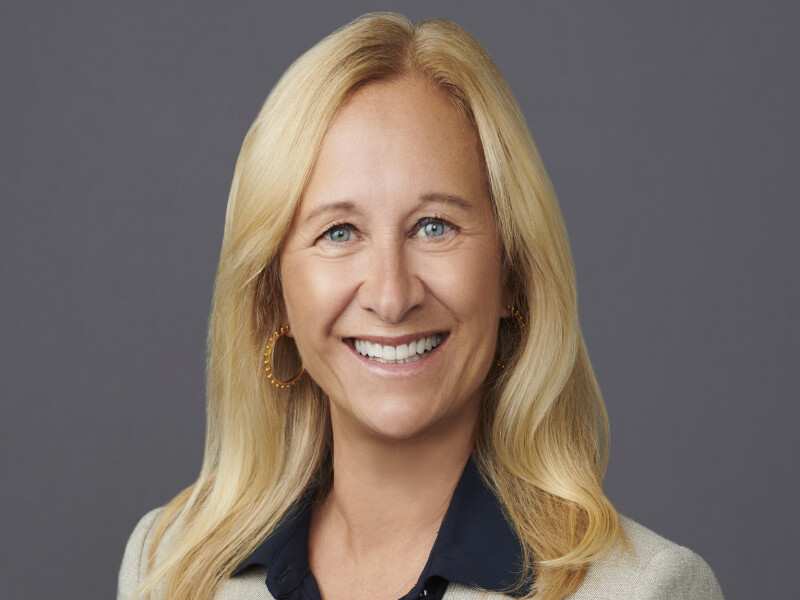
For more than three decades, Deb Calhoun has been a voice for the inland industry, from her early days at the American Waterways Operators to her long tenure with Waterways Council Inc. As she prepares for retirement, she reflects on the people who shaped her career and an industry that, as she puts it, got into her blood and imprinted itself on her heart.
You and I first met in 2015, but you were a leading voice for the industry long before. How did you get your start?
I began my career in the maritime industry in 1991 when I served as director of public affairs for the American Waterways Operators. I came to AWO from the aerospace and telecommunications sectors, serving in communications and public affairs. My boss at the Aerospace Industries Association told me that his former naval nuclear submarine colleague, Joe Farrell, president of AWO at the time, was seeking a public affairs director.
I went in for the interview in my 1990s uninspired navy-blue suit “uniform” (we all wore those for interviews back then!) and briefcase to review my experience. Joe told me to just tell him what my hobbies were and what my favorite joke was. He wanted to be sure I would fit in with the AWO staff, and he was confident he could teach me about the inland waterways industry. He was right, because I learned from some of the best in the early days. Berdon Lawrence, Joe Pyne, Bobby Guthans, Charlie Lehman, Ken Wheeler, Steve Little, and on and on.
I left AWO when my oldest son was born in 1995 to start a maritime communications consultancy practice that represented the marine salvage, offshore, international shipbuilding, and port sectors, as well as Waterways Work!, which preceded Waterways Council Inc. Naturally, Waterways Work! and WCI became my favorite clients, and I decided to work for them full-time in 2003. I was named senior vice president in 2016, appointed to interim president and CEO in 2020, and returned to my role as senior vice president when Tracy Zea became president and CEO.
This industry has a way of getting into your heart. How did that happen for you?
The people in this industry are what make this a fact. I worked as passionately as I have over the years for this industry because of the people. The people who own or work at the companies, who live on and operate the boats, who cook the food, who work in the offices, who educate lawmakers and advocate for good policy, who perform the many roles that keep it functioning day to day are the industry’s lifeblood. There has never been a time I needed help that someone from this industry didn’t drop everything to be of service to me and for the overall cause. It is a special place to work and is certainly in my blood and imprinted on my heart.
What is an episode or season during your career that stands out as particularly special or impactful?
I am most proud of the work we have been able to accomplish within the national news media to educate audiences about the criticality of the inland waterways and its infrastructure. Never wasting a crisis, during the drought of 2012, when the Mississippi River nearly closed before the rock pinnacles at Thebes, Ill., were removed by the Corps to allow for barge transiting, the inland waterways were featured in every single newspaper in America and around the world. The idea that America’s most iconic and important river system could shut down to shipping was the subject of editorials and commentaries every single day, and it highlighted the importance of the system in the U.S. and globally.
Before and after that event, we have met with hundreds of editorial boards and media outlets around the country extolling the many benefits — often out of sight and mind — of our amazing inland waterways system, to educate audiences about the intrinsic value of the rivers to our U.S. economy, the environment and our quality of life. I believe it truly has been the third cornerstone, an essential pillar that has supported WCI’s legislative advocacy and member stakeholder work that has led to success.
Your husband is also a longtime industry leader. How did you meet? More broadly, talk about the importance of relationships in this industry.
As an employee of AWO and a consultant to Waterways Work! and WCI, Rick’s company, Cargill, was a member of all these organizations, so I was familiar with him. I didn’t really get to know Rick until the aforementioned drought of 2012, when I would call and email him constantly to speak to the news media about the impacts of that near catastrophe. He was always an amazing sound bite, and reporters wanted to hear about the potential impacts of a major transportation artery from an international shipper. Rick was that guy.
At the heart of this industry are relationships, family, and colleagues who feel like family. It’s special in this regard, and I am so thankful to have been a part of it.
Looking back on your career, what’s stayed the same
I think everyone still understands that reliability and safety will always be key, but we also need partnerships (with the Corps of Engineers, Coast Guard, Congress, industry, labor, etc.) to be successful. We need recapitalization and investment to remain efficient. And we need a belief in the tenet that this system is an indispensable national asset that serves a multitude of beneficiaries.
What’s changed?
When I joined the industry 30 years ago, we spent a lot of time explaining why inland waterways mattered. Today, I think policymakers recognize our rivers are essential to the nation’s freight network. I think the challenge has shifted from proving our value to ensuring that investments are made wisely so the system is ready for the next generation.
What would you say are some industry priorities moving forward?
I think strengthening the workforce, addressing weather changes, solidifying partnerships, and utilizing new technologies will continue to be key areas of focus ahead.
How has the task and role of communications within the inland industry changed over the years?
Communicating about this industry has shifted a bit because the news media has changed. As an entity, the media has consolidated, shrunk, and some newspapers that we always dealt with have closed. Social media has taken a larger role in educating audiences about what we do and why it matters, but again, there is no AI bot or replacement for human advocates who can underscore the importance of this system. There is no better cheerleader for the inland waterways system than the people who keep it moving forward.
How can individuals and companies do a better job telling their story?
It will always be essential to share your story about why this industry and your company matter to those lawmakers and community leaders that can further the goal of modernizing the system and keeping it reliable and available to operators, shippers, and all beneficiaries. WCI makes it easy to reach out to members of Congress through our action alerts on policy issues, and we promote our members and the industry through social media. Every one of us has an opportunity — and a responsibility — to help others understand why this system matters and why continued investment is so important.
I think message consistency builds credibility and trust with our audiences, and it helps to make policymakers understand this isn’t just one company’s issue. It’s a national priority.
This interview has been edited for length and clarity.
