



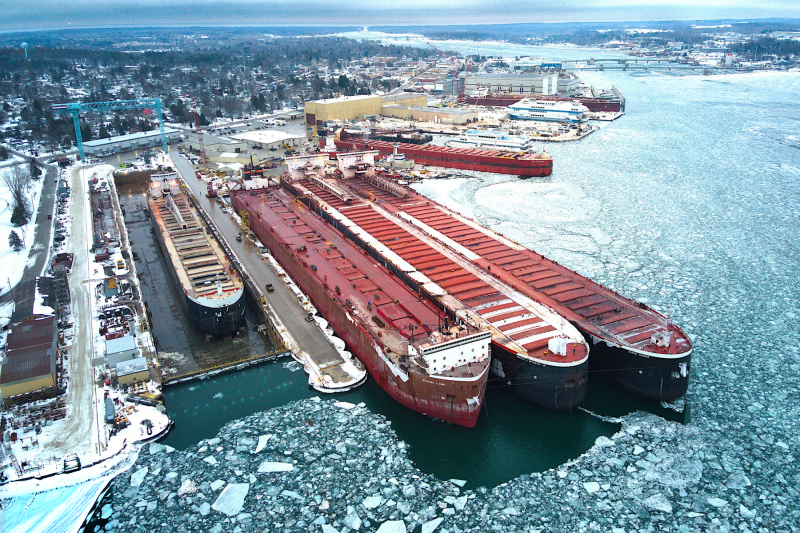
A group of Great Lakes shipyards has announced a collaborative alliance aimed at competing for Coast Guard work and expanding domestic shipbuilding capacity in the region.
Fincantieri Marine Group, Washington, D.C. — which operates Fincantieri Marinette Marine, Marinette, Wis., Fincantieri Bay Shipbuilding, Sturgeon Bay, Wis., and Fincantieri ACE Marine, Green Bay, Wis., — announced Thursday that it is partnering with Fraser Shipyards LLC, Superior, Wis., and Donjon Marine Co., Erie, Pa., to establish a collaborative framework to bring new shipbuilding programs and technology to the "Fourth Coast."
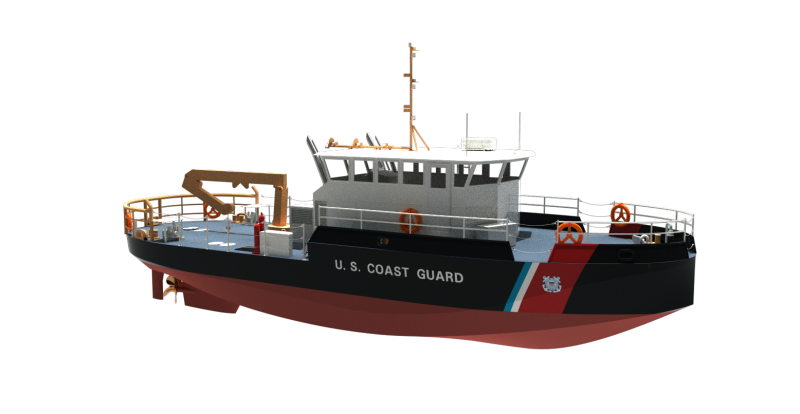
The alliance's immediate focus is a contract to build a series of new Homeland Security Cutter - Light icebreakers for the Coast Guard, the partners said.
Fincantieri Marine Group CEO George Moutafis said, "Our initial goal is to provide the Coast Guard with a ready-to-build solution for its seven new light icebreakers, and we welcome others to join us on this and other potential projects as we collectively bring significant work to the Fourth Coast. The alliance of these accomplished shipbuilders remains open to other Great Lakes companies, especially those with maritime technology and manufacturing expertise."
The Coast Guard contract pursuit comes as Marinette Marine navigates a transition in its Navy workload. In November, the Navy canceled the final four planned Constellation-class frigates, retaining only the first two hulls under construction at the Marinette yard. In December, the shipyard delivered the last Freedom-variant littoral combat ship, closing out the long-running Navy program.
Fincantieri's three Great Lakes shipyards have functioned as a coordinated multi-yard system on shipbuilding programs for nearly two decades, and the company said that model could serve as a blueprint for a broader domestic supply chain across the region.
By distributing the construction of vessels or individual components across multiple facilities, the alliance could compress delivery timelines on multi-hull programs, an emphasis under the Trump administration's broader Maritime Action Plan. The policy framework, which aims to reverse a decades-long decline that has left the U.S. building less than 1% of the world's commercial ships, aims to channel investment into shipyards, supply chain companies, and advanced manufacturing across the country.
John Witte, Jr., president and CEO of Donjon Marine, said, "This alliance reflects the kind of collaboration required to expand domestic industrial capacity and deliver important national shipbuilding programs."
Fraser Shipyards CEO Patrick Kelly said, "This Great Lakes Shipyard alliance will encourage quick mobilization and collaboration among shipbuilders and maritime companies operating in the region as we adopt new shipbuilding technologies. The Trump administration has proposed Maritime Prosperity Zones to facilitate stronger relationships among industry partners and communities to increase industrial capacity at a time of renewed investment in domestic shipbuilding."
The zones, modeled on the Opportunity Zone concept, are proposed as 10-year designated areas intended to draw private investment into waterfront communities and maritime industries, with the Great Lakes explicitly identified as a target region in the Maritime Action Plan.
In December, a bipartisan group of senators led by Tammy Baldwin, D-Wis., and Todd Young, R-Ind., wrote to President Trump urging that Maritime Prosperity Zones be established in Great Lakes states, arguing the region is "well positioned for sustained national investment" given its existing base of shipbuilders, manufacturers, steel producers, and maritime suppliers.
