


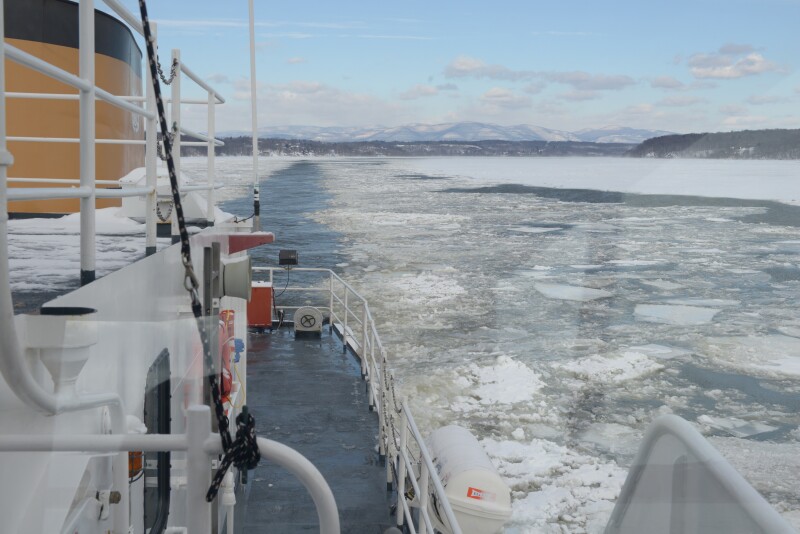
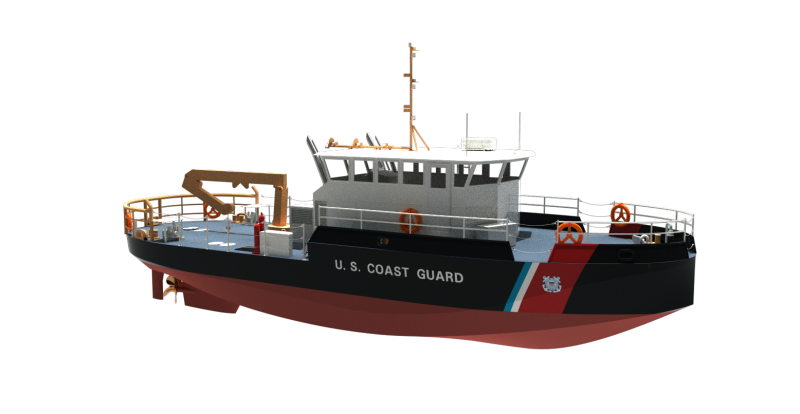
The U.S. Coast Guard has issued a request for information (RFI) to industry as part of early planning for the homeland security cutter-light icebreaker program, which could result in the construction of up to seven vessels.
The notice is intended to gather industry feedback to support acquisition strategy and solicitation development for the potential program. The Coast Guard said it is considering streamlined contracting approaches, including reduced government oversight, source selection processes, and contract requirements.
The agency anticipates the future requirement would include maturation of an existing contract design into a production-ready design, followed by production engineering, construction, testing, and delivery of the vessels.
According to the notice, the government has already developed a contract design baseline that would be provided to industry. Contractors would be responsible for advancing the design to a production-ready level and executing vessel construction and delivery.
The RFI requests industry feedback on several areas, including the draft statement of work and specifications, contract design artifacts, production feasibility and industrial base considerations, execution approaches, and program risks such as cost and schedule drivers. The Coast Guard is also seeking feedback on a potential two-phase advisory down-select process for the eventual solicitation.
The RFI comes as the U.S. government continues a broader push to expand the nation’s icebreaking fleet, which has long been considered undersized relative to growing Arctic activity and strategic competition in polar regions. The Coast Guard currently operates only two heavy polar icebreakers, the aging Polar Star and the inactive Polar Sea, along with the medium icebreaker Healy. The limited fleet has raised concerns among policymakers and defense planners about year-round access to the Arctic and the nation’s ability to support scientific research, national security missions, and maritime commerce in ice-covered waters.
To address the shortfall, the Coast Guard and U.S. shipbuilding industry have begun ramping up icebreaker construction programs in recent years. Bollinger Shipyards is currently building on the Arctic security cutter program, the Coast Guard’s next generation of heavy icebreakers, at the company's Pascagoula, Miss facility. The program is intended to recapitalize the heavy icebreaker fleet and provide sustained polar presence.
Arctic security cutter program contracts were awarded to Bollinger Shipyards and Finnish shipbuilder Rauma Marine Constructions to design and build up to six Arctic security cutters. Under the plan, two vessels will be built in Finland, with the first expected in 2028, and up to four will be built in the United States by Bollinger, with first delivery expected in 2029. The vessels will be based on the multipurpose I\icebreaker design developed by Seaspan Shipyards in partnership with Aker Arctic Technology Inc.. The Coast Guard said the approach is intended to leverage Finland’s icebreaker expertise while transferring that knowledge and production capability to U.S. shipyards over time.
Together, the Arctic security cutter program, and the proposed homeland security cutter–light icebreaker program represent a multi-tiered approach to rebuilding U.S. icebreaking capability, with heavy, medium, and light ice-capable vessels intended to support operations ranging from polar missions to domestic icebreaking and maritime security operations in northern waters.
Responses to the RFI are due April 10, 2026.
