



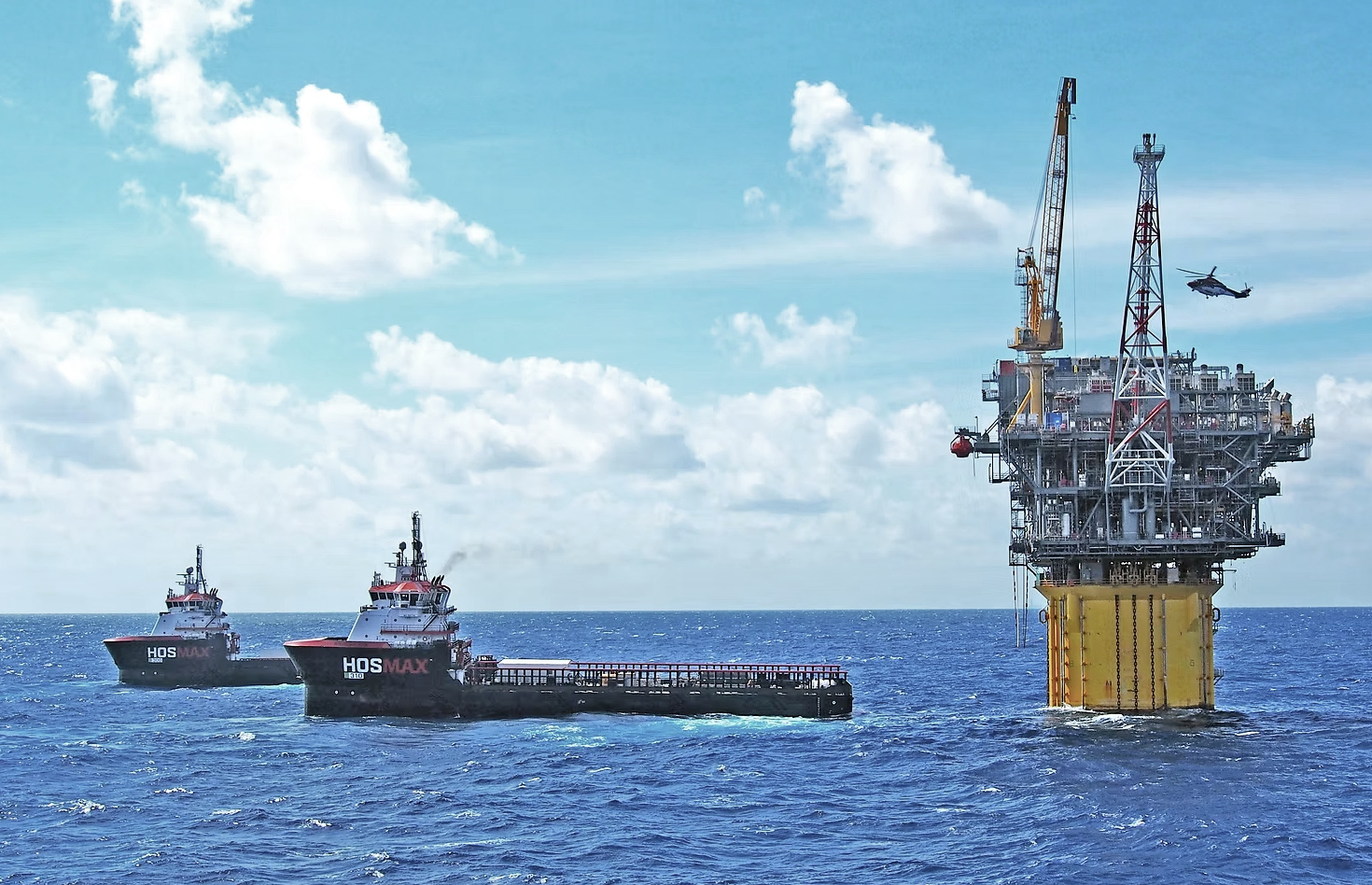
The National Reactor Innovation Center (NRIC) has selected Deployable Energy for two Nuclear Energy Launch Pad demonstrations, a full-power demo at the Idaho National Laboratory (INL) and a maritime demo in partnership with Hornbeck Offshore.
The demonstrations represent the next phase in evaluating Deployable Energy's nuclear battery platform in operationally relevant environments. The projects will inform validation and regulations for advanced nuclear energy technologies.
"This is an important progression in demonstrating how our Unity Nuclear Battery can perform at full power and in demanding real-world environments," said Bobby Gallagher, co-founder and CEO of Deployable Energy. "Our continued work with INL and [the U.S. Department of Energy's Idaho Operations Office] has created a pathway to accelerate systematically from concept to criticality and from criticality to full-power demonstrations. Expanding that work into the maritime environment with Hornbeck Offshore gives us an opportunity to evaluate the technology against a new and highly relevant set of operational requirements."
As the United States government spurs on the research and development of small modular nuclear reactors (SMRs), maritime operations present a strategic — and challenging — application, with space and weight constraints, environmental conditions, safety concerns, logistics, and system integration concerns. Deployable Energy's partnership with Hornbeck Offshore offers an opportunity to demonstrate how the company's nuclear technology can play a role in commercial marine, government, defense, emergency-response, and remote-energy applications.
"Nuclear-powered maritime operations are exactly the kind of environment where Deployable Energy and Hornbeck Offshore have the potential to create significant value for coastal communities," said Todd Hornbeck, chairman, president, and CEO of Hornbeck Offshore. "This maritime demonstration will allow us to test not only power generation but also the deployment model, from transportation and integration to operations."
The demonstration at the Idaho National Laboratory will allow Deployable Energy's nuclear reactor to function at full power, generating the technical and operational data needed to support U.S. Nuclear Regulatory Commission (NRC) licensing and future deployment of the system.
"Deployable Energy has set the benchmark for speed to criticality, moving from initial discussions to reaching criticality in just 155 days," said John Wagner, director of Idaho National Laboratory. "With their strong collaborative spirit and impressive ability to execute, we're excited to continue supporting Deployable Energy as they advance toward commercialization."
The concurrent Idaho-based and maritime demonstrations highlight the flexibility of Deployable Energy's approach to nuclear power systems, said Sanjay Mukhi, the company's chief commercial officer.
"Our objective is bigger than a single demonstration," Mukhi said. "We are leveraging the entire ecosystem developed by INL to prove out our commercial offerings through a suite of rigorous tests that showcare the Unity Nuclear Battery under real operating conditions, which creates the confidence needed for broader deployment. The Nuclear Energy Launch Pad program enables us to collaborate with outstanding companies like Hornbeck Offshore to demonstrate a commercial nuclear pathway that hasn't been done in the U.S. since the NS Savannah in the late 1950s."
Deployable Energy's Unity Nuclear Battery is a 1-megawatt-hour modular, transportable microreactor system scalable for a variety of applications.
