



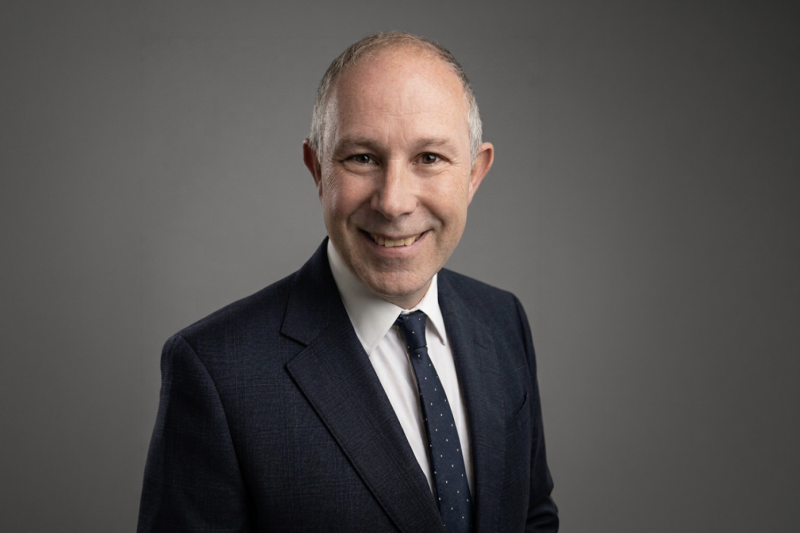
Sea Machines Robotics on Thursday announced it has hired Courtney Bradbury as vice president of program management, a newly created position that will oversee the company’s delivery of large-scale autonomous vessel programs.
Bradbury, based in Seattle, was director of development at Foss Maritime before joining the Boston-based company. He will build out a new program group by hiring project-focused personnel, marine and naval engineers, and construction management specialists.
The position reflects a change in the company’s business. Sea Machines has traditionally developed autonomy technology and supplied autonomous products. Recent awards for complete autonomous vessel builds mean it now also manages prime contracts.
“With the recent program awards of full autonomous vessel builds, it’s clear that we’ve successfully added prime contract management to our traditional business of technology development and autonomous product supply,” said Michael G. Johnson, founder and CEO of Sea Machines Robotics. “Courtney uniquely brings the right combination of technical skills, construction management, dogged offshore experience, and marine wherewithal to create and lead this new group. And I trust that he’ll deliver success.”
The company said demand for autonomy is shifting from an early innovation market toward budgeted fleet programs. Defense acquisition is moving in the same direction.
In September, Sea Machines was one of six companies that completed Phase I at-sea testing under the Navy’s Medium Unmanned Surface Vessel (MUSV) program. The Navy awarded production agreements for 10 vessels each to Galliano Marine Services, HII, and Saronic Technologies. Leidos, PAC MAR, and Sea Machines also completed the Phase I work but did not receive production agreements. All six companies will receive $15 million awards and are now eligible for follow-on production agreements.
“Michael’s vision for marine autonomy and the creation of Sea Machines more than a decade ago has given the company time to get over the learning curve,” Bradbury said. “Gaining experience integrating across a broad range of engine manufacturers and navigation systems has allowed the system to be robust against the largest set of equipment in the marine industry, rather than being built for one type of vessel or one use case.”
He added, “Sea Machines is rapidly evolving from an autonomous system supplier to an autonomous vessel supplier. The newly created department will bring additional capabilities that allow large-scale vessel building programs to be effectively executed through advanced shipbuilding techniques, supply chain management, and robust programmatic-level management.”
Bradbury is a registered professional engineer in Washington state. He holds an unlimited tonnage mate’s license and a degree in naval architecture and marine engineering from the State University of New York Maritime College. He began his career at sea before moving into vessel design and later managing offshore engineering programs.
