



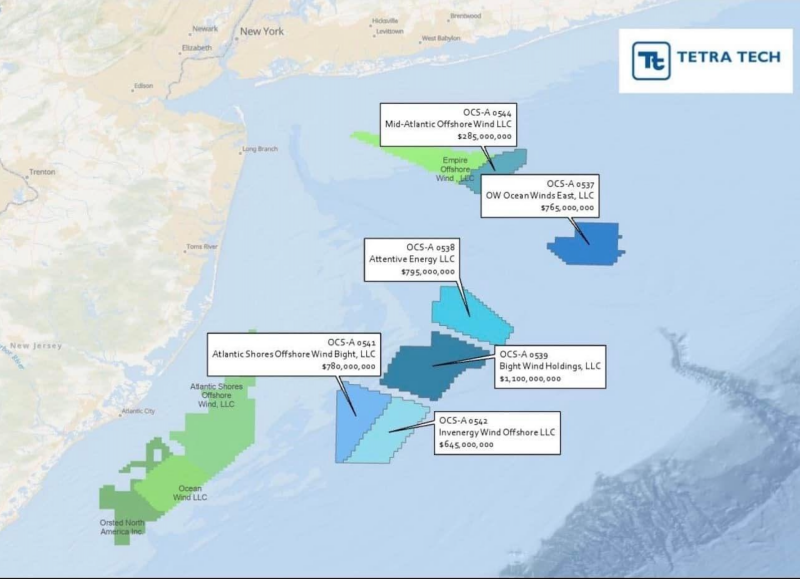
The Department of Interior reached another legal settlement, paying developer Invenergy $765 million to give up its offshore wind energy leases – the third such deal as the Trump administration pays companies to abandon plans for wind turbine arrays.
According to an Interior Department statement June 18, the developers will then “redirect that amount towards other domestic energy sources with the demonstrated capability to deliver reliable, affordable power, including the development of natural gas-fired power plants in Indiana, Wisconsin, Iowa, Kansas, and Missouri and geothermal power generation projects in the Western U.S.”
Starting in January 2025, the administration’s determined campaign to block offshore wind, solar and other renewable energy development brought pushback from wind power advocates, developers deeply invested in ongoing projects and states that saw offshore wind as key to their future energy planning.
Facing that resistance and setbacks in federal courts, the administration pivoted to a strategy of paying wind developers to go away, cutting their losses on projects not yet under construction.
TotalEnergies was the first to surrender, with a March 23 acceptance of the Interior Department’s proposal to surrender its wind leases, valued at $795 million, in exchange for a commitment to invest more in U.S. oil, gas, and LNG projects.
TotalEnergies chairman and CEO Patrick Pouyanné pointedly cast his company’s lot with the Trump administration in a joint March 23 public statement from Interior officials.
“Considering that the development of offshore wind projects is not in the country’s interest, we have decided to renounce offshore wind development in the United States, in exchange for the reimbursement of the lease fees,” said Pouyanné.
With the latest settlement June 17, Interior Secretary Doug Burgum said “companies are shifting investment back toward dependable, secure energy infrastructure that can power our economy and lower utility costs. We applaud Invenergy for recognizing the importance of baseload power and investing in energy solutions that deliver real benefits to American consumers.”
Daniel Runyan, Invenergy’s senior vice president for development issued his company’s compliant statement.
“At a time of unprecedented energy demand, Invenergy is focused on delivering reliable, affordable energy for our customers and supporting disciplined investment at scale. That is why Invenergy, with our affiliates and on behalf of our various stakeholders, will deploy additional capital into projects that can be delivered on a commercially reasonable timeline and meet customer demand while continuing to evaluate opportunities as market conditions evolve.”
The cancellation would be purchased through the government’s Judgment Fund, a reserve of taxpayer dollars overseen by the U.S. Department of Justice and the Treasury Department. This brings the total amount the Trump administration has agreed to pay to cancel offshore wind leases to more than $2.5 billion to date.
Meanwhile, environmental groups filed a lawsuit June 18 in U.S. District Court in Oregon seeking to reverse the Trump administration’s “de facto Defense Department freeze on new wind energy projects.”
The court filing contends the Defense Department used it review process to halt more than 100 proposed wind projects. Objectors include the Conservation Law Foundation, Environmental Defense Fund, Natural Resources Defense Council, the New York League of Conservation Voters, and the Sierra Club. They seek a preliminary court injunction or stay forcing the Defense Department to start considering and clearing wind projects again.
