Oregon’s public debate over offshore wind energy opened a new chapter July 24, when state planners delivered an “Offshore Wind Energy Roadmap” to the state Legislature.
Lawmakers in 2024 had passed House Bill 4080 directing the state Department of Land Conservation and Development (DLCD) to develop an “Offshore Wind Energy Roadmap” defining standards to be considered for developing and approving future offshore wind energy in Oregon.
Over 15 months, the state agency convened advisors representing a broad array of coastal and other interests, including commercial fishing and federally recognized tribes in Oregon. The process included community meetings, focus groups with community organizations and ocean users, and a 69-day public comment period.
The resulting plan including appendices and responses to public comments was published on the DLCD website. Agency officials say it “will help Oregon responsibly consider potential offshore wind energy development while addressing the needs, concerns, and interests of the many people and communities who could be affected.”
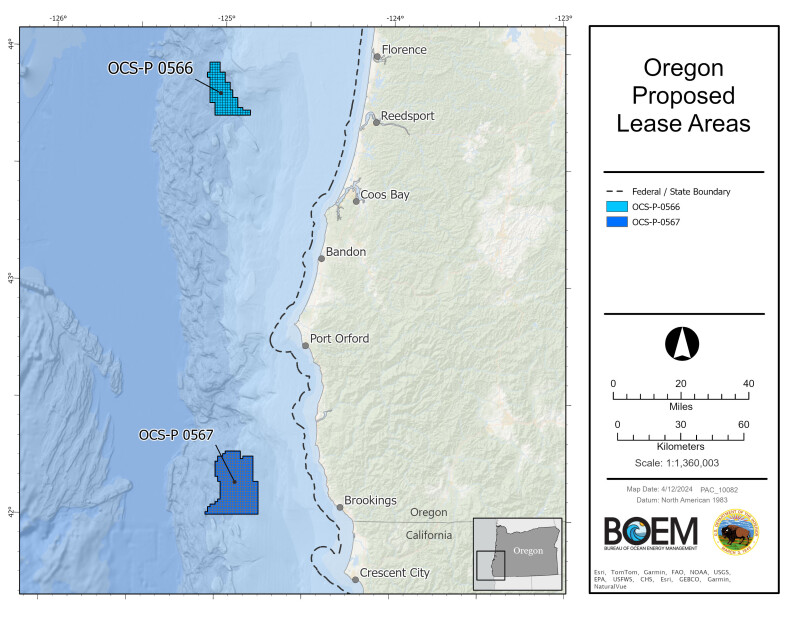
Opposition to offshore wind development led Gov. Tina Kotek in September 2024 to pull Oregon from a wind energy leasing agreement with the federal Bureau of Ocean Energy Management. Months of pressure from skeptical Oregon leaders, commercial fishing groups and Native tribal advocates led to that impasse, and in July 2025 the Trump administration rescinded all BOEM wind energy planning areas.
Developed with coastal communities and interests from November 2024 to June 2026, the roadmap “does not recommend whether offshore wind energy should be built off Oregon’s coast,” according to the document’s preamble.
In its final draft, the roadmap does not make a recommendation on whether offshore wind should be developed. It does discuss five potential future scenarios:
– Large-scale development including major port development
– Large-scale development without major port development;
– Pilot projects
– Economic participation without wind turbines
– Opting out entirely from offshore wind
“Considering these alternative pathways was important to Oregonians who participated in the Roadmap process, given important community, cultural, and environmental values and uses of the coast,” the state planners said.
The documents include policy recommendations, possible investments and other actions the state can to prepare for the future.
“It provides clear expectations on the decision points and process steps for each phase of potential development — from leasing and permitting, through construction and operation, to eventual decommissioning,” the planners say.
“There are recent uncertainties about federal policy and the future of the offshore wind energy industry. However, the need remains to advance state clean energy and climate goals, to strengthen state policies, and to build capacity and knowledge should the federal interest in offshore wind energy development off Oregon’s coast return.”