


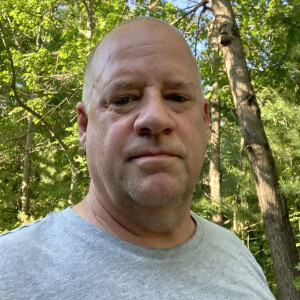
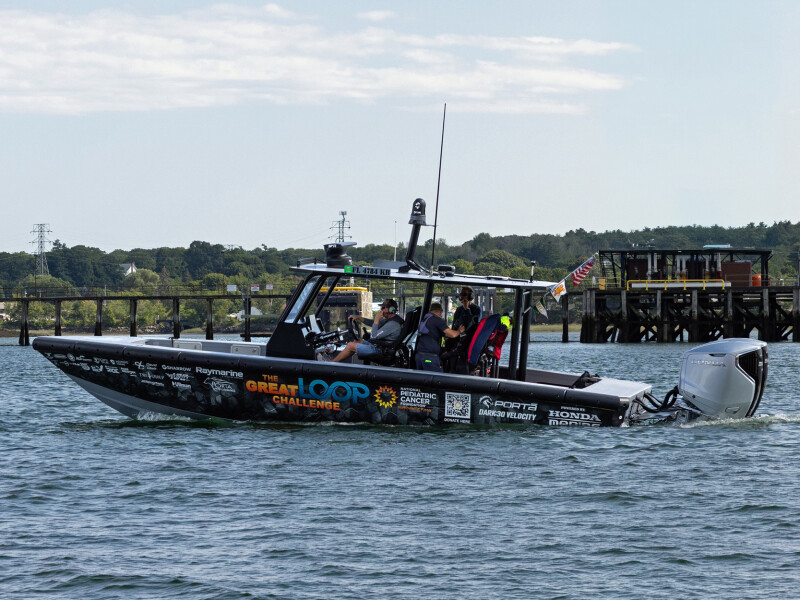
When Capt. Scott “Red” Flowers set out in his 30' Velocity powerboat this summer, it marked his second time tackling the Great Loop for a good cause. Flowers’ first Great Loop Challenge was in 2024, and both then and now, Flowers traveled the all-water route around the eastern United States and parts of Canada to raise money for the National Pediatric Cancer Foundation.
CHALLENGE DEFINED
Boaters traveling the loop — or “loopers,” as they’re known — can choose any starting point, but they typically travel counter-clockwise, motoring up the East Coast then taking the Erie Canal to Lake Ontario. Some boaters take the Hudson and Rideau rivers and the Chambly Canal to the St. Lawrence Seaway toward Lake Huron and Lake Michigan. Still others take a longer route to the Great Lakes by passing Nova Scotia en route to the St. Lawrence River.
From the Great Lakes, loopers enter the Illinois Waterway at Chicago, then make their way to the Mississippi River. At Cairo, Ill., boaters have to make another choice. They take either the Ohio River to the Tennessee River and the Tennessee-Tombigbee Waterway to Mobile, Ala., or the Mississippi River to New Orleans. Once on the Gulf Coast, boaters use the Gulf Intracoastal Waterway to reach the Florida panhandle, completing the Loop by going around the tip of Florida or the Okeechobee Waterway.
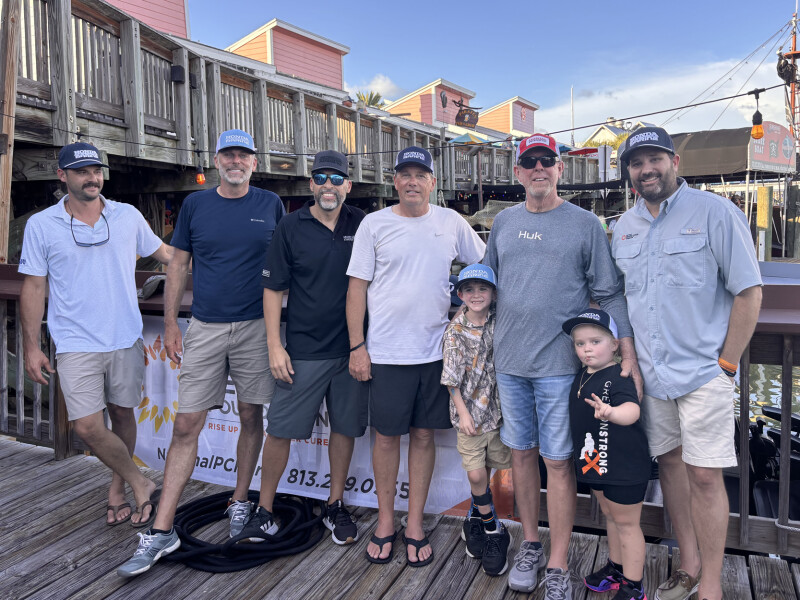
In the first Great Loop Challenge in 2024, Flowers used a 28' Canyon Bay center console powered by a 400-hp Mercury V10 outboard. He and his team covered about 6,000 miles in 19 days, 19 hours, and 50 minutes and raised about $500,000 for the Pediatric Cancer Foundation.
For the 2026 edition of the challenge, Flowers upped the ante in terms of distance and money raised. He added the leg that took the team around Nova Scotia, which increased the length to more than 7,000 miles.
Flowers completed this year’s loop, officially called the 2026 Great Loop Challenge Powered by Honda Marine, on Aug. 30, traveling 7,300 miles in 20 days, 18 hours and 38 minutes. During the journey, Flowers estimated, “Half was bad weather. Nova Scotia was beyond a shadow of a doubt the worst. The temperatures were in the 40-degree range, and we were freezing.”
THE TEAM
Fortunately, the semiretired fishing guide and former Florida Power & Light line worker was partnering with some of the marine industry’s sharpest minds in terms of impact mitigation to ease the wear and tear on him and his boat team.
When Flowers left DeLand, Fla., on Aug. 8, his team included Scott Portā, founder of Portā Products, and Jim “Slim” Berns, vice president of operations at Sharrow Marine, which makes ribbon-style propellers. Within a few hundred miles, though, the exhaustion of working around the clock to prepare the boat caught up with Portā, who became violently seasick. Flowers navigated into a port near Beaufort, S.C., where he propped up Portā in a chair on dry land and nursed him back to health with sips of Gatorade. From there, Portā wound up driving himself back home.
Before Flowers and Berns arrived at a stop in Wilmington, N.C., Flowers called Ian Johnston, a founding member of the Mythic Group, which makes large-scale, 3D-printed products.
Johnston is a longtime industry veteran who has made multiple ocean crossings, sailed countless hours at night, and is an electronics wizard. Johnston joined the team in Wilmington and finished the trip.
While Portā didn’t finish the Great Loop Challenge on the boat, he was integral to the endeavor nonetheless. After Portā committed to the project, he used his connections in the marine industry to provide Flowers’ team with state-of-the-art equipment in shock mitigation and G-force reduction. Portā put his custom running surface on the 30' Velocity boat powered by twin 350-hp Honda outboards mounted on a Portā Products hydraulic outboard transom bracket. The Portā Performance bottom has been proven in offshore racing to reduce impacts by an average of 1G. The boat was also outfitted with a custom version of Seakeeper’s Ride system, an automatic ride-control product that constantly adjusts the boat to compensate for pitch and roll.
“We took a high-speed bottom that is extremely responsive and requires 110% focus for a half-hour race and made it easy to manage and capable of carrying an extra 2,800 pounds of fuel, 1,500 pounds of gear, the T-top, and electronics,” Portā said.
Hefring Marine provided AI-assisted support tools that let the crew assess sea state, vessel response, and routing in real time. The team could also download data after a leg of the run to track how the boat handled the conditions. For improved navigation, Tocaro Blue’s ProteusCore mixed machine learning with traditional radar for improved driver awareness and identification of objects on the horizon.
SOLID FOUNDATION
Portā has worked with Velocity Powerboats President Scott McCormick for years, and he immediately came to mind when he thought about a boat for the 2026 Great Loop Challenge. Portā won his first offshore powerboat race in a 30' Velocity called Hot Ticket, and he had a cool name in mind for Flowers’ boat.
“I wanted to use a 30 because I wanted to call it the Portā Dark:30 Velocity,” he said.
The Dark:30 is one-of-a-kind with gunwales raised 8" to allow for the boat’s extra-large rubrail. The infused hull was laid up with Velocity’s race laminate, and it has a 4"-thick transom and a race-proven stringer and bulkhead system.
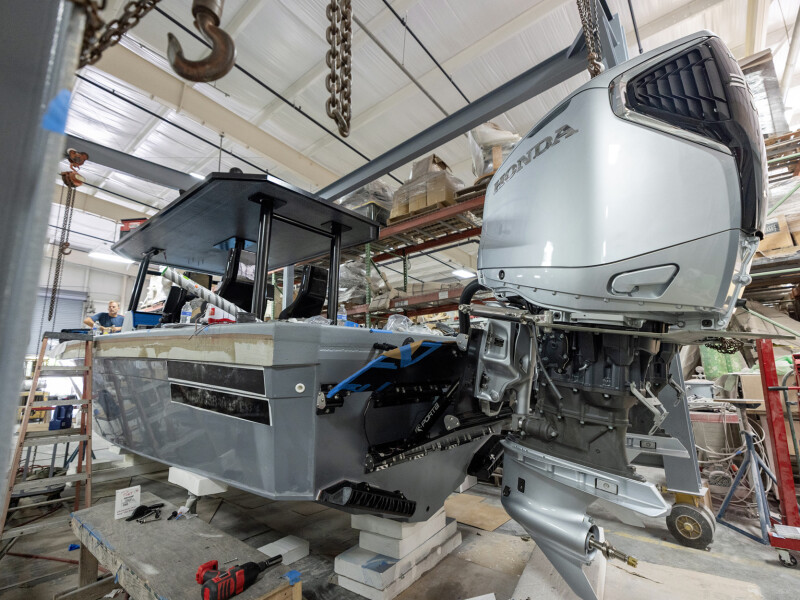
“It weighed 1,100 pounds when it came out of the mold,” Portā said. “You could thump the hull with a 2x4, and it rang like a bell. I wasn’t afraid to build some real beef into the boat.”
He built a ladder bar system out of ½"x4" aluminum plate that ran down the center of the boat from the transom to the console. They were drilled and tapped to hold down the structures for the hardtop, seat boxes, and console. McCormick and his team seamlessly integrated the system into the hull.
Aluminum tabs called “tombstones” extended from the stringers up through the ladder bars to lock the seat bases, hardtop stanchions, and the console into position.
Portā then turned his attention to the boat’s bottom.
Using Awlfair compound applied to the bottom after it was covered in AkzoNobel primer, Portā reworked the bottom to reduce drag that causes harder hits and impacts in waves and improve the efficiency of water flowing down the bottom from bow to stern.
“The Seakeeper Ride took care of the rest,” he said.
POWERFUL PHILANTHROPY
When Portā approached Honda Marine’s division director, Joshua Matthews, about the outboard manufacturer participating in the Great Loop Challenge, the decision to get behind the effort was an easy one. The company has a history of philanthropy, and its engines have proven themselves for decades as the power of choice for the United States Coast Guard.
Honda Marine believed in the challenge so much that it became the primary name-in-title partner of the 2026 Great Loop Challenge. The engine manufacturer supplied the two engines — Honda BF350s — on the Dark:30 plus spares and support along the route. Oil and gear-lube changes were performed at Portland Yacht Services in Portland, Maine, and at Dubbert’s Pro in Port Clinton, Ohio. No other maintenance items, like spark plugs or belts, required attention during the challenge.
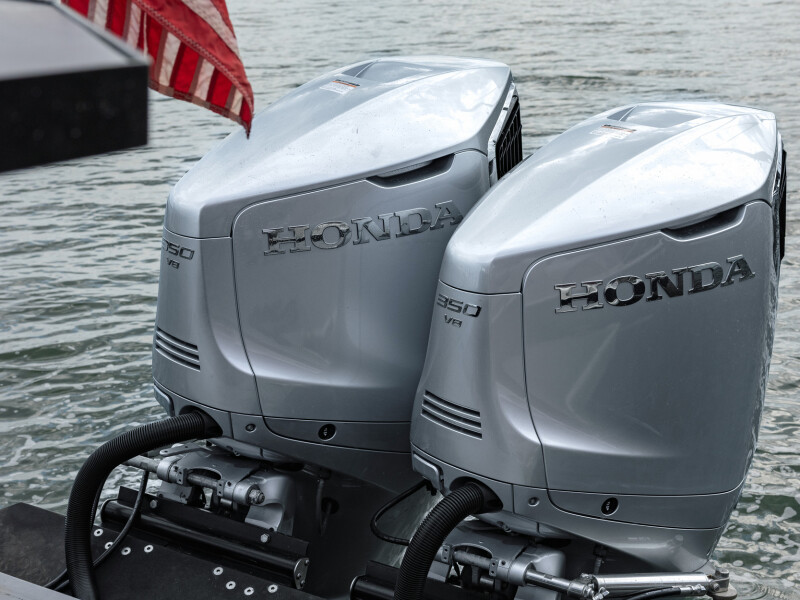
“The BF350s had been released in 2023 and [the Great Loop Challenge] was an opportunity for real-world testing and a better understanding of performance,” Matthews said. “The team put their lives in the hands of our engines to get them out of some hairy situations.”
Both Honda BF350s encountered propeller strikes, one in the Straits of Mackinac that also damaged the anti-ventilation plate. The other took place on the Tennessee-Tombigbee Waterway after the prop hit a submerged log. During a stopover in Key West, Fla., Matthews took the boat for a ride, felt only a minor vibration, and gave Flowers his blessing to finish the run.
HAVE A SEAT
Perhaps the most impactful products aboard the Dark:30 in terms of direct effect on the participants were the four Ullman Dynamics Daytona suspension seats.
Ron Carpenter, president of TMS Group in St. Petersburg, Fla., who previously drove boats for the Navy SEALs, has been at the forefront of helping the military better understand the impacts that drivers and passengers endure while operating at high speeds. Carpenter and his team are the U.S. factory representatives for Sweden’s Ullman Dynamics, a leading manufacturer of shock-mitigating systems for marine use. He met Flowers before the first Great Loop Challenge when Flowers had already committed to using a different pedestal-style seat in his 28' boat.
“A pedestal seat only mitigates vertical impact,” Carpenter said. “If you only mitigate vertical impact, the left hook you don’t see coming is the lateral impact.”
For the 2026 Great Loop Challenge, Carpenter put Ullman Dynamics Daytona seats on the Dark:30. Portā then developed a retractable helm that lets the driver extend the steering wheel to sit fully engaged in the seat in what Carpenter described as a “neutral spine position.”
“We want the driver’s arms bent and his head over his shoulders with the natural S curve of your spine absorbing the impacts,” he said.
Carpenter also gave the team rollers and elastic bands and taught them how to use the rollers to work on impingements and the bands to stretch in between segments of the challenge.
A SAFER VIEWPOINT
Setting out from Cape Cod, Mass., for Portland (Maine) Harbor at night, Johnston took the helm. He set the Teledyne Flir M364C thermal and visible camera system to see out in front of the boat to have a clear view of other boats, navigational aids, and debris.
“The M364C is the product that keeps the lights on here,” said Jim McGowan, marketing manager for the Americas for Teledyne Flir and Raymarine. “We sell so many of those cameras to recreational boaters, first responders, commercial boats, and even now for unmanned surface vessels.”
The M364C is a two-axis stabilized camera that can remove a boat’s pitching motion from what’s displayed on the screen. It also can hold a heading when the boat turns.
Teledyne Raymarine partnered with the 2026 Great Loop Challenge, sponsoring Flowers and his team with state-of-the-art equipment worth about $60,000. The list included two Axiom multifunction displays, a 12" model and a 22" display, with RMK-10 remote control keypads. The Cyclone Pro open-array radar is the same used in many commercial applications, and the CP100 sonar modules and CPT-S transducer provide some of the most accurate depth readings in the industry. The electronics package also included a CAM210 visible light IP unit. For AIS, Raymarine provided a Class B transceiver and an RNS-5 RayNet network switch to help manage the overall system.
Flowers said the navigation equipment “was second-to-none” throughout the 20-day challenge, but there were some issues that still took some old-fashioned ingenuity to fix.
“We had our bags under the console, and they were bouncing around so much that they tore out the wires under the dash, leaving us with no electronics,” he said.
PERSEVERANCE
As of early September, the National Pediatric Cancer Foundation, the beneficiary of the Great Loop Challenge, had received just over $600,000, and Flowers said the challenge is “still open for business” and continuing its fundraising efforts. Flowers, 66, is a survivor of Stage 4 cancer, and he attributed his tenacity and persistence for completing the challenge to seeing kids with cancer fighting through treatment.
Flowers said he is already thinking about the next version of the challenge. Wherever he goes next, Flowers said he will always use an open-cockpit boat.
“When the weather turns, and you get wet and cold, all that adds up,” he said. “I don’t want to feel comfort, because when the children are suffering, we should be suffering along with them.”
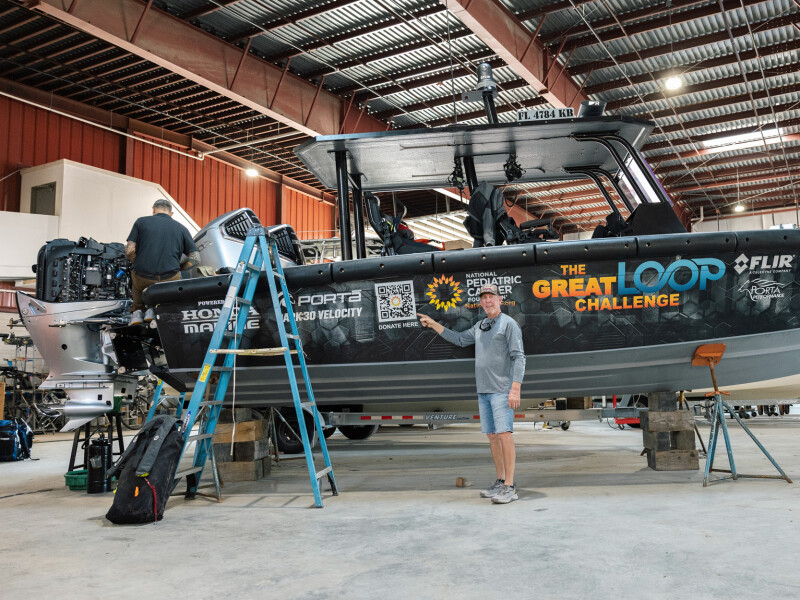
Thus far, Flowers and his team have raised about $600,000 for the National Pediatric Cancer Foundation through the 2026 Great Loop Challenge, and their fundraising efforts continue. The boat was on display at the International BoatBuilders’ Exhibit & Conference in Tampa, Fla., in September. Later, it was set to appear at the Race World Offshore Key West World Championships in Key West, Fla., the first week of November as a pace boat.
The Dark:30 will be on display at the International WorkBoat Show, Dec. 2-4 in New Orleans. During the show, attendees will hear from the team supporting Capt. Flowers and learn about how companies can get involved. More information is available here.
