


.JPEG.medium.800x800.jpg)
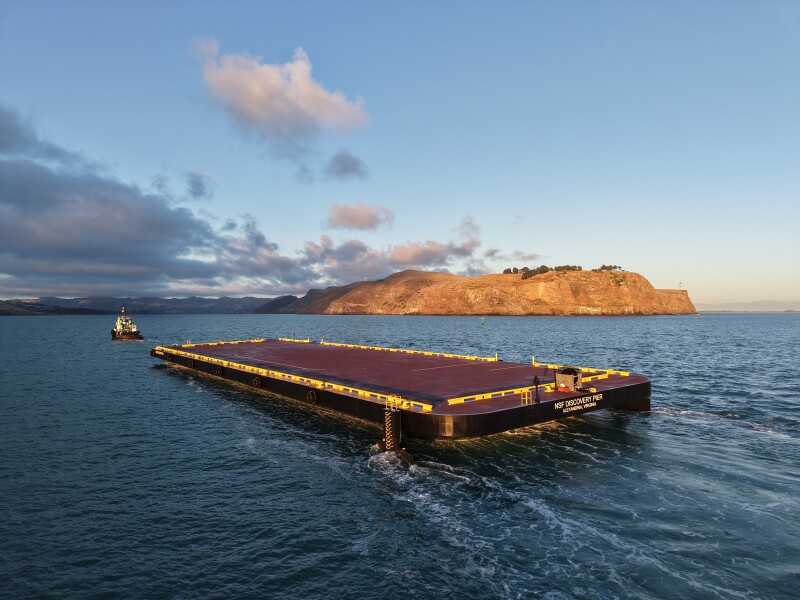
TradeWinds Towing, New Orleans, has completed a 69-day, 9,159-mile ocean tow from Portland, Ore., to McMurdo Station, Antarctica, delivering the National Science Foundation’s new Discovery Pier to support U.S. research operations.
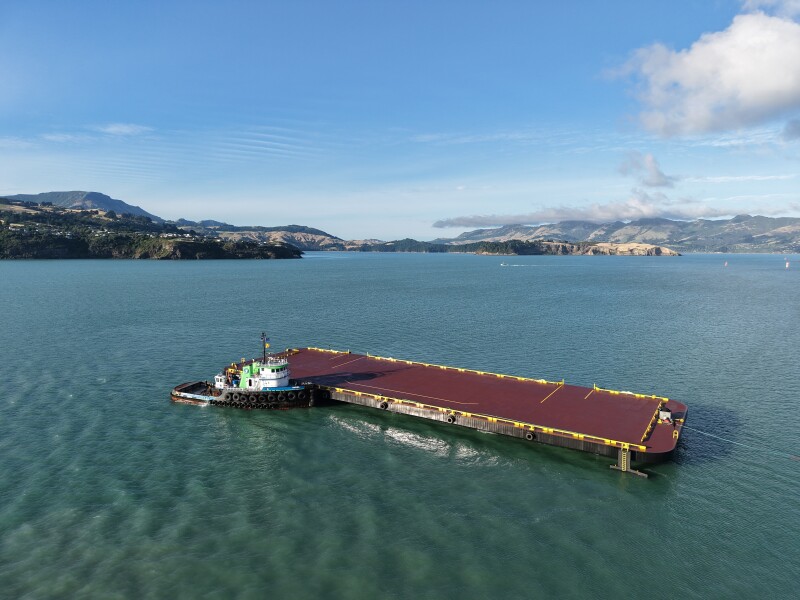
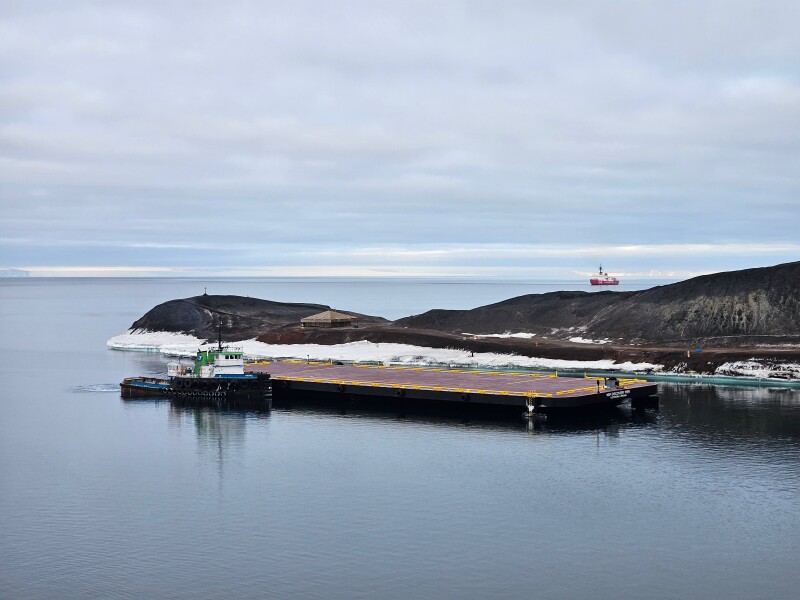
The voyage, led by the 110'x31'13.5', 3,800-hp ocean tug Rachel, departed Dec. 3, 2025, and included stops in Honolulu; Pago Pago, American Samoa; and Lyttelton, New Zealand, before the final transit across the Southern Ocean. The 328'x100' pier, designed by Glosten and constructed by Gunderson Marine & Iron, Portland, Ore., will replace McMurdo’s seasonal ice pier, which must be rebuilt or reinstalled each year.
Unlike the temporary ice structure, the new pier is designed for long-term service, with raked sides intended to mitigate ice impacts once installed at McMurdo Station in the Ross Sea.
TradeWinds began preparations in late October 2025, coordinating with Gunderson to meet U.S. regulatory requirements and International Maritime Organization SOLAS standards. At the outset of the voyage, Rachel became the first U.S. vessel approved under the revised International Maritime Organization Polar Code, which now applies to vessels over 300 gross tons.
Certification required development of a comprehensive Polar Plan and risk analysis covering navigation in ice, extreme-weather operations, engineering protections, tow-winch safeguards, and enhanced survival equipment.
The project also required compliance with New Zealand’s biofouling rules. The tug underwent diver-performed hull cleaning in Honolulu, while the newly constructed pier qualified for an exemption.
When the tug-and-tow arrived in Lyttelton on Jan. 28, TradeWinds personnel coordinated with port officials for what was expected to be a 40-day round trip to Antarctica. According to local authorities, it was the first tug-and-tow configuration of its kind to enter the harbor in more than 15 years.
Southern Ocean
For the final leg south, TradeWinds took on two ice pilots from SKUA Ice Pilots of Chile, as required under the Polar Code, and coordinated closely with the heavy icebreaker USCGC Polar Star.
The transit through the “Screaming 60s” brought sustained 20’ to 30’ seas. TradeWinds management remained in constant communication with the vessel, supported by forecasting from Locus Weather, Camden, Maine. At one point, the tug held position north of an advancing front for approximately four days to avoid heavier weather.
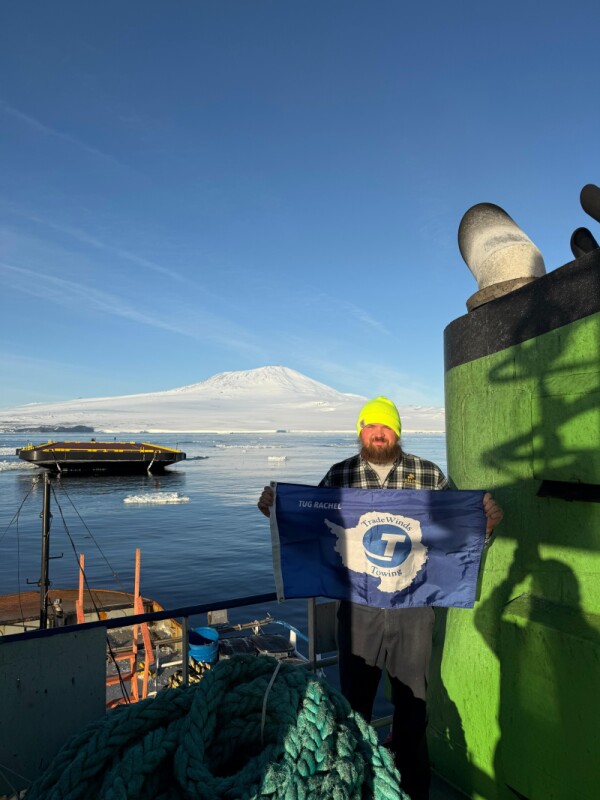
“The Southern Ocean gave the relatively low freeboard of the barge a bit of a fight during the final leg of the voyage,” said Capt. Justin Gustafson of Rachel. “Crossing safely through 30-foot seas, with the help of our shoreside team and weather services, we were able to properly plan around the weather for a large portion of the transit.”
On Feb. 20, Rachel entered the Ross Sea ice gate and made final approach to McMurdo with escort support from Polar Star, which cut a path through ice approximately 15 nm north of the station.
The pier was safely moored with support from Gunderson technical personnel, Polar Star’s crew, U.S. Navy Seabees, the U.S. Army Corps of Engineers, and representatives from the National Science Foundation.
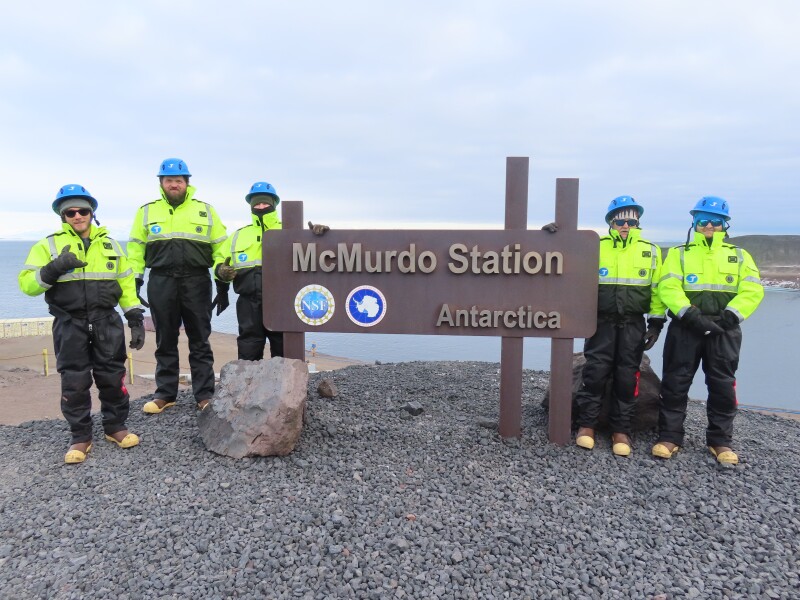
McMurdo Station serves as the primary logistics hub for U.S. Antarctic research. The new pier is expected to improve the reliability and longevity of shoreside infrastructure supporting annual resupply missions.
TradeWinds said the project required months of planning, interagency coordination, and specialized operational safeguards to complete a tow few U.S. operators undertake.
With the delivery complete, the company said it remains positioned to support future domestic and international heavy tows, including complex operations in polar environments.
