


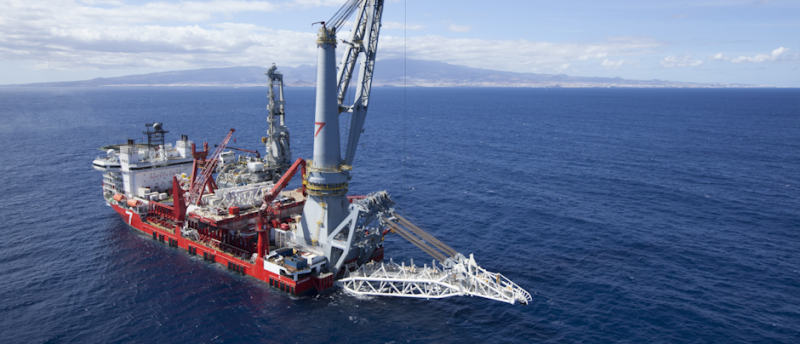
Subsea7, London, has been awarded a contract by Shell, London, for the Kaikias waterflood project in the U.S. Gulf of Mexico, the offshore services company announced Thursday.
The Kaikias field is a deepwater development located in the Mars-Ursa Basin, about 130 miles off the coast of Louisiana.
Under the contract, Subsea7 will be responsible for the transportation and installation of a subsea umbilical, riser, and rigid flowline in water depths of up to 5,400'. Project management and engineering activities will begin immediately from Subsea7’s Houston office, with offshore operations scheduled for 2027.
Subsea7 described the contract as "sizeable," which it defines as having a value of between $50 million and $150 million.
Craig Broussard, senior vice president for Subsea7 Gulf of Mexico, said, “This award strengthens our long-standing and successful collaboration with Shell. We are bringing our deepwater experience to the Kaikias development and delivering cost-effective solutions that will support safe and efficient project execution, helping Shell maximise long-term value from the field.”
In December, Shell announced it had taken a final investment decision on the Kaikias waterflood project, a secondary oil recovery initiative that will inject water into the reservoir to displace additional oil and re-pressurize the formation supplying the Ursa platform in the Mars Corridor. First water injection is expected in 2028, and the project is anticipated to extend the production lifecycle of the Ursa hub by several years.
The Kaikias field was discovered in 2014 and has been producing since 2018 via a subsea tieback to the Ursa tension-leg platform. Shell is the operator of Ursa and holds a majority working interest in the platform, and production from the Kaikias waterflood is expected to increase recoverable resource volumes by roughly 60 million barrels of oil equivalent.
Waterflood projects like Kaikias reflect a broader trend in the Gulf of Mexico and other mature deepwater regions, where operators increasingly seek to enhance recovery from existing infrastructure as costs for new, large‑scale developments continue to rise. Such strategies can deliver additional barrels at competitive breakeven costs and extend the economic life of key hubs amid volatile oil markets.
