



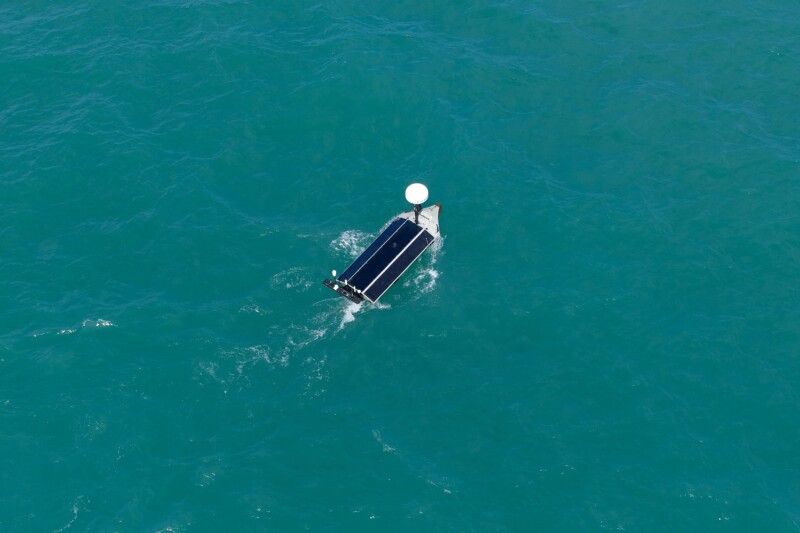
Seasats, San Diego, has deployed a fleet of Lightfish unmanned surface vessels from the Texas coast into the Gulf of Mexico for maritime border security operations.
The USVs will conduct autonomous surveillance aimed at detecting drug trafficking and other unauthorized vessel activity as part of an existing federal border security program overseen by the Office of the Assistant Secretary of War for Homeland Defense and Americas Security Affairs.
The Gulf deployment expands on Seasats’ work along the Rio Grande, where Lightfish vessels have operated since January in support of Operation River Wall. The USVs have provided surveillance and early warning alongside crewed patrol assets.
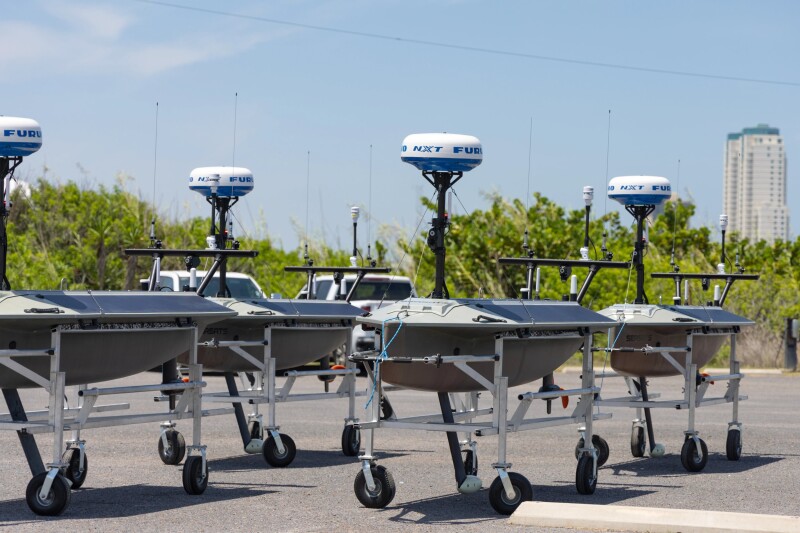
Each Lightfish is approximately 11' long and weighs 340 lbs. The solar-powered vessels are designed to remain on station for months and can be launched and recovered by two people from a boat ramp or pickup truck.
The vessels have a modular payload bay capable of carrying electro-optical and infrared cameras, signals equipment and sonar, according to Seasats.
“The Gulf is too vast to monitor with crewed hulls alone,” Seasats CEO Mike Flanigan said. “A Lightfish is solar powered and has no one aboard, so it can hold station for months in conditions where you wouldn't want to put a crew.”
The Pentagon is considering substantially expanding its use of the vessels, Reuters reported Oct. 2. Defense officials are looking at adding as many as 50 Lightfish USVs beyond a current 10-vessel test group, with expanded operations potentially creating a surveillance network extending from Texas toward Key West. Reuters reported that each Lightfish costs about $240,000.
Assistant Secretary of War for Homeland Defense and Americas Security Affairs Mark R. Ditlevson said the government is evaluating unmanned systems as a way to expand maritime surveillance while supplementing Coast Guard cutters, aircraft, and other crewed assets.
“The rapid pace of commercial innovation presents a tremendous opportunity for our Homeland Defense mission,” Ditlevson said in the Seasats announcement. “By partnering with industry to rapidly prototype and field mature, scalable technologies, we can close critical capability gaps and deliver relevant solutions into the hands of our warfighters.”
Seasats said it has more than $100 million in U.S. government contracts and has vessels operating with the U.S. Navy, NOAA, and research organizations.
