



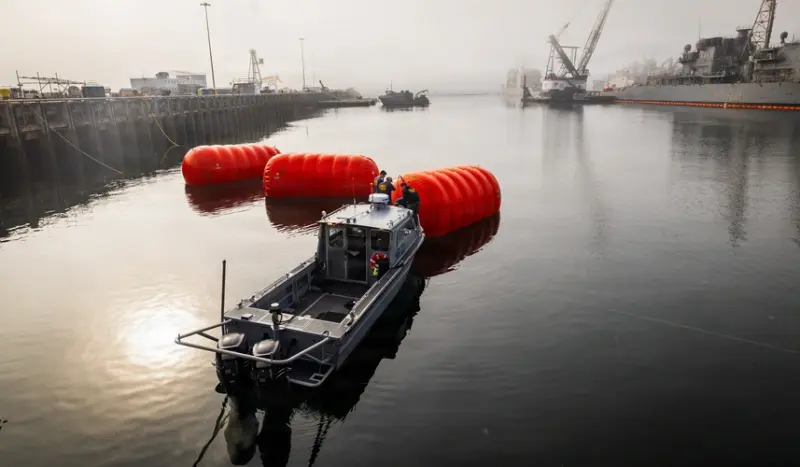
The U.S. Navy is seeking contractors for a construction program valued at up to $15 billion to build a new drydock and upgrade waterfront infrastructure at Puget Sound Naval Shipyard & Intermediate Maintenance Facility in Bremerton, Wash.
The work at Naval Base Kitsap will support maintenance of nuclear-powered aircraft carriers and submarines, including Ford-class carriers and Virginia-class submarines. The project is part of the Navy’s Shipyard Infrastructure Optimization Program, which addresses aging facilities and maintenance capacity at its four public shipyards.
Naval Facilities Engineering Systems Command is soliciting proposals for a multiple-award construction contract covering design-build and design-bid-build work. The contract has a five-year base period and one five-year option, with a combined ceiling of $15 billion across all task orders. Proposals are due Dec. 1.
The drydock project will require substantial changes to the operating shipyard. Plans include demolition and construction of piers, wharves and moorings, along with relocation or replacement of several facilities. A forge and heat-treatment shop will be built at Naval Base Kitsap-Bangor, while some employees will temporarily move into leased space outside the shipyard.
Maintaining vessel repair operations during construction will be a central challenge. The new drydock site requires demolition of a large maintenance facility beside the existing Dry Dock 3, creating a sequence of employee relocations and related construction projects, according to the Government Accountability Office.
Navy plans reviewed by GAO call for site-preparation demolition to begin in 2027, followed by drydock construction in 2030. Completion is planned for 2038. The Navy requested $14.76 billion in total project authorization in its fiscal year 2027 budget request.
The Bremerton work is one component of a broader modernization effort at Puget Sound, Norfolk, Portsmouth and Pearl Harbor naval shipyards. In a September report, GAO estimated that the program would exceed $200 billion and could require more than 50 additional years to complete.
