



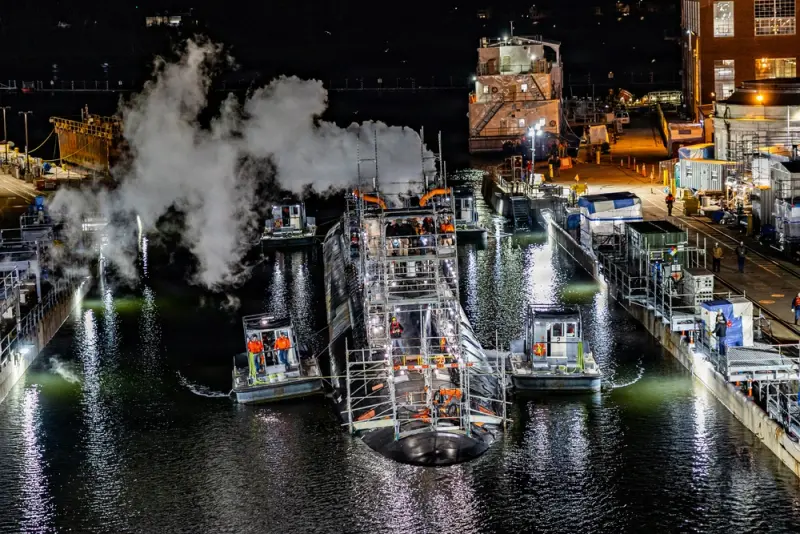
The Navy’s effort to rebuild and modernize its four public shipyards could cost more than $200 billion and take more than 50 additional years, according to a Government Accountability Office report released Sept. 25. GAO called for regular reviews of the program’s requirements, costs and risks as the work proceeds.
The Navy launched the Shipyard Infrastructure Optimization Program, or SIOP, in 2018 to address deteriorating facilities and capability gaps at the yards that maintain and modernize its nuclear-powered aircraft carriers and submarines. Based on its analysis of Navy plans, GAO said the program will take years longer and cost much more than originally anticipated. Developing the plans and estimates alone has taken longer than expected.
Changes at the shipyards have added to the work. GAO cited environmental issues that led to additional projects and expanded the scope of planned construction, including seismic risks at Puget Sound Naval Shipyard.
The Navy has established an oversight framework for SIOP using some tools and requirements associated with major defense acquisition programs. But that framework does not specify how the Navy will periodically reassess the program’s objectives and resources over the coming decades, GAO found. Without those reviews, the Navy may have difficulty determining whether projects planned today will continue to meet the fleet’s needs when they are built.
GAO made three recommendations to the Navy to address those oversight and management gaps:
- Add steps to the SIOP oversight framework for periodic reviews of the program’s approved requirements, objectives and performance measures. GAO said the reviews should confirm that the requirements remain relevant and identify emerging gaps or changes as the program moves forward.
- Set out the steps and timing for annual reviews of SIOP’s mission readiness, affordability and sustainability, consistent with applicable Navy guidance for major defense acquisition programs.
- Identify the key organizations managing SIOP projects and document their roles, responsibilities and working relationships in the program’s concept of operations. GAO directed that recommendation to SIOP’s program management office, working with Naval Facilities Engineering Systems Command and other stakeholders.
GAO also urged Congress to consider requiring annual, standardized reports on SIOP for the duration of the program. The reports would show total spending to date; original and current cost, schedule and performance estimates; and an analysis of program risks. GAO said Congress could also require similar information for individual projects selected by cost or other thresholds.
The Navy already provides Congress with reports and briefings on parts of SIOP, but it is not required to present a consolidated account of the full program’s costs and risks, GAO found. That leaves lawmakers without a consistent picture of how much has been spent, what remains to be funded and what could delay or increase the cost of the work. Major defense acquisition programs, by comparison, must provide annual status reports with detailed cost and schedule information.
GAO said the Navy has also created organizations to oversee construction and coordinate with the shipyards without fully documenting how their responsibilities fit together. Clarifying those relationships would help the Navy manage construction while the yards continue their fleet maintenance work throughout the extended program.
The Navy agreed with GAO’s three recommendations and outlined planned steps to implement them.
