



U.S. Reps. Mike Kelly, R-Pa., and Nathaniel Moran, R-Texas, introduced legislation July 23 that would create a federal tax-incentive program aimed at attracting private investment to U.S. shipbuilding and maritime manufacturing.
The Shipbuilding Investment and Workforce Act would authorize the designation of up to 100 Maritime Prosperity Zones, or MPZs, and treat the selected census tracts as qualified opportunity zones under the federal tax code.
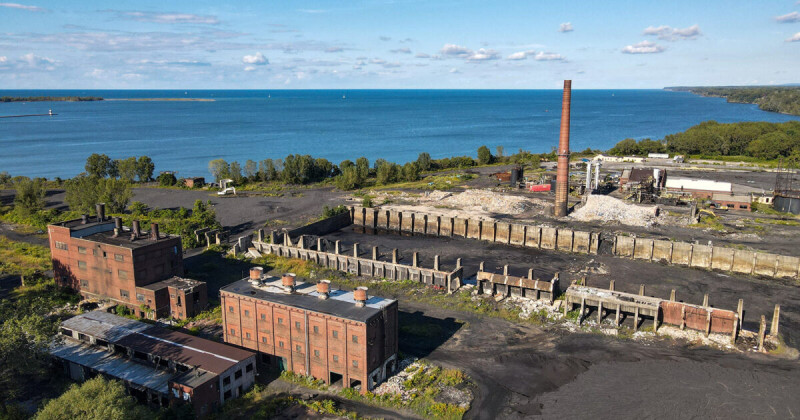
Kelly’s announcement framed the legislation around separate plans for a large shipbuilding operation along the Erie, Pa., waterfront. His office said a new Erie shipyard supporting Navy construction could directly create about 1,000 jobs.
The bill itself, however, does not designate Erie or any other location as an MPZ. Instead, it establishes a national selection process through which the secretary of commerce would nominate eligible census tracts in consultation with officials from the Defense, Navy, and Transportation departments, the Office of the U.S. Trade Representative, and the Office of Management and Budget.
A tract would have to be considered an appropriate location for maritime industry operations. Once Commerce submitted a nomination, the Treasury secretary would certify the tract and designate it as a qualified opportunity zone.
Property and businesses receiving the tax treatment would have to operate substantially in connection with maritime activity. The legislation defines eligible work broadly to include the construction, reconstruction, repair, rehabilitation, or refurbishment of shipyards, ports, harbor facilities, and vessels.
The bill also lists several related industries that could qualify, including fabricated-metal manufacturing, ship and boat building, ship repair, crane and hoist manufacturing, marine navigation-system manufacturing, water-transportation support, freight transportation, and engineering services.
The proposal is modeled on the Opportunity Zone program established through the 2017 Tax Cuts and Jobs Act. Its sponsors said MPZs would connect private and allied investment with waterfront communities, shipyards, suppliers, advanced manufacturers, and maritime workforce programs.
The legislation would also extend certain tax treatment available to qualified rural opportunity funds to investments made through qualified maritime prosperity funds.
“U.S. strength abroad depends on the revitalization of American shipyards,” Moran said. “The Shipbuilding Investment and Workforce Act gives American investment a reason to bet on American shipyards again.”
Kelly described the measure as both an economic and national-security initiative and argued that the United States needs additional capacity to compete with China in commercial and naval shipbuilding.
“Expanding America’s shipbuilding production is vital for economic growth and national security,” Kelly said. “The Shipbuilding Investment and Workforce Act takes a major step toward making America the dominant ship producer in our hemisphere, if not the world.”
Kelly’s office cited estimates placing the U.S. share of global commercial shipbuilding below 1%, compared with more than 53% for China. A summary released with the bill said the United States had five oceangoing commercial vessels under construction in 2022, compared with 1,794 in China and 734 in South Korea.
The proposal follows the Trump administration’s Maritime Action Plan, released in February. The plan calls for increased investment in domestic shipyards, development of the maritime workforce, changes to government vessel procurement, streamlined regulations, and more reliable long-term demand for U.S.-built ships. It also recommends establishing geographically diverse Maritime Prosperity Zones, including locations along rivers and the Great Lakes.
The Chamber of Marine Commerce, Lake Carriers’ Association, Steel Manufacturers Association, American Iron and Steel Institute, and American Shipbuilders Suppliers Association announced support for the bill.
The proposed tax-code changes would take effect after Dec. 31, 2026. The legislation directs the Commerce Department to begin the zone nomination and notification process by July 1, 2027.
