



Committees in both the House of Representatives and Senate have passed their versions of the Water Resources Development Act of 2026 (WRDA), with the legislation now headed to the full House and Senate.
The House Transportation & Infrastructure (T&I) Committee voted unanimously July 14 to approve H.R. 9497, with sections addressing funding and policy related to ports and harbors, the nation’s inland waterways, flood and storm risk management, the environment, and other water resources infrastructure.
“Not only does WRDA 2026 help build and maintain safe and reliable waterways, flood protection, and other water infrastructure for our country, it streamlines Army Corps of Engineers’ processes, provides reforms to improve project delivery, and empowers local stakeholders,” T&I Committee Chairman Sam Graves (R-Mo.) said following the committee vote.
Ranking Member Rick Larsen (D-Wash.) underscored the nationwide impact of waterways infrastructure.
“The Water Resources Development Act of 2026 continues our committee’s biennial efforts to improve water resources infrastructure across the country, grow our economy, ensure communities can affordably access U.S. Army Corps of Engineers’ expertise, and build resilient infrastructure in the face of more frequent and severe storms,” Larsen said. “In the Pacific Northwest and across the country, investments in ports, harbors, and inland waterways support good-paying jobs and are key to long-term economic growth. I look forward to WRDA 2026 passing the full House soon.”
The House version of WRDA 2026 would authorize 133 new feasibility studies, including 14 projects the Corps of Engineers has already vetted.
For stakeholders of the inland waterways, a key provision in the legislation is the establishment of the Office of Inland Navigation Construction Management, which would be led by a new inland program manager reporting directly to the deputy commanding general for civil works and emergency operations. The office would develop and maintain an inland waterways program management plan, oversee inland waterways construction and major rehabilitation projects, oversee funding for those projects, and provide updates at every meeting of the Inland Waterways Users Board, with all projects developed in accordance with the Corps’ Capital Investment Strategy (CIS).
The bill would also establish the Office of Water Supply, Water Conservation, and Drought Resiliency; the Office on Technical Assistance and Community Outreach; and the Office on Alternative Delivery Methods.
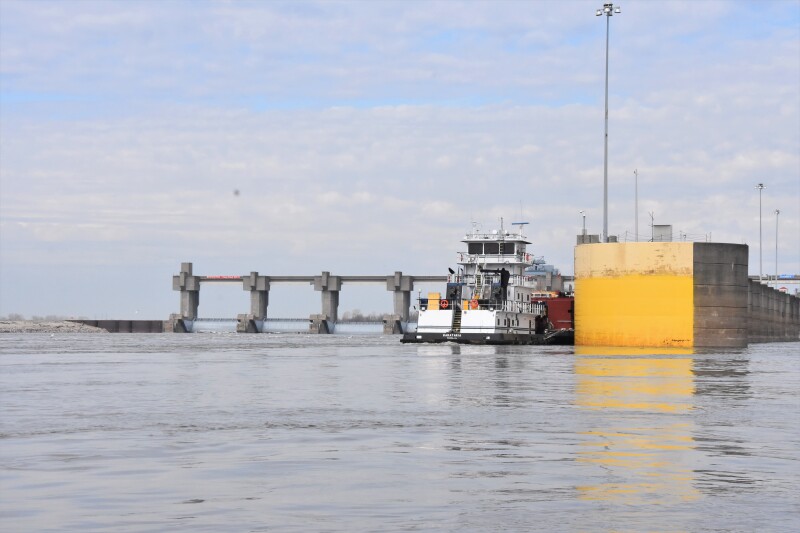
The inland navigation construction management office provision would address a major issue with the Corps’ delivery of new locks and dams on the system, like Kentucky and Chickamauga locks on the Tennessee River, both of which have seen drastic cost overruns and delays.
Tracy Zea, president and CEO of Waterways Council Inc. (WCI), praised House T&I Committee members for directing the Corps to establish the inland navigation-focused office in its WRDA bill.
“WCI is encouraged by the inclusion of the provision in the House WRDA bill to create an Office of Inland Navigation Construction Management,” Zea said. “Given that inland waterways lock and dam infrastructure modernization over the past 28 years (1997-2025) has resulted in the completion of only three projects, significant cost overruns, and schedule slippages, WCI initiated and urged this idea to create more efficiency and accountability in project delivery.”
WCI released a white paper in February calling for “a new programmatic approach for delivering major projects.” Rather than individual Corps districts studying, engineering, contracting, and managing major lock projects, the WCI report called for a central office charged with executing major inland waterways infrastructure projects from start to finish. The House T&I Committee’s draft of WRDA 2026 names that office as its first provision.
“This office within Corps headquarters will serve as the central information hub for Corps’ districts and divisions to provide more timely, accurate, and consistent information on the inland construction program for the Corps, industry, the Inland Waterways Users Board, and Congress,” Zea said.
Beyond the newly formed offices, the House version of WRDA includes provisions to improve Corps’ accountability to Congress, strengthen flood and coastal storm risk management, and reauthorize the High Hazard Potential Dam program under the Federal Emergency Management Agency’s National Dam Safety Program.
The Senate Environment & Public Works (EPW) Committee unanimously passed its version of WRDA 2026 on July 17, with EPW Committee Chair Shelley Moore Capito (R-W.Va.) and Ranking Member Sheldon Whitehouse (D-R.I.) applauding the bipartisan support for the measure and its relevance to their home states.
“WRDA 2026 is an incredible bipartisan achievement that will strengthen water resources infrastructure and increase access to clean and safe drinking water nationwide,” Capito said. “I look forward to the impact this bill will have on my home state of West Virginia as it supports flood risk management efforts, restores ecosystems, strengthens cybersecurity for critical water systems, and provides vital funding for water infrastructure projects across our state. I am proud to see this legislation move forward with strong bipartisan support.”
“Unanimously advancing this significant package demonstrates bipartisan commitment to maintaining and upgrading the nation’s water infrastructure,” Whitehouse said. “The Ocean State stands to benefit much from this bill, which supports investments in safe drinking water and wastewater systems as well as flood risk management, ecosystem restoration, and navigation.”
The Senate version would authorize 15 new water resources projects and 61 project feasibility studies.
Both measures will now go before the full House and Senate. If passed, the two bills then will be reconciled in conference.
