


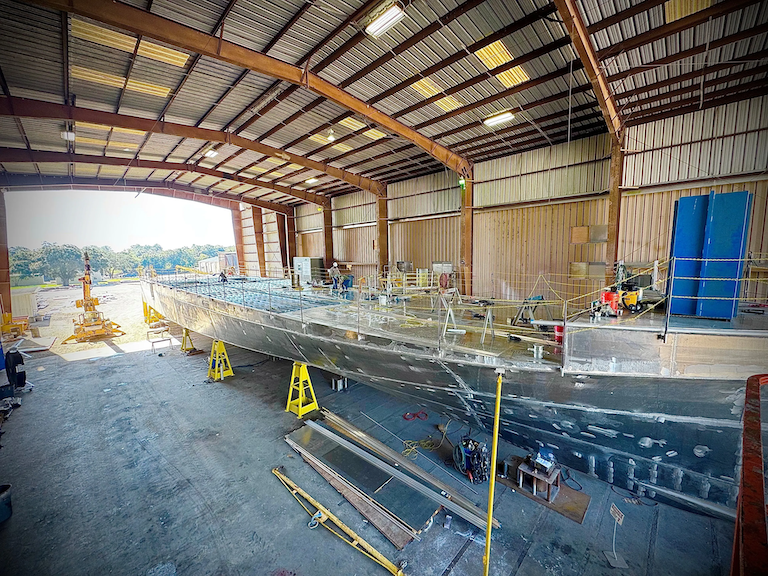
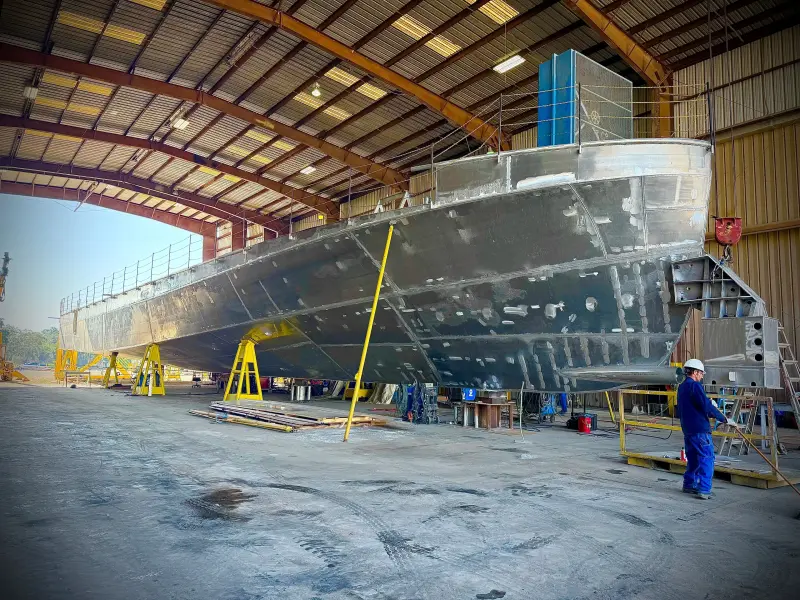
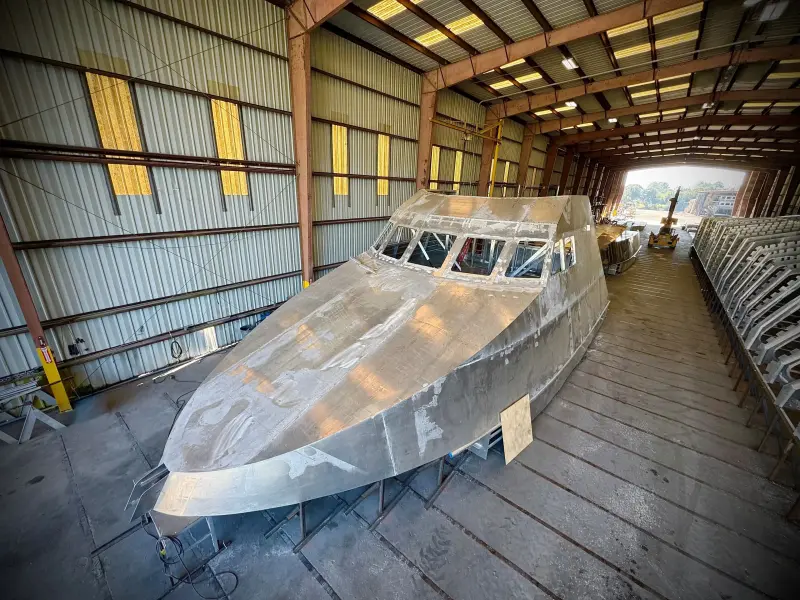
Huntington Ingalls Industries has been awarded a U.S. Navy contract to build 10 Romulus unmanned surface vessels for the service’s Medium Unmanned Surface Vessel (MUSV) program, the company announced Sept. 29.
The vessels will use HII’s Odyssey Autonomous Control Solutions, a modular system designed to handle navigation, onboard systems and payloads, and coordination with manned and unmanned platforms with limited human intervention.
HII is working with Louisiana production partners Breaux Brothers Enterprises, Halimar Shipyard and Bayou Metal Supply & Manufacturing. The Romulus program was developed in partnership with Beier Integrated Systems and Incat Crowther.
The announcement did not disclose the contract value or delivery schedule.
“HII has made deliberate, early investments in the development of autonomous systems, advancing capabilities essential to the Navy’s hedge strategy,” said Chris Kastner, HII’s president and CEO. “We remain firmly committed to supporting the U.S. Navy’s vision and accelerating this critical capability from production to operational deployment.”
HII said it began securing production partners, suppliers, capacity and infrastructure for Romulus in 2025 to prepare for construction. Its production model distributes component and assembly work among regional shipbuilders and manufacturing partners before final vessel integration.
“Unmanned vessels ultimately must be built, integrated, tested and sustained as part of a fleet,” said Andy Green, president of HII’s Mission Technologies division. “As the nation’s largest shipbuilder, HII understands that challenge from both sides.”
Before the award, HII and partners Applied Intuition, Greenroom Robotics and Rodi Marine completed the MUSV program’s evaluation phase. Navy-monitored testing took place over 13 days in the Gulf of America, according to HII.
The evaluation included a 420-nautical-mile endurance mission completed over 28 hours. HII said its autonomy system met all established success criteria during the mission.
Odyssey’s open architecture is designed to accommodate additional sensors, command-and-control technologies and artificial intelligence algorithms. The system enables unmanned vessels to assess their surroundings, navigate, manage equipment and execute missions, according to the company.
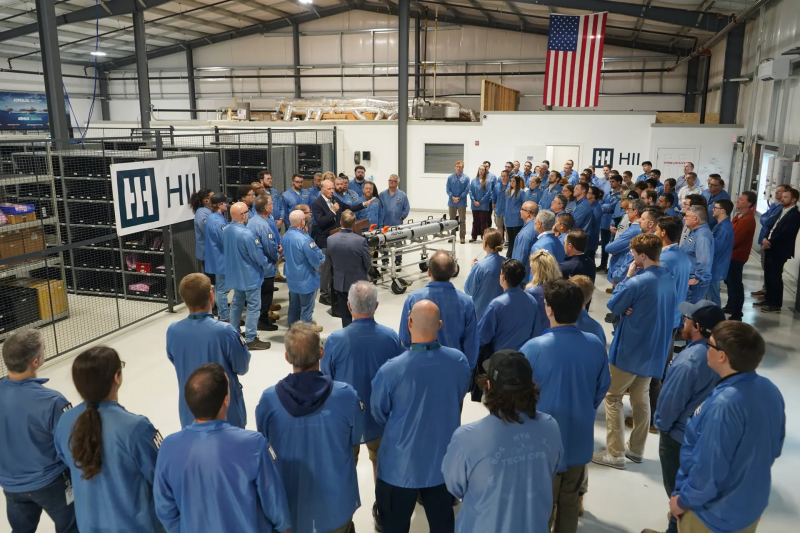
In September, HII added 10,000 sq. ft. to its unmanned systems manufacturing facility in Pocasset, Mass., increasing production space by 25% to 50,000 sq. ft. The expansion supports construction and integration of Remus unmanned underwater vehicles and Romulus unmanned surface vessels, including production of the Navy’s Lionfish small unmanned undersea vehicle, based on the Remus 300 platform, and the Remus 620.
The Navy awarded HII an option-year contract for continued Lionfish production in July. The facility will also support integration of Odyssey autonomous control software, simulation and modeling capabilities, and autonomy hardware for Romulus vessels.
