



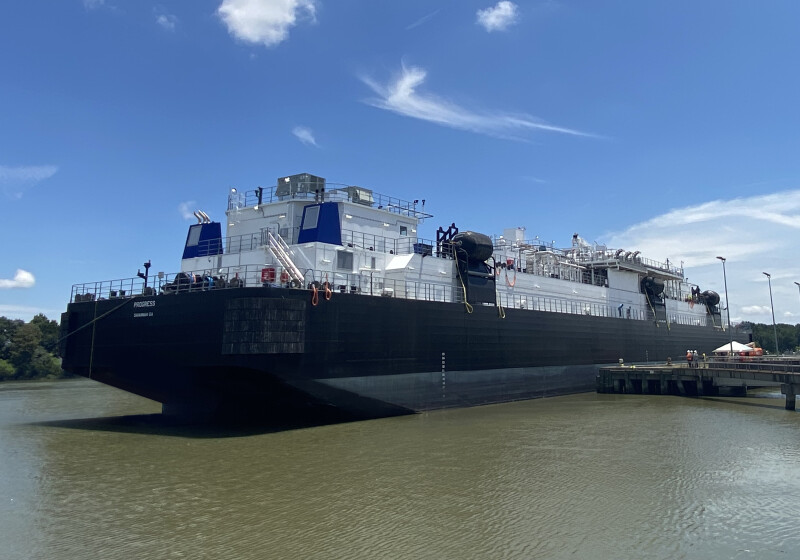
A new policy letter gives Coast Guard captains of the port (COPTs) updated guidelines for the bunkering of liquified natural gas (LNG) and other alternative fuels, as vessel operators and designers continue the industry’s evolution toward reduced carbon emissions.
The letter was effective July 24 and supersedes previous policy letters issued in 2015.
The new OES Policy Letter 01-25 guidelines “aim to address the rapid development and implementation of alternative marine fuels given the gaps in existing U.S. regulations, which are primarily focused on the bunkering of traditional petroleum-based fuels,” according to a Coast Guard summary. “This policy letter establishes a risk assessment model using current industry standards rather than prescriptive requirements and encourages collaboration with local Harbor Safety Committees to leverage local expertise to address hazards and identify risks.”
“Due to the absence of specific prescriptive regulations for bunkering LNG and other alternative marine fuels, the COTP should use their authority to require that an initial bunkering proposal be submitted,” according to the guidelines.
Other recommendations note:
- The bunkering proposal should be initiated by the fuel supplier with sufficient time for the COTP to review for any areas of concern prior to the bunkering operation. The proposal should include information on the fuel to be bunkered, anticipated date ranges, location, facility, vessel(s), and company(ies) that will be involved in the bunkering operation.
- In return, the COTP should provide, at a minimum, a copy of this policy letter for guidance about facilitating the bunkering operation.
- Risk assessment: COTPs should use their authority to require that a risk assessment be conducted for the proposed alternative fuel bunkering operation.
- The COTP should require the fuel supplier to submit a risk assessment plan for review prior to the risk assessment being conducted.
- The plan may be submitted in conjunction with or combined with the bunkering proposal and should include a list of proposed participants, the standards and methodologies to be used for assessment of risk, technical details on the bunker supplier vessel or facility and receiving vessel, qualification and training of personnel directly involved with the transfer, assumptions to be used throughout the risk assessment, and any pre-identified hazards to be discussed.
