From detection to action: Enabling better decision-making offshore
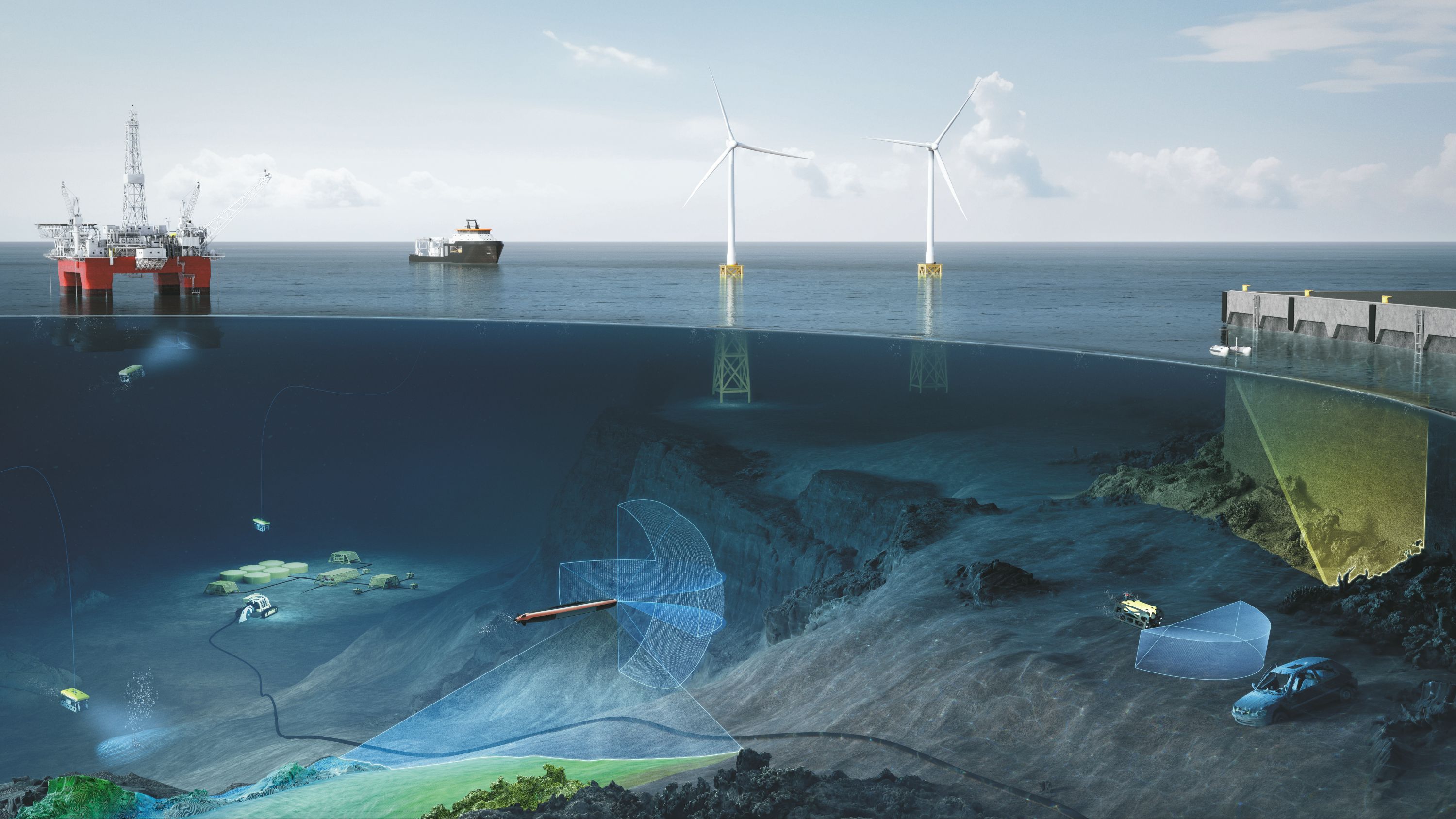
Detecting something offshore is only the beginning. Ahead of the International WorkBoat Show in New Orleans, Alex Kern, KONGSBERG’s VP Sales for the Americas, considers how operators can close the gap between discovery and decision-making, why advances in maritime robotics are opening up fresh opportunities, and where the new KONGSBERG fits in.
Alex Kern, Vice President Sales, Americas | KONGSBERG
KONGSBERG’s Alex Kern presents a common scenario. Imagine, he says, that a survey vessel inspects a section of pipeline. The captured data is then processed, analysed and any areas of concern are identified. Decision makers then have to conclude how to act upon those potential anomalies, including determining whether to mobilise another asset or vehicle to take a closer look.
It’s a situation underlining the reality that detecting an issue is usually only the starting point of a much longer process. Operators need to know precisely where it is, understand what has changed and what sort of response is necessary, with each step of that journey depending on the intelligence gathered in the one before it.
“But what if there’s ways to compress that entire process?” asks Kern. “I think that’s a genuinely exciting opportunity for the entire offshore market.”
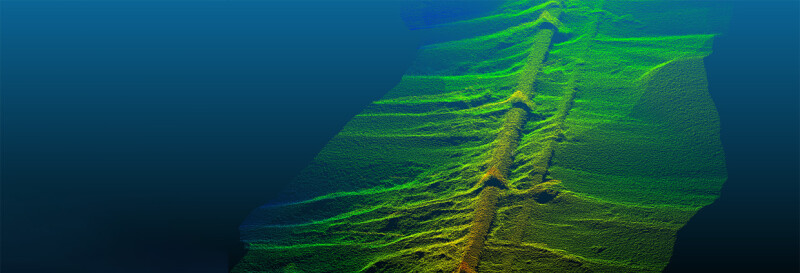
High-resolution survey data helps operators detect and position features on and around subsea infrastructure.
Enhancing efficiencies
So, what does that kind of compression look like? Again, Kern asks us to use our imagination.
“Now, imagine the same inspection with high-resolution sonar, precise positioning and better ways to share and analyse the data,” he says. “The sonar picks up a feature in detail and positioning gives the team an exact location. Then, with optimal data management and better visualisation, the new survey is seamlessly compared to earlier survey records, rapidly helping establish whether the feature is new or has changed. With that information in hand, the operator can decide whether to keep monitoring, investigate further with a more detailed autonomous underwater vehicle (AUV) survey, or send a crewed vessel to carry out maintenance.”
Kern continues: “If operators can reach that decision sooner, they can plan the follow-up while the information is still fresh and make better use of the vessels and vehicles available to them. So, what historically might have required multiple vessel mobilisations and lengthy analysis could be accomplished through a more connected, efficient combination of crewed and autonomous assets.”
This, it becomes clear, is the sort of thinking – and capability – that’s central to KONGSBERG’s key message for the 2026 International WorkBoat Show: From Detection to Action.
Added value data
One of the biggest opportunities in ‘closing the gap’, in Kern’s view, comes after the data has been collected.
The specialist expertise needed to interpret survey data and enable the right calls to be made (at the right time), may be thousands of miles from the vessel. That means experts need to access the relevant information quickly, as well as having the ability to compare it with what the operator already knows about the site.
Kern points to KONGSBERG’s Blue Insight ecosystem, including Geomatics, as an example of how operators can organize ocean data, improve accessibility and integrate it across platforms so teams offshore and on shore can extract optimal value. He also sees a growing role for artificial intelligence and automated analysis in flagging anomalies and identifying changes across repeated inspections. On a pipeline survey, he stresses, that could help specialists “laser focus” their attention on what has changed and what, potentially, needs to be done about it.
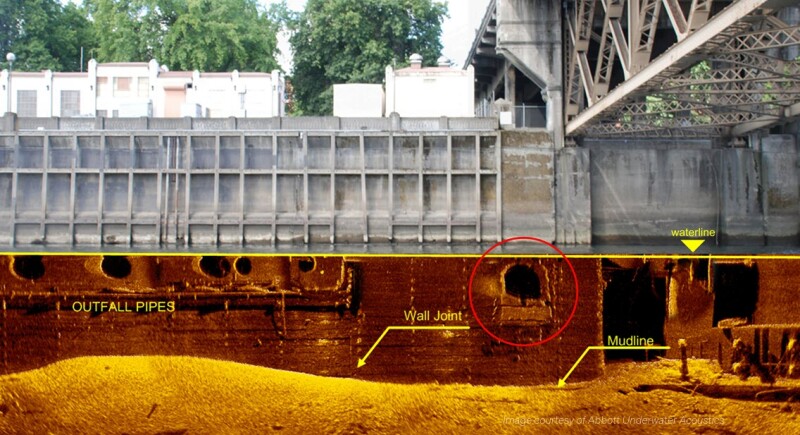
Survey visualization adds context above and below the waterline, helping teams identify features that require closer review.
“The future isn’t just about collecting more ocean data,” Kern states. “It’s about making ocean data more valuable.”
Defining developments
Kern believes the offshore industry is also on the cusp of further, radical change that he says has been under the radar for many industry stakeholders. He points to the fact defense investment is now driving accelerated development in autonomous underwater and surface systems, drawing new companies into maritime robotics. He expects a fresh wave of opportunity to emerge as those capabilities find wider commercial use.
Offshore energy, subsea infrastructure monitoring, ocean science and deep-sea exploration all need information that can be costly to gather using crewed vessels alone. Remote and autonomous platforms could “fundamentally change the economics equation” on repeat surveys and monitoring in particular. Kern sees a future in which a workboat, a remotely operated vehicle and an autonomous system may all have a part to play on the same job, each taking on the tasks it is best suited to.
That creates obvious opportunities for operators seeking efficiencies, but also for the companies building robotic platforms… and that includes KONGSBERG. Any asset needs to know where it is, to navigate, to communicate and collect reliable data. KONGSBERG can supply those capabilities as part of its own integrated product range, with the commercially proven HUGIN AUVs a prime example. It can also supply them to equipment manufacturers developing their own platforms, as well as to operators fitting out traditional workboats or more specialised offshore vessels.
.webp.medium.800x800.webp)
Autonomous underwater vehicles can combine sensing, navigation and positioning to support targeted subsea surveys.
“We have a position across the entire value chain that enables us to understand not just the jobs that need to be done, but the equipment needed to do them,” Kern says. “So, we don’t have to sell in everything we supply or manufacture every robotic platform. Instead, we can operate as a trusted partner delivering commercially proven technology that enables both platforms and individual operators to accomplish their most demanding missions.”
Dedicated to Discovery
For customers heading to New Orleans, there’s also a practical question about ‘the new KONGSBERG’. Following a group demerger early this year, Kongsberg Maritime now operates as an independent company, with KONGSBERG bringing together Discovery and its defense and aerospace businesses. Discovery continues to serve the commercial ocean industry.
“For our offshore customers, the most important thing to understand is that KONGSBERG Discovery remains deeply committed to the commercial ocean industry,” Kern says. “That means customers can still turn to us for market-leading expertise in areas such as sonar, subsea positioning, navigation, ocean science and autonomous systems.” He adds that KONGSBERG intends to maintain strong commercial relationships with Kongsberg Maritime, “as many of our technologies are complementary, and our customers benefit when we work together.”
What seems to excite Kern most about the new structure is the synergy between defense and the commercial space, and how it can open new doors of opportunity for the industry. For example, he sees huge potential where autonomy and advanced sensing meet tasks such as monitoring critical subsea infrastructure. For a workboat operator or a robotics manufacturer in the Americas, this may mean not only access to technology that makes an existing job more efficient, but innovations that make an entirely new kind of work commercially viable.
“I see this as an exciting chapter for KONGSBERG, of course, but also for the whole industry,” Kern states. “I’m naturally looking forward to talking about that in New Orleans, but also to connecting with customers to understand their needs, pain points, and where we can compress processes and deliver real benefits. Together, I believe we can help shape the future of ocean technology. The WorkBoat Show is a good place to set sail!”
Let’s continue the conversation at WorkBoat: https://www.kongsberg.com/news/events/international-workboat-show-2026/
Visit KONGSBERG at Booth 4029 to learn more.

Sponsored content that appears on WorkBoat.com allows our brand partners to provide readers with information on a variety of topics – from product launches and rebranding to critical issues affecting the industry, thought-leadership pieces, trends and more. Sponsored content reflects the opinion of the sponsoring brand partner and does not necessarily reflect the opinion of WorkBoat or its staff.