



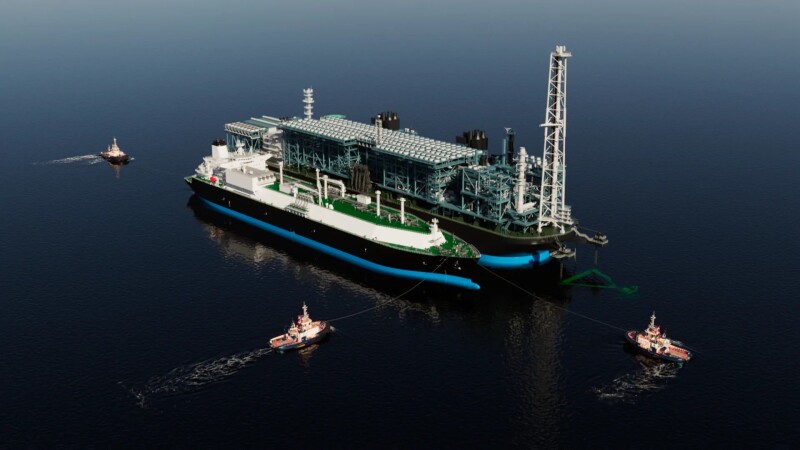
A federal appeals court has rejected a challenge to the deepwater port license for Delfin LNG, leaving the approval in place for the $5 billion offshore LNG export project.
The U.S. Court of Appeals for the Fifth Circuit denied a petition for review filed by the Center for Biological Diversity, Sierra Club, and Habitat Recovery Project. The environmental groups challenged the Maritime Administration's (Marad) licensing of the project under the Deepwater Port Act, the National Environmental Policy Act, and the Administrative Procedure Act.
The court found that the groups failed to establish standing because they did not identify a member who showed a concrete, project-specific injury tied to Marad's licensing decision.
Without standing, the court said it lacked jurisdiction to consider the merits of the groups' environmental and procedural claims.
Houston-based Delfin Midstream Inc. plans to develop a deepwater port offshore Louisiana using floating vessels to liquefy natural gas and load LNG onto tankers for export.
Marad issued a record of decision approving Delfin's application in 2017 and tentatively authorized a license once the company met several additional conditions. Delfin later changed aspects of the project's financing, ownership, and design, including reducing the planned number of floating vessels from four to three and replacing water-based cooling with air-based cooling.
In 2024, Marad determined that the 2017 record of decision no longer supported the modified project and instructed Delfin to submit an amended application for supplemental review. Delfin did not submit an amended application, and Marad did not prepare a supplemental environmental impact statement.
President Donald Trump in January 2025 issued an executive order directing Marad to determine whether changes to the project were likely to result in substantially different environmental consequences from those previously evaluated.
Marad concluded the modifications reduced the project's environmental effects and issued the deepwater port license in March 2025.
The environmental groups argued that Marad violated federal law by issuing the license without requiring an amended application, reopening public comment, or preparing a supplemental environmental impact statement. They asked the Fifth Circuit to vacate the licensing decision.
The court did not rule on those claims.
"Concern, without injury, is not standing," Judge Don Willett wrote for the three-judge panel.
The ruling comes about a month after Delfin reached a $5 billion final investment decision to begin construction on Delfin FLNG 1, the first planned floating LNG (FLNG) export facility in the United States.
The Samsung Heavy Industries-built vessel is expected to have an LNG export capacity of 4.4 million tonnes per year and begin production in 2030. Delfin is also working toward investment decisions on two additional FLNG vessels, which would bring total export capacity to 13.2 million tonnes annually.
