



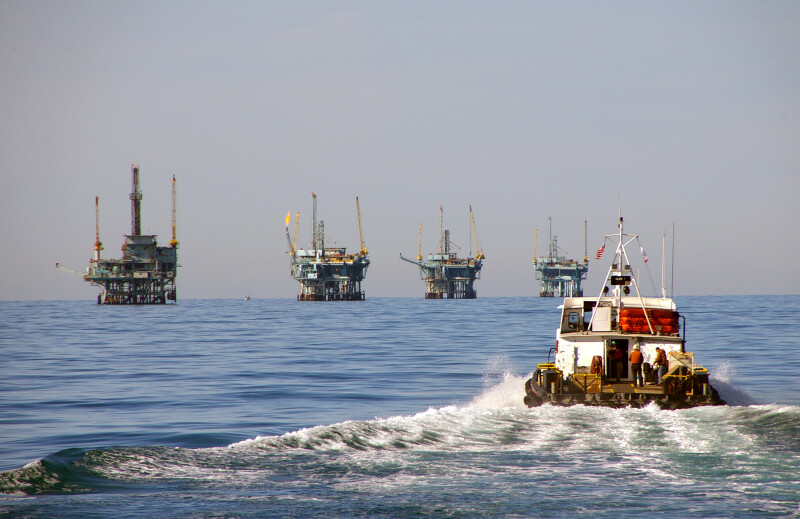
Federal offshore regulators are taking an early look at whether the Outer Continental Shelf (OCS) could support space launch, re-entry, and recovery infrastructure, opening a new line of questions for the commercial marine industry as the U.S. looks to expand launch capacity.
The Bureau of Ocean Energy Management (BOEM) announced July 7 that it had issued a Request for Information (RFI) on the potential use of the OCS for offshore space launch and re-entry activities. The request, scheduled for publication in the Federal Register on July 8, opened a 30-day public comment period ending Aug. 7.
The RFI is not tied to a specific project, lease area, or proposed launch site. Instead, the agency is seeking technical, environmental, and operational information from industry, researchers, and other stakeholders to help inform future planning, interagency coordination, and potential offshore space-related activities.
For the maritime sector, the inquiry raises a basic but potentially significant question. If offshore space infrastructure moves beyond the concept stage, what role could commercial vessels, offshore platforms, tug and barge operators, support vessels, shipyards, and U.S. mariners play?
In responses to WorkBoat, a Marine Minerals Administration (MMA) spokesperson said the agency is focused on learning about industry capabilities, technical and safety standards, environmental considerations, and best practices for offshore space launch and re-entry facilities.
“We expect that offshore assets could potentially include decommissioned oil and gas platforms or new platforms designed for rocket launches,” the spokesperson said.
The MMA was formed after the Department of the Interior reunified BOEM and the Bureau of Safety and Environmental Enforcement. The RFI was issued by BOEM before that reorganization, but responses to WorkBoat were provided by MMA.
The spokesperson said information collected during this stage will help the agency understand offshore capabilities and consider potential future activities, coordination, and planning for offshore space launch and re-entry.
While the agency is still exploring the offshore space activity concept, the spokesperson said commercial vessel operators could be positioned to provide services and expertise if the sector develops.
“Commercial vessel operators remain uniquely positioned to provide key services and expertise for any potential new Outer Continental Shelf activities,” the spokesperson said. “MMA looks forward to engaging with a wide array of Outer Continental Shelf stakeholders to fully understand the nation’s capabilities, including how existing skills and services could create supply chain synergies for potential offshore launch and recovery development.”
That potential could involve a range of vessel work, including towing, supply, crew transport, safety support, and recovery operations. It also could require coordination with existing vessel traffic and marine users, particularly if launch windows, hazard areas, or offshore facilities begin affecting commercial routes.
Marine support for space operations is not entirely new. NASA and commercial providers already use recovery vessels and support boats during crewed spacecraft splashdowns, while the U.S. Coast Guard maintains warning and hazard-area information tied to launch and recovery activity.
BOEM’s RFI, however, points to a broader question than recovery support. It asks whether the federal offshore area itself could support launch, re-entry, and recovery infrastructure.
The RFI seeks information on operational practices, technical and safety standards, environmental considerations, and best practices for offshore launch and re-entry facilities. It also asks for insight into emerging domestic and international guidelines or voluntary standards relevant to offshore space operations.
For the Offshore Marine Service Association (OMSA), the issue is whether U.S. offshore vessels and mariners will be positioned to support the space sector as the market develops.
Aaron Smith, president and CEO of OMSA, said several member companies already have experience in the space industry.
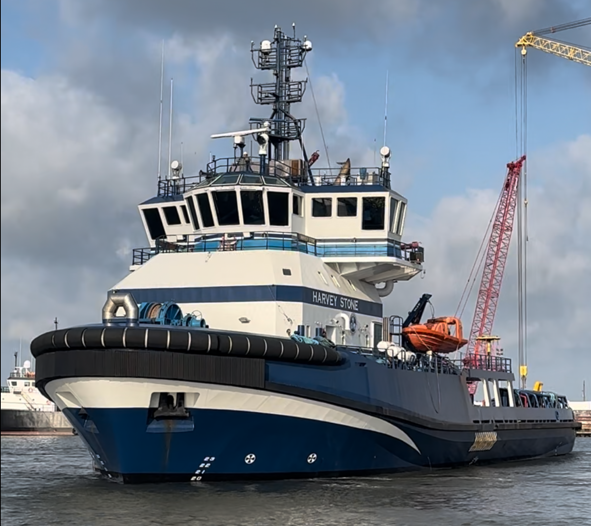
“Numerous OMSA members such as Harvey Gulf International Marine, SeaTran Marine, and Guice Offshore have been working in the space industry for years,” Smith said. “This experience shows America already has the vessels and mariners capable of supporting the next generation of commercial space operations.”
Smith framed the emerging sector as both an opportunity and a policy test for U.S. maritime interests.
“The question is whether we'll create the conditions for that work to be done by American companies and American mariners, or allow another emerging industry to be outsourced before it ever gets off the ground,” Smith said. “That starts with enforcing the Jones Act and giving companies the confidence to invest in the shipyards, vessels, and skilled workforce needed to support opportunities like this for decades to come.”
The Jones Act issue could become more prominent if offshore space infrastructure eventually involves fixed or moored facilities on the OCS, vessel transportation to and from those facilities, or other coastwise trade questions. For now, BOEM’s RFI does not establish how any specific future project would be structured or regulated.
Speaking broadly about Jones Act debates, Leon Rittenberg III, a Liskow maritime attorney who advises vessel owners and operators, said Jones Act critics often underestimate existing U.S. maritime capacity.
“In the Jones Act trade rules, most critics really don’t understand the U.S. capacity,” Rittenberg said. “There are more U.S. vessels available, and there are certainly more that can be built, but there are more vessels available to do things than people realize.”
Rittenberg said the law also remains tied to domestic mariner jobs and shipbuilding capacity.
“If you’re a believer in high-paying jobs for Americans, you should be a big Jones Act fan,” he said.
The American Waterways Operators (AWO), which represents the tugboat, towboat, and barge industry, pointed to a different but related concern. As new uses emerge offshore, vessel operators need predictable access to the waterways and clear coordination around safety restrictions.
Liam Morcroft, senior government and public affairs associate at AWO, said federal agencies should recognize the role of the tug, towboat, and barge industry in the broader supply chain.
“The most important thing for federal agencies to understand is that the tugboat, towboat, and barge industry is a linchpin in the American supply chain and critical to our national security,” Morcroft said. “Any expansion of offshore space activity needs to account for that from the start.”
Morcroft said the growth of offshore activity in multiple sectors, including aquaculture, energy production, and space exploration, makes it important to preserve safety fairways, protect the marine environment, and maintain the sea space operators need to work safely and efficiently.
AWO members have not reported extensive impacts from space-related navigation restrictions to date, Morcroft said. He said that could change as launch cadence grows.
“As launch cadence grows it is key that hazard areas and closures be established in a transparent and predictable manner, with clear stakeholder involvement and advance notice, so vessel operators can plan accordingly and impacts can be minimized,” he said.
That concern fits with the existing maritime management of launch and recovery operations, where temporary hazard areas and notices to mariners are used to keep vessels clear of areas that may be affected by falling debris, descending vehicle components, or recovery activity.
At the same time, Morcroft said AWO sees both opportunity and caution in the growth of offshore space activity.
“This is really a two-pronged focus for AWO,” he said. “Our members' commitment to safety and operational excellence makes them well-suited to engage with a wide range of maritime activity and cargo transportation, and several AWO members are already providing support functions for the growing commercial space sector at an exciting time for that industry.”
Still, he said AWO’s primary focus so far has been ensuring that current vessel operations are not unnecessarily disrupted by new or expanding activity on the water.
Crowley Maritime Corp., Jacksonville, Fla., said offshore launch and recovery work would draw on maritime capabilities already used in offshore energy and heavy project logistics.
David DeCamp, director of corporate communications at Crowley, said those services could include ocean towing to position launch or landing platforms, high-deck-strength barges used as stable bases, and DP offshore support vessels for station-keeping, crew transfer, and mission coordination.
On the recovery side, DeCamp said operations could include precision positioning of landing platforms, safety and exclusion-zone enforcement, retrieval of rocket components, and transport back to port. Those operations would be supported by a broader logistics chain, including terminal operations, staging, and secure handling.
“The foundation is already in place,” DeCamp said. “Today’s tug, barge, and offshore vessel fleets are highly capable and adaptable.”
DeCamp said the work would likely involve targeted modifications, including reinforced decks, enhanced fire suppression, advanced communications systems, and accommodations for cryogenic fuels and sensitive hardware. Crews also would need additional training around safety zones, hazardous materials, and coordination with launch operators.
“Overall, this is less about building entirely new vessels and more about evolving proven platforms and procedures to meet a new type of mission,” DeCamp said.
As offshore launch activity grows, DeCamp said coordination across agencies and with the maritime industry will be critical, particularly around safety zones, communication protocols, traffic deconfliction, and emergency response.
The market is still developing, he said, with a mix of outsourced marine services, hybrid partnerships, and increasing vertical integration by space operators. But DeCamp said offshore operations are moving from concept toward commercial reality as reusable rocket systems grow in size and require larger, more capable platforms.
The RFI comes as federal officials point to growing launch demand and increased pressure on existing launch infrastructure, airspace coordination, and maritime coordination. Offshore platforms could offer additional flexibility, while also bringing the space sector into closer contact with the offshore energy, marine construction, vessel operations, port logistics, and shipyard industries.
BOEM’s announcement said the OCS includes approximately 3.2 billion acres under federal jurisdiction, giving the agency a central role in evaluating whether offshore space infrastructure could be developed responsibly.
The RFI also supports federal efforts to strengthen U.S. space leadership, launch capacity, re-entry, and recovery infrastructure. Acting BOEM Director Matt Giacona said in the agency’s announcement that offshore launch and recovery infrastructure could expand operational flexibility, increase capacity, reduce constraints on growing launch demand, and strengthen commercial and national security space capabilities.
For now, MMA is emphasizing that the process remains early.
The agency will review comments after the Aug. 7 deadline, the spokesperson said, to develop a broader understanding of current technologies, practices, and research trends.
“It is premature to speculate when, or if, offshore commercial space launches will occur,” the spokesperson said. “If the process moves beyond the information gathering phase, MMA would work to ensure any development is managed in a safe and environmentally and economically responsible way.”
