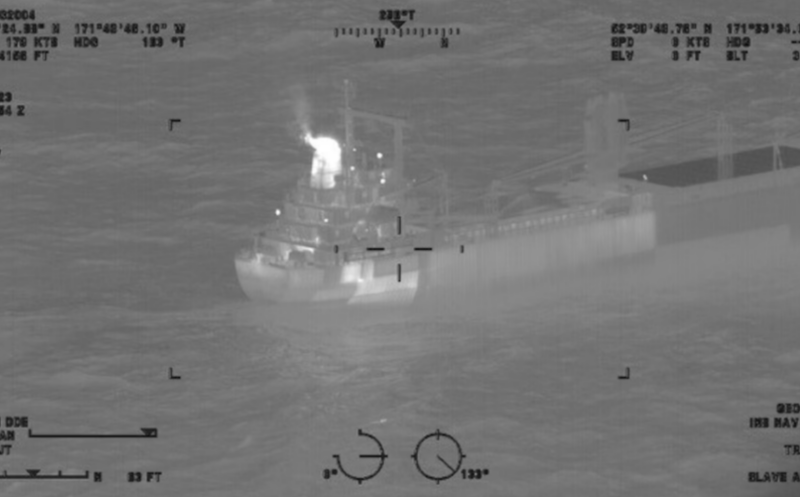
The first of two fires broke on the 410’ cargo vessel Genius Star XI on Christmas morning 2023 after its cargo of lithium-ion battery storage units shifted in the holds during heavy weather, damaging the units and triggering thermal runaway in several batteries, the National Transportation Safety Board reported Dec. 18.
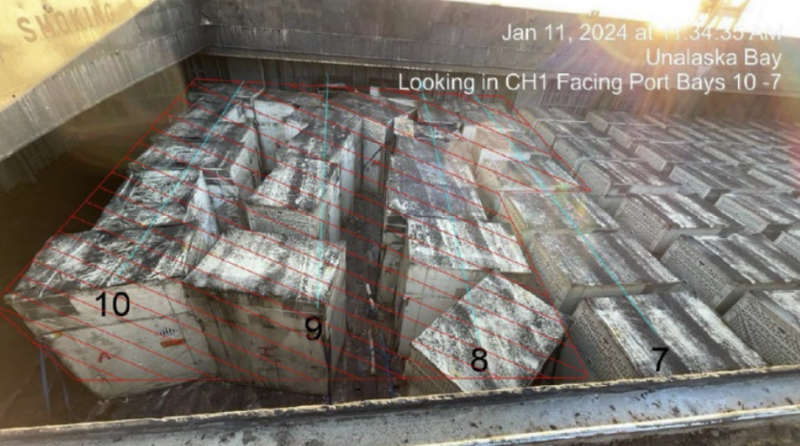
The Genius Star XI was transiting the North Pacific when improperly secured lashing belts failed, allowing 41 lithium-ion battery energy storage system (BESS) units to shift in the cargo holds.
That movement led to “internal structural deformation,” according to the NTSB report. “This damage caused batteries in three of the units to enter thermal runaway, when a lithium-ion cell enters an uncontrollable, self-heating state that can exceed 572°F, causing the two fires within the holds.”
After overnight winds gusting to 31 knots and seas to 19’, the master altered course around 8:30 a.m. so the crew could go on deck to check the cargo. They saw that BESS units had shifted, and the chief officer observed black smoke coming from a manhole cover that had been opened to allow access to the ship’s hold 1.
After that first fire, the crew activated the vessel’s fixed carbon dioxide fire-extinguishing system and diverted to the nearest port at Dutch Harbor, Alaska. With the first fire extinguished and the ship en route to Dutch Harbor, a second fire occurred in another cargo hold on Dec. 28.
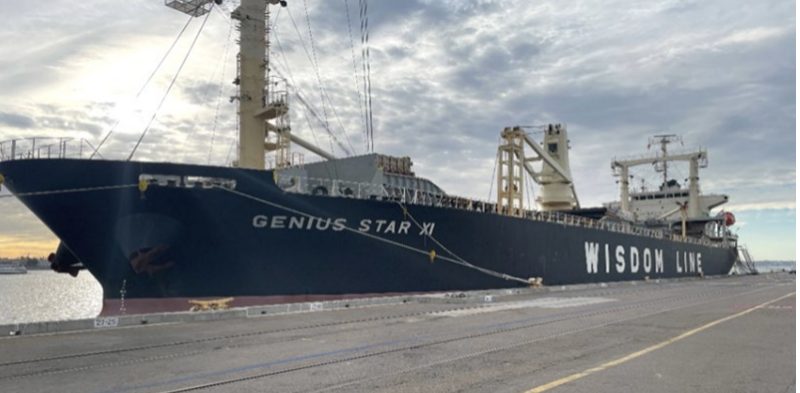
The crew cooled the affected area externally with fire hoses. The fire was confirmed extinguished when the Genius Star XI arrived at Dutch Harbor on Dec. 29. No injuries or pollution were reported.
At Dutch Harbor the Genius Star XI was directed by the Coast Guard to anchor two miles from shore due to the potential risk of a reflash of the fire. Marine firefighters from T&T Salvage and Resolve Marine and determined that fires within the cargo holds were extinguished.
On Jan. 27, 2024, the Energy Security Agency (ESA), a U.S. company with expertise in lithium battery safety, arrived on scene, hired by the Taiwan-based ship operator Wisdom Marine. ESA performed a damage assessment of the BESS units, prepared them for later safe disposal of the damaged lithium-ion battery packs.
The Genius Star XI incident and other shipboard fires involving lithium-ion batteries on car carriers elevated battery safety on the radar of maritime safety authorities. The new report summarized the findings of NTSB and Coast Guard investigators who examined the Genius Star XI at Dutch Harbor and at San Diego in February. They detailed shortcomings in the cargo lashings, including failures of D-rings and belt hooks that contributed to the shifting.
The board summarized that when transporting BESS units, ship crews should:
· Follow the vessel’s cargo securing manual and approved lashing plan.
· Thoroughly inspect all cargo-securing arrangements during and after loading.
· Pay close attention to lashing belt hooks, wires, and chain falls to verify they are properly seated on D-rings and attachment points.