


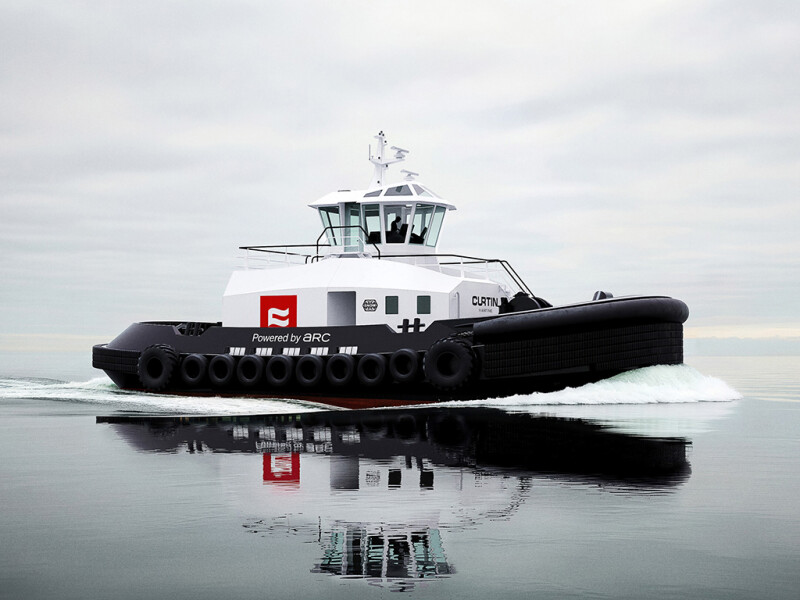
Arc Boats, Los Angeles, Calif., has signed a $160 million contract with Curtin Maritime Corp., Long Beach, for a fleet of eight electric ship assist tugboats. The order is being described as the largest commercial deployment of electric workboats to date.
The tugs will be built in partnership with Snow & Co., Seattle, with the first four scheduled for delivery by the end of 2027. Each tug will be powered by Arc’s integrated electric propulsion system, producing more than 4,000 hp and supported by a six megawatt-hour battery buffer. The first four vessels measure 80’9”x42’3” with a 12.5’ draft, twin 2,000-hp L-Drive thrusters, and a bollard pull of 55 short tons.
Arc CEO Mitch Lee said the project is meant to signal a turning point for the tugboat sector and for commercial workboats more broadly. He explained that this is not a pilot program or a grant-backed demonstration, but a direct investment in electric propulsion as a cost-competitive option.
“This is a really big deal for the industry,” Lee told WorkBoat, noting that Arc and Curtin are moving forward without government subsidies. “It’s a big deal for the commercial industry as a whole, because two profit-seeking companies, Arc and Curtin Maritime, have decided that the best way to drive profit in this industry is to adopt a new technology.
"Curtin doesn’t need to go electric," he explained. "They could go diesel, and they are choosing to do that [transition to electric]. It speaks to where the technology is today, that we are at this inflection point where the technology has reached a level of maturity that it can compete on its own.”
According to Lee, the private financing behind the deal demonstrates the strength of the business case. With Arc vertically integrating its powertrain systems, he said the tugs can match diesel vessels on acquisition cost while delivering savings in fuel, maintenance, and compliance over the long term.
Lee explained that Arc will retain ownership of the tugs, while Curtin will operate them under a bareboat charter arrangement. This model allows Curtin flexibility in where to station the vessels, starting with the Port of Los Angeles.
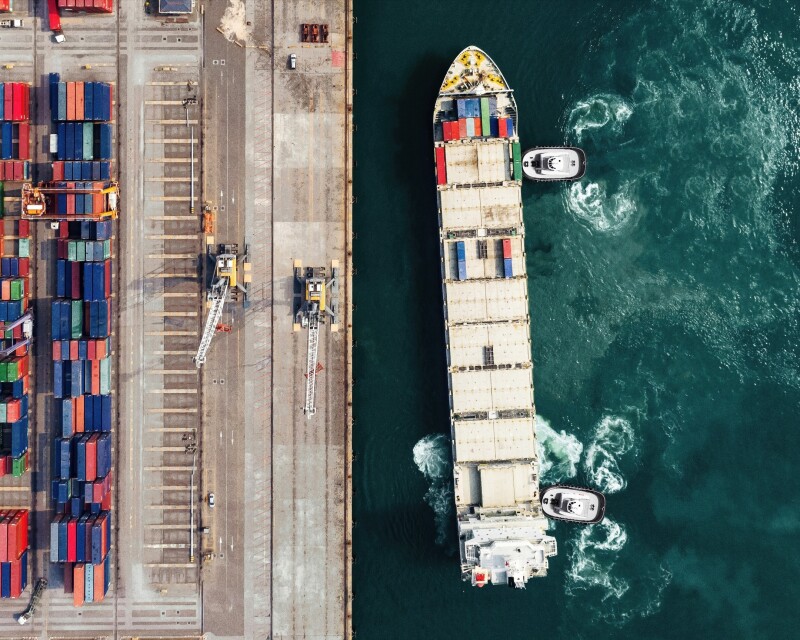
“Curtin plans to long time charter the vessels,” he said. “The Port of Los Angeles is where things will start, in part because of the charging infrastructure there and because we are both local. But the intent is to then continue to build these and spread them out across other ports along the West Coast.”
Lee said Curtin’s large-scale order helps avoid the inefficiencies of building vessels one at a time and gives both companies leverage in how the fleet is produced. “It’s a pretty conservative industry,” Lee said. “It’s an industry that has lagged a lot of investments from that you might see across other domains. And Curtin was an exception to that and their level of ambition. The speed that they’ve moved at. Their interest in technology even before we were having these conversations. And they’re going big," he said.
"This isn’t a ‘Let’s do a little pilot project.’ This is, ‘We are committed to this technology and we’re going to go be cost competitive in part because we are going to do a volume commitment,’" Lee stated. "So now we have an opportunity to escape that trap of ordering everything as a one-off…let’s go actually build a fleet of boats. And that gives you a lot of pricing power.”
Lee added that Arc leaned on Curtin’s operational knowledge and its existing relationship with Snow & Co. and designer Jay Edgar. “We know a lot about electric powertrains and have a lot to learn on the vessel construction side,” he said. “Curtin in turn really values and trusts Snow & Co., so it was kind of a no brainer to use that shipyard. Between the three of us, I think we are bringing a lot of collective expertise to make a product that can meet and exceed the demands of ship-assist operations.”
Lee noted Arc has already opened discussions with the Coast Guard to ensure certification moves forward smoothly. He said that the company is sourcing battery technology that’s already validated by the automotive industry, which he noted often meets or exceeds the regulatory thresholds the Coast Guard requires. “We feel comfortable with the regulatory side of this and are not taking it lightly, but we feel comfortable with it,” he said.
Construction is already underway, with the first hull expected to hit the water by late 2026. The first four vessels will be sisterships, while the next four will likely vary in size but follow the same basic architecture. Lee said both companies want to move quickly: “Curtin wants to move just as fast as we want to move and we plan to do exactly that.”
Lee stressed that the bigger message is about long-term industry transformation. From his perspective, electric technology is no longer experimental. It is commercially viable. “What we are saying to the industry is that this technology is now directly competitive on cost,” he said. “You get all the benefits downstream—lower fuel costs, higher uptime, less maintenance, and fewer compliance headaches.”
Ultimately, Lee framed the deal as the start of something larger. “We want to go help repower the entire industry,” he said. “We want to go help rebuild and modernize this industry around what we believe is fundamentally better technology in electric and hybrid-electric powertrains.”
