



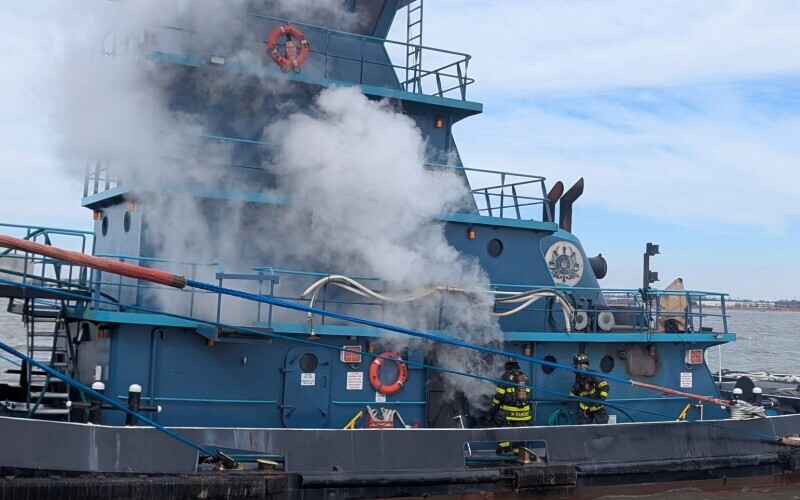
An engine room fire aboard the 71' towing vessel Thor caused an estimated $1.5 million in damage but resulted in no injuries or pollution, according to a recent National Transportation Safety Board (NTSB) report.
The incident occurred Feb. 18, 2025, at about 9:25 am while the Thor was pushing two light material scows on the Delaware River, about 1.5 miles below New Castle, Del. The tug, owned and operated by Allegiant Tug Company, was en route from Philadelphia to Norfolk, Va., with a crew of four on board.
Shortly after passing beneath the Delaware Memorial Bridge, the captain observed smoke coming from a stack along with a metallic odor. He sent the engineer and mate to investigate. As they approached the engine room, the fire detection system alarm sounded. When they opened the engine room door, they encountered heavy black smoke.
The captain sounded the general alarm, ordered the crew to secure ventilation and seal the engine room, and issued a mayday call on VHF Channel 16. The vessel was not equipped with a fixed fire-extinguishing system, nor was one required under its Subchapter M certificate of inspection, NTSB said in its report.
Good Samaritan towing vessels Wye River and Magothy assisted in moving the tow out of the Delaware River channel. As the fire intensified, the captain reported losing steering due to fire damage to associated cabling. After the tow was clear, the captain and engineer pulled emergency fuel stops for the main engines and generators before abandoning the tug to the barges. All four crewmembers were later recovered by Wye River.
Responders from the Coast Guard, Wilmington Fire Department, and Delaware State Police arrived on scene. Fire Boat 7 from Wilmington deployed fire teams, and the blaze was brought under control by 12:00 pm. The vessel was later towed to port.
Post-fire examinations by Coast Guard, NTSB, and Bureau of Alcohol, Tobacco, Firearms and Explosives (ATF) investigators determined the fire originated in the upper port aft area of the engine room. A metal paint locker containing flammable materials was located in that space. Investigators also found evidence that a 110-volt boot warmer had been plugged into an extension cord near the locker. The control switch was in the “on” position, and the associated breaker was found tripped. The extension cord’s insulation had burned away.
Investigators said an electrical fault, such as a loose or damaged wire, could have caused resistive heating sufficient to ignite nearby combustible materials, including paint cans and a plastic trash can stored near the paint locker. However, due to the extent of the damage, the ATF was unable to identify a specific ignition source and classified the cause as undetermined, concluding the probable cause of the fire was an undetermined ignition source in the upper level of the engine room.
