



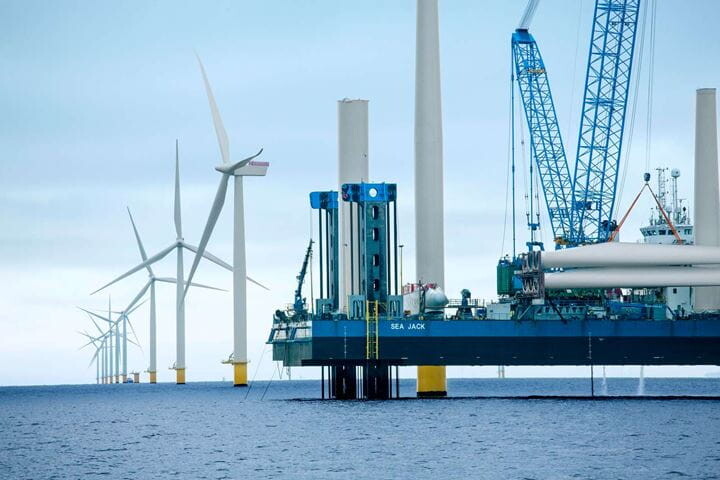
For the second time a federal court on Monday turned back the Trump administration’s attempt to shut down the Revolution Wind energy project off southern New England, handing wind power developers another temporary reprieve in an on-again, off-again legal battle.
U.S. District Judge Royce Lamberth ruled developer Ørsted "would be irreparably harmed" unless work on the almost 90% complete turbine array is allowed to continue, while the company disputes the government’s Dec. 22 claim that “national security” required an immediate stop-work order.
The judge’s temporary injunction mirrors an earlier ruling he issued in September a few weeks after the administration attempted then to halt Revolution Wind. Of the Dec. 22 order, Judge Lamberth wrote, the decision appeared "arbitrary and capricious" and violating the Administrative Procedure Act that requires detailed rationale for rule changes and a public comment period.
Revolution Wind is one of five projects off the East Coast targeted by Trump officials in the Dec. 22 order, and four of them have mounted legal challenges. At a Jan. 9 White House meeting with oil industry executives to talk about his plans to tap Venezuela’s oil resources, Trump repated his longstanding vow to stamp out the U.S. wind industry: “I’ve told my people we will not approve windmills.”
The Monday ruling is a setback for the administration’s position that pausing all offshore wind project work for 60 days is a response to new classified information it claims to have uncovered about military implications off offshore wind turbine arrays.
Industry advocates dismissed the administration’s bid as a delaying tactic, arguing that the federal Bureau of Offshore Energy Management, Department of Defense and other agencies have studied effects of turbine arrays on radars and other military technology, including interference and how to mitigate effects.
With a maximum output rating of 704 megawatts and 65 turbines, Revolution Wind has been a flagship project for the beleaguered U.S. offshore wind industry, and a longtime target for opponents like southern New England commercial fishermen who foresee environmental effects on groundfish, scallop and squid fishing grounds.
On the defensive since the second Trump administration arrive Jan. 20, wind power advocates with the industry group Oceantic Network too note of the ruling.
“The U.S. offshore wind industry has always worked closely with the federal government to ensure national security interests were prioritized in the siting and permitting of every project in federal waters,” Oceantic CEO Liz Burdock said in a statement. “Oceantic applauds this result to get the project moving again to deliver reliable, affordable power to communities across New England that desperately need it.”
