



Florida’s 16 seaports can benefit from modernizing and electrifying their infrastructure, a movement “critical to maintaining Florida’s position as the world’s 15th largest economy and keeping the state competitive on a global stage,” according to a new report by the Environmental Defense Fund and consultants AECOM.
The report Powering Florida: Port Electrification as a Pillar for Global Competitiveness makes a case for “how modernizing and electrifying port infrastructure can strengthen Florida’s economic leadership while improving long-term cost performance and operational efficiency,” according to the Environmental Defense Fund.
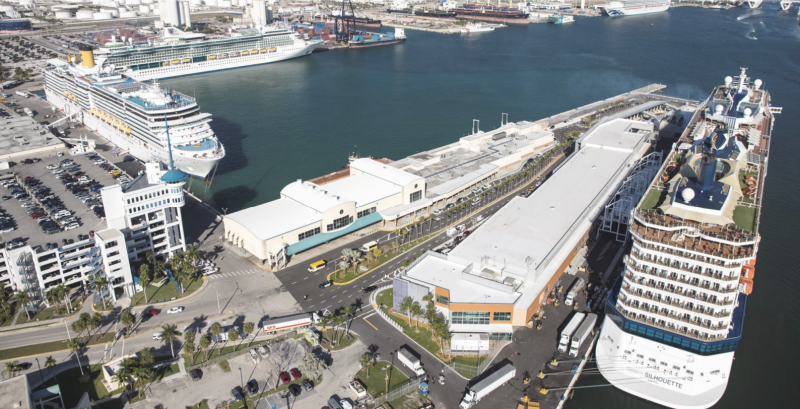
Florida has the world’s three busiest cruise ports along its Atlantic coast and altogether the ports generate more than $117 billion in economic activity and around 13% of Florida’s annual gross domestic product, according to EDF.
“Florida ports operate in a highly competitive global market,” said Rohemir Ramirez Ballagas, director of shipping and transport at the Environmental Defense Fund. “Modernizing equipment and infrastructure helps ports attract customers, improve efficiency, and reduce long-term operating costs. This report demonstrates that leadership in electrification delivers clear business advantages.”
The report was supported by the American Association of Port Authorities and produced by infrastructure consulting firm AECOM, Sarasota, Fla.
Key findings in the paper include:
• While some electric cargo equipment carries higher upfront costs, the study finds that
• Shore power infrastructure allows ships to plug into the electric grid while docked,
• Modernizing ports with electric equipment builds resilience by reducing reliance on
“Florida’s ports are exceptionally well positioned to capitalize on the continued growth of the
“To remain competitive with other major cargo ports along the Eastern Seaboard, Florida ports must increasingly focus on terminal optimization and densification to expand capacity and improve throughput. In today’s maritime industry, this evolution is most effectively achieved through the electrification of container yards and cargo-handling equipment.”
