



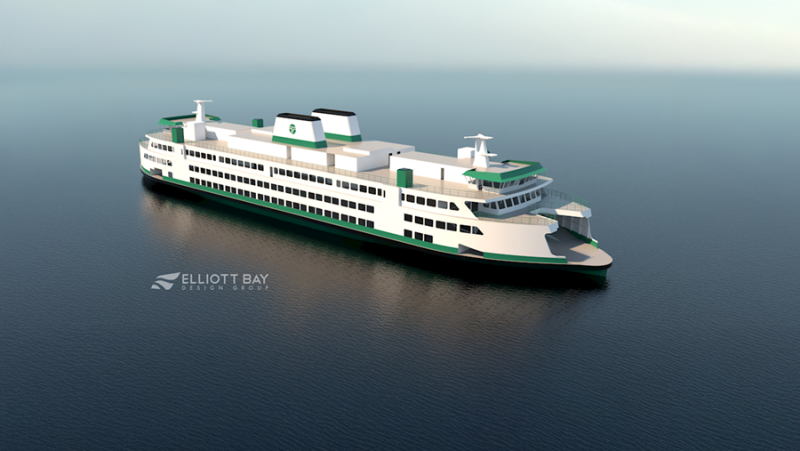
Corvus Energy will supply battery energy storage systems (ESS) for two new hybrid-electric ferries being built for Washington State Ferries (WSF), under a contract with ABB’s Marine & Ports division. The agreement includes an option for a third vessel.
WSF operates the largest ferry system in the United States, with 21 auto-passenger ferries serving 19 terminals across 10 routes. The two new 1,500-passenger, 160-vehicle ferries are the first of up to 16 vessels planned under the agency’s $3.98 billion Ferry System Electrification program. The initiative represents the largest ferry electrification effort in the U.S. to date.
The hybrid vessels will be equipped with battery energy storage systems and diesel generators. As onshore charging infrastructure becomes available, the ferries are designed to operate on battery power alone. In full battery mode, the vessels will operate without fuel consumption or exhaust emissions.
ABB, which is serving as the propulsion single-source vendor for the vessels, selected Corvus Energy’s Dolphin NxtGen ESS for the project. ABB cited the system’s safety and performance record in awarding the contract.
“Washington State Ferries forge a very progressive path towards environmentally sustainable operations with these electric hybrid ferries, marking a significant milestone in the evolution of zero-emission maritime transportation in the U.S.,” said Bruce Strupp, vice president of marine systems for ABB’s Marine & Ports division. He added that “the proven reliability, safety and performance of the Corvus ESS was important in awarding this contract to Corvus Energy.”
Fredrik Witte, CEO of Corvus Energy, said the project reflects growing demand for marine electrification in North America.
“Washington State’s progressive Ferry Electrification Plan is a noteworthy milestone for U.S. marine electrification,” Witte said. “It’s a leading example of advancing sustainable ferry operations not only within the United States but also globally.”
The vessels are being built by Florida-based Eastern Shipbuilding Group. The first ferry is scheduled to enter service in 2030, with the second following in 2031.
