



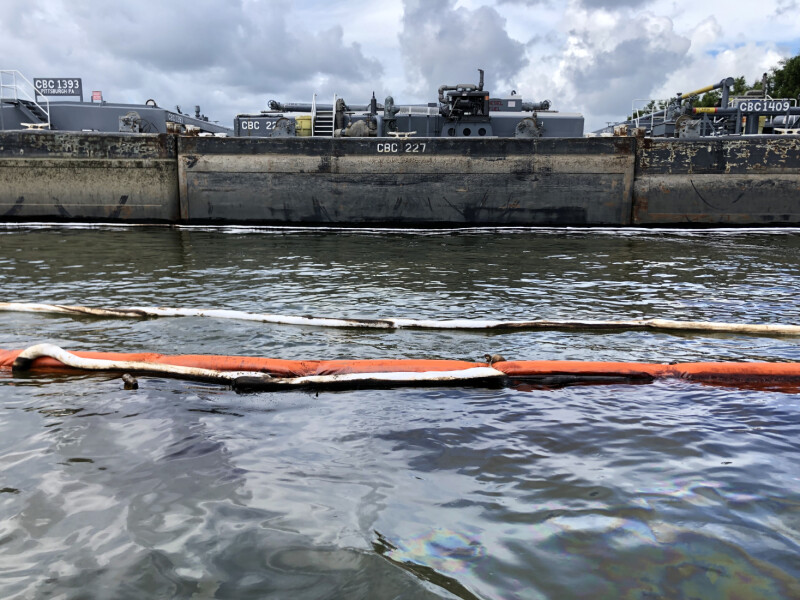
When we hear the term “oil spill” we might think of the Exxon Valdez or the Amoco Cadiz disasters. However, there are many smaller oil spills that regularly occur during cargo transfers that can be legally more complex. Instead of a single grounded tanker being prosecuted by the government, we could have companies on opposite sides of a bunkering operation disagreeing about who is to blame.
This can be illustrated by a recent lawsuit in federal court arising from bunkering operations between a fuel barge and a tanker on the Mississippi River in July 2022. The tug and barge, owned by a marine transportation company, were supplying low-sulfur fuel to the tanker. During transfer, oil overflowed and spilled overboard.
The tanker interests sued for damages, clean-up costs, and other expenses, asserting negligence and unseaworthiness under general maritime law. They also brought a claim under the Oil Pollution Act of 1990. In response, the tug and barge company filed a counterclaim alleging the negligence of the tanker crew.
Which side did the court find liable? From the bunkering agreement, the court saw that both sides had important duties. The agreement specified that the barge’s tankerman would begin transfer at a flow rate of 150 cu. meters per hour, increase to 400 cu. meters per hour, then reduce flow when the fuel delivered neared 700 tons. The person-in-charge on the receiving tanker had a duty to ensure that the starboard fuel oil tank had enough space to take on the incoming fuel.
The tug and barge admitted they pumped more oil than called for, but argued the tanker crew was required to monitor the operation and call stop when the final ullage was reached.
The tug and barge moved for summary judgment, asking the court to find there was no triable issue of fact. In other words, “This is plain to see on its face — no need for a full trial here.” The court denied summary judgment, finding enough disputed facts to require a full trial.
When crews from four or five different companies are working a single vessel, figuring out who bears more blame is rarely straightforward.
