




Friday marks the 20th anniversary of Hurricane Katrina making landfall across the Louisiana/Mississippi border. The final death toll stands at 1,833 — over 1,400 in New Orleans. More than 500 drowned here, mostly from a breach in the levee system, more than 500 died of heart attacks and accidents that occurred while they were trying to reach safety, and more than 300 died from “unspecified” causes.
After two decades, New Orleans has recovered but still remembers its dead and celebrates its survivors.
I think it’s important to remind people of just how valuable the marine industry was to the people of Louisiana and Mississippi following the catastrophe — that’s what it was — a catastrophe.
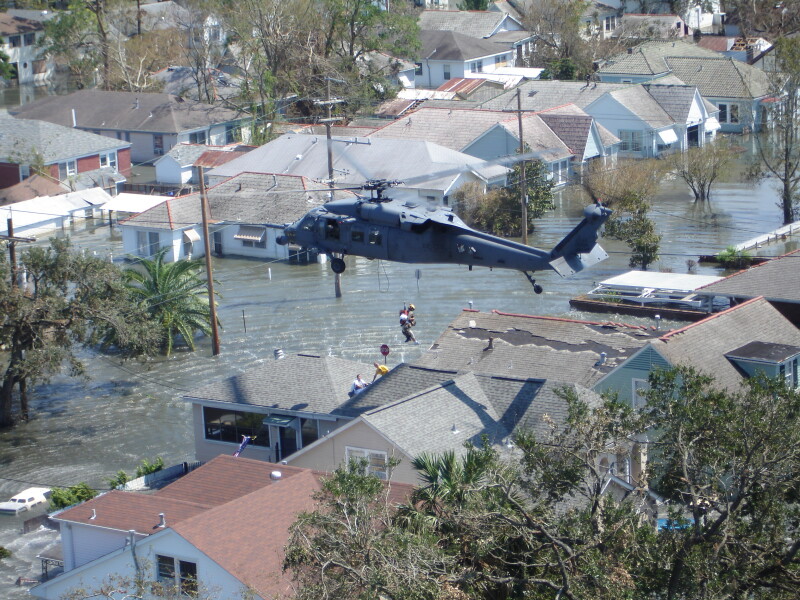
Let’s start with the U.S. Coast Guard. Estimates say that about 60,000 people were rescued from rooftops and flooded homes following the storm. Of that number, the USCG rescued more than 33,000, including more than 9,400 medical patients. Coast Guard personnel from every district in the U.S. — more than 5,600 Coasties — participated. I know people, friends and family, who were “brought out” by the Coast Guard. Incredible. The agency was just doing its job, it said, but those who were rescued will never look at the Coast Guard as ordinary in any way. You have to go through it to understand, so they tell me.
The rest were rescued by agencies like the Louisiana Wildlife & Fisheries and what’s known today as First Responders — local, county, parish, and state police, firefighters, and others. Literally, an army moved in to save those that Katrina had left for dead.
On the Mississippi River, tugs, towboats, rescue vessels from surrounding port authorities — even passenger vessels — moved out to clear debris from the river and find people who were waiting — desperately — to be rescued.
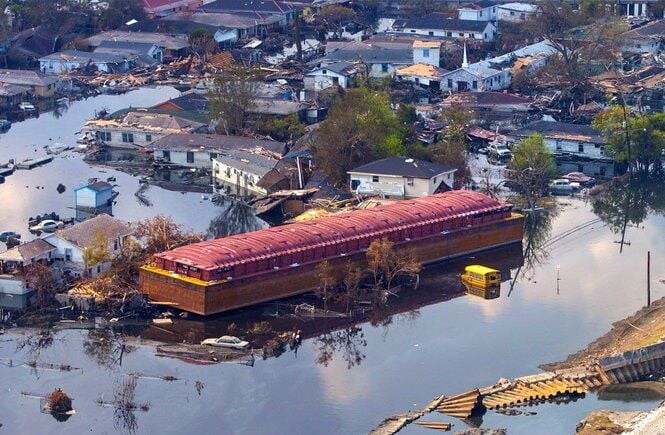
In area hospitals, medical personnel watched in horror and frustration as patients died while rescuers fought to get through. Death was everywhere. Heroism was, too.
The question being asked today is whether New Orleans is prepared for another Katrina. As someone who was close to the destruction left in Katrina’s wake, I can tell you that no one can be prepared for it.
The good news is that the levee system is stronger. In 2012, Hurricane Isaac came ashore in New Orleans on Katrina’s anniversary. Though it was only a Category 1 cyclone (Katrina was a strong Category 3), its storm surge was greater than Katrina’s because just as Isaac approached the coast, a high-pressure system formed to the north and kept the storm from pushing inland. Consequently, it just kept, hour after hour, building up water out in front of it. But the levees held.
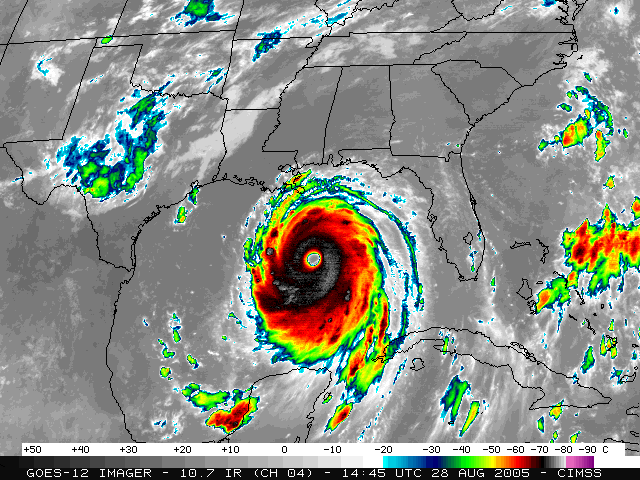
In 2021, during the COVID-19 pandemic, the levees held again when Hurricane Ida, a Category 4 storm, became one of the three strongest hurricanes to ever come ashore in Louisiana with winds of 150 mph. Yes, stronger than Katrina. It also arrived on Aug. 29. Once more, the marine industry was there to help like it did for Hurricane Katrina, 9/11, the “Miracle on the Hudson”, and countless floods and other emergencies.
So, what do you say to people who saved so many lives? Thanks? That just doesn’t seem to be enough. Maybe to say that we know what you did, and we won’t forget. There really are no words.
