



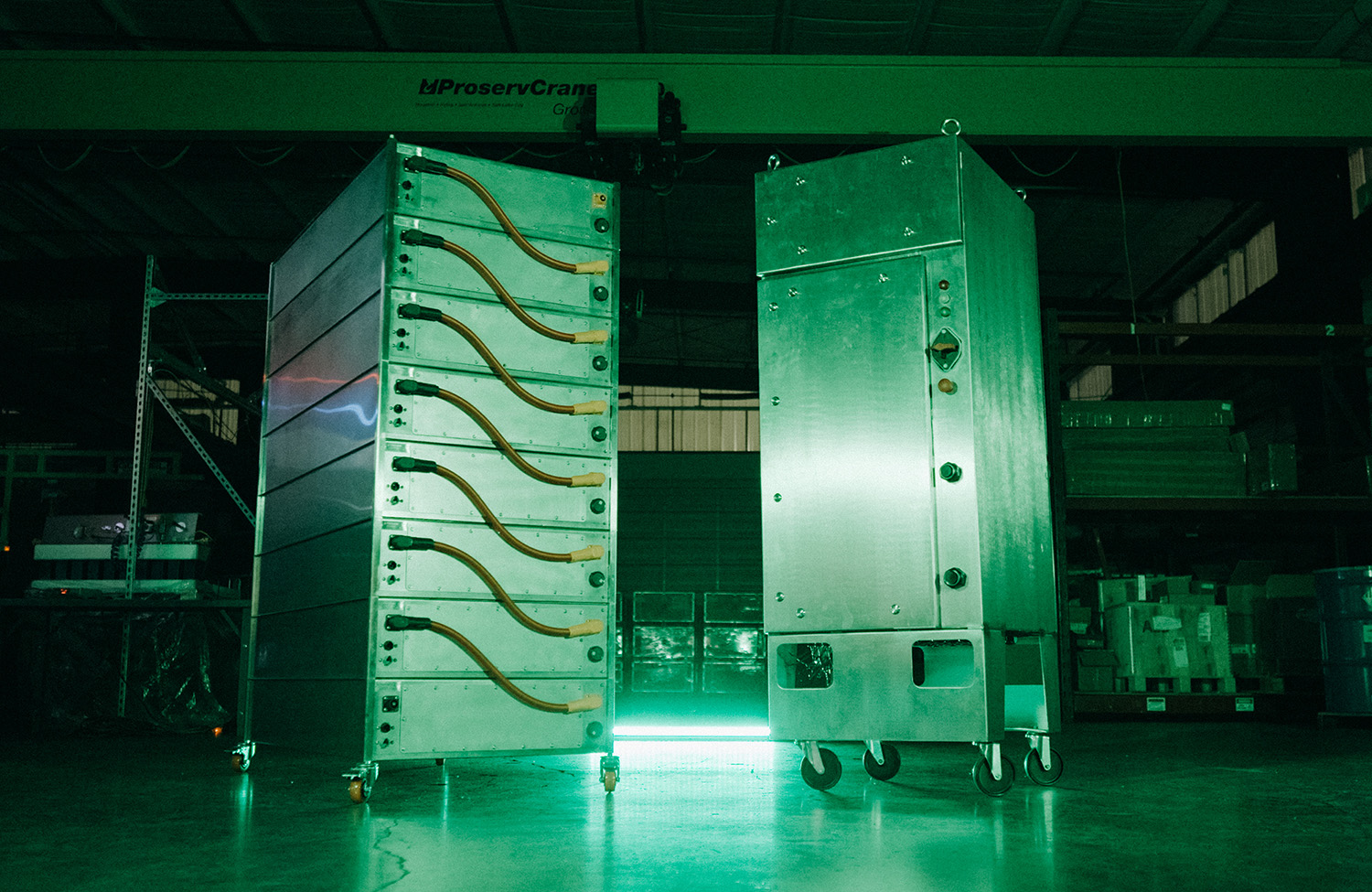
Fleetzero, a Houston-based developer of electric and diesel-electric marine power systems, has announced a collaboration with Louisiana shipbuilder Thoma-Sea Marine Constructors and Glosten, a Seattle-based naval architecture and marine engineering firm, aimed at accelerating the design and deployment of autonomous vessels for the commercial maritime, government, and defense markets.
The partnership will combine Fleetzero’s Leviathan battery storage system, propulsion technology, and autonomy software with Thoma-Sea’s shipbuilding capacity and Glosten’s vessel design expertise to bring to market an autonomous diesel-electric vessel engineered to operate in contested waters over an extended period, capable of executing supply deliveries with minimal radar detection.
“The vessel being built today is designed with the ability to robotically self-deliver and autonomically discharge cargo in its hull to receiving parties on a beach or dock,” said Matt Mallino, vice president of marketing for Fleetzero. “Its propulsion also allows for autonomous self-withdrawal. Cargo can include a range, from military resupplies or food to commercially common contents.”
The vessel’s angular design “draws inspiration from the best of current stealth vessels and beach-capable designs,” Mallino said. The collaboration and forthcoming vessel meets the goals set forth by the Department of Defense, Maritime Administration (Marad), and Coast Guard, including the use of a modular open systems approach (MOSA) to offer autonomous and remotely operated cargo delivery, patrol, and contested logistics missions capability, electrified harbor operations, operator safety features, and compliance with Jones Act and Buy American standards.
“Moving cargo through contested waters is more imperative today than ever before,” Fleetzero CEO Steven Henderson said. “Fleetzero is building and demonstrating that capability today. By partnering with Thoma-Sea and Glosten, we are pairing our Leviathan energy storage systems and Fleetzero’s autonomy stack with two of the most capable shipbuilding and design organizations in the country. This is how we can deliver MOSA-compliant, autonomous vessels at scale.”
Pairing diesel-electric propulsion with Fleetzero’s Leviathan system opens the door to long-duration autonomous missions with minimal noise and heat signature, while also reducing operating expenses and maintenance costs.
“The diesel-electric propulsion system we are currently using for some defense platforms incorporates a silent mode, much like a Navy diesel-electric submarine using the Leviathan energy storage system, to achieve lower noise, low thermal emissions, along with low radio frequency noise, reduced radar cross section, and other low observable technologies,” Mallino said. “This low observability is a critical differentiator for the U.S. in contested logistics.”
Mallino said that, while the three-party collaboration was just announced, the project is already well underway.
“The first prototype is on the water now,” he said. “We are developing the production version, and it could be on the water within the year.”
Thoma-Sea, based in Houma, La., is no newcomer to government jobs. The shipyard is building the National Oceanic and Atmospheric Administration’s Oceanographer-class research vessels and has built Navy-administered vessels for U.S. allies.
“Our yards have been building ships for American operators for decades,” said Walter Thomassie, managing director of Thoma-Sea. “Partnering with Fleetzero and Glosten allows us to deliver the next generation of autonomous vessels with stealth capabilities ready for the missions our customers face today.”
Glosten, by incorporating Fleetzero’s propulsion and autonomy technologies with Thoma-Sea’s hulls, will help deliver the vessel’s low radar cross-section, silent transit capabilities, beach approach angles, and autonomous self-withdrawals.
“Bringing autonomy and electrification together at the vessel-design level is where this collaboration creates real value,” said Morgan Fanberg, CEO of Glosten. “Working with Fleetzero and Thoma-Sea, we are designing vessels that are autonomy-native from the keel up, not retrofitted as an afterthought. The design is both functional and low-signature, built for decades of deliveries in the years ahead.”
