




When Chris Sullivan served in the U.S. Coast Guard, he spent two years underway in the Bering Sea off Alaska. The crew got its news updates about a week or two later than the rest of the country, and they didn’t speak to their families for weeks at a time.
“Now you can’t talk about [onboard communications] and not say Starlink,” said Sullivan, today head of sales, marketing, and strategic partnerships at Navtronics, an electronics dealer in York, Maine. “It checks every box. Instead of needing to have a high-frequency radio antenna and another one for TV, it’s one antenna coming down to a server.”
Starlink is the satellite-based communications system launched by SpaceX. It employs more than 9,300 low-earth-orbit (LEO) satellites that let users around the world access the internet and make voice and video calls from a smartphone. Marine VHF radio is still the preferred way to communicate between commercial vessels and to send out mayday calls, but satellites have changed the way mariners stay connected with the world and with their families when at sea.
“Eight to 10 years ago, you would have killed to have this performance,” said Sullivan. A captain on a workboat can dedicate a certain amount of bandwidth to each crewmember, and it’s up to each individual to manage that between calling home, surfing online, or playing video games in their off time. A deckhand can log in and use voice-over-IP to call his family on his cell phone.
Starlink also enhances safety because crew can access up-to-date weather data from multiple sources. “You can look in real time if a storm front is coming,” said Sullivan. “You can monitor it in real time now.”
Starlink Maritime business rates start at $2,325 per month with a hardware cost of $12,999 for 50GB Global Priority service. Prices will most likely come down with competition. Amazon is working on its own network, and China’s national network, Guowang, is a government-backed 13,000-satellite LEO constellation aimed at providing global broadband coverage to challenge Starlink. It’s expected to have at least half the satellites launched by 2032.
Inmarsat’s NexusWave delivers high-speed connectivity to vessels, offering unlimited data, global coverage, and what the company calls “secure by design” infrastructure. The company integrates multiple high-speed networks in real time, including Global Xpress (GX) Ka-band, LEO, and coastal LTE service with an additional layer of L-band for resiliency.
NexusWave supports expanding Internet of Things (networked objects and devices) deployments and real-time monitoring to remote IT management, and it has an upgrade path to the ViaSat-3 satellite network. Unlimited data plans are available, and business, operational, and crew traffic are separated to maximize performance and minimize risk. Inmarsat provides 24/7 technical support and access to self-service portals with dashboards for real-time viewing of connection status, data usage, and vessel locations.
CONTROLLING THE MESSAGE
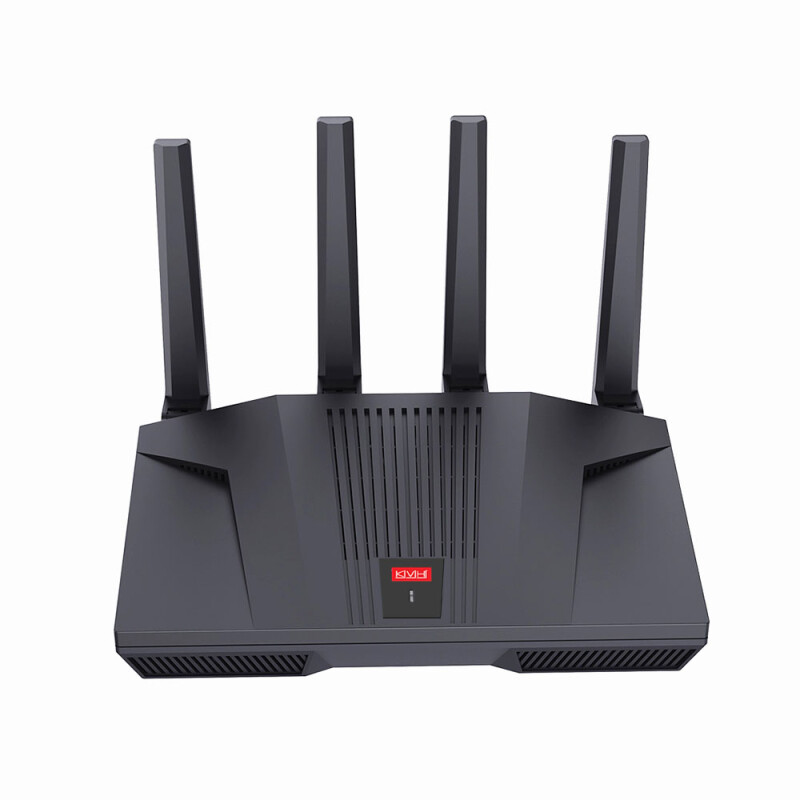
At the International WorkBoat Show in December, KVH Industries introduced its CommBox Edge Core router and network bandwidth manager. It is used to manage Starlink, Eutelsat OneWeb, VSAT, and cellular services for vessels and integrates Wi-Fi supporting external networks and onboard mesh connectivity.
KVH is bringing features of its CommBox Edge 6 to the Core to allow workboat operators to have a secure resource for employing multiple communications networks and replace more basic routers often provided with satcom products. CommBox Edge Core has an integrated router that manages onboard wide area networks, including Starlink, VSAT, OneWeb, 5G/LTE cellular, and more.
The new unit has Wi-Fi 6 and an access point controller to support multiple networks, plus a high-gain Wi-Fi bridge to external networks. It has IP and user-based data usage tracking and alerts, zero-touch installation, out-of-the-box operation, and a mobile app. Security features include a built-in firewall, identity access management, and license options for secure cloud connectivity. CommBox Edge Core can be purchased on its own or as part of KVH’s Starlink/CommBox Edge Core Performance Kit.
“Right now, we have fast internet speeds with OneWeb and Starlink. It’s now, ‘How do they control it and pump the brakes a little bit,’” said Robert Blackman, senior manager, service business development at KVH. “I feel like the conversation shifted from just communications to, ‘How do we control it, how do we secure it?’ Before, speeds were so slow that you didn’t have to worry about the crew trying to use gaming systems or streaming because it was so slow. Now it works flawlessly.”
KVH has more than 1,100 customers on the CommBox products, and the system can tell a vessel operator where people are going online, the traffic being used. The top culprits are Facebook, Instagram, YouTube, and TikTok.
Blackman said CommBox Edge Core is an entry-level system that gives vessel operators the ability to manage bandwidth on board. The company sells it with Starlink, but customers can add OneWeb, VSAT, cellular, L-band, or whatever network they need. KVH can create multiple profiles to separate vessel business from crew use, putting business on Starlink and crew online time on OneWeb. “We can have numerous profiles,” said Blackman. “All the comms are being used, and they’re used efficiently. One of the most beneficial features for so many customers is that they can see the consumption on a per-user, per-device level.”
For commercial and workboat business, Blackman sees CommBox Edge Core used on vessels like tugs, barges, and similarly sized boats with less than 10 crewmembers and one or two networks on board. CommBox Edge 6 would be used on larger vessels using multiple networks. It has more processing capability and can handle more data. Wi-Fi is built into the CommBox Edge Core while Edge 6 works with a separate router. That brings in the need for more network security, like an intrusion prevention system.
Unlike computers, hard drives, and other storage devices, the CommBox Edge Core has no fans or moving parts, so there’s no risk of dust or moisture intrusion. KVH also provides the unit with instructions for myriad mounting locations. Pricing for the CommBox Edge Core starts at $349.
KEEPING IT SIMPLE
Even with all the satellite technology, when communication is critical between vessels or a captain and emergency responders, rules mandate that work and commercial boats have marine VHF radios at the helm.
In the commercial marine world, Standard Horizon has the most market share. Other key players in the VHF segment include ICOM, Uniden, and Cobra. These companies don’t make marine VHF antennas. Best known names for this important piece of hardware include Shakespeare, Digital, and GloMex.
“The commercial side of our business is far greater in terms of units sold,” said Jason Bentley, president of Yaesu East, the parent company of Standard Horizon. He estimates that 70% of Standard Horizon’s commercial units are made up of the GX600 fixed mount and HX400 and HX400IS handhelds.
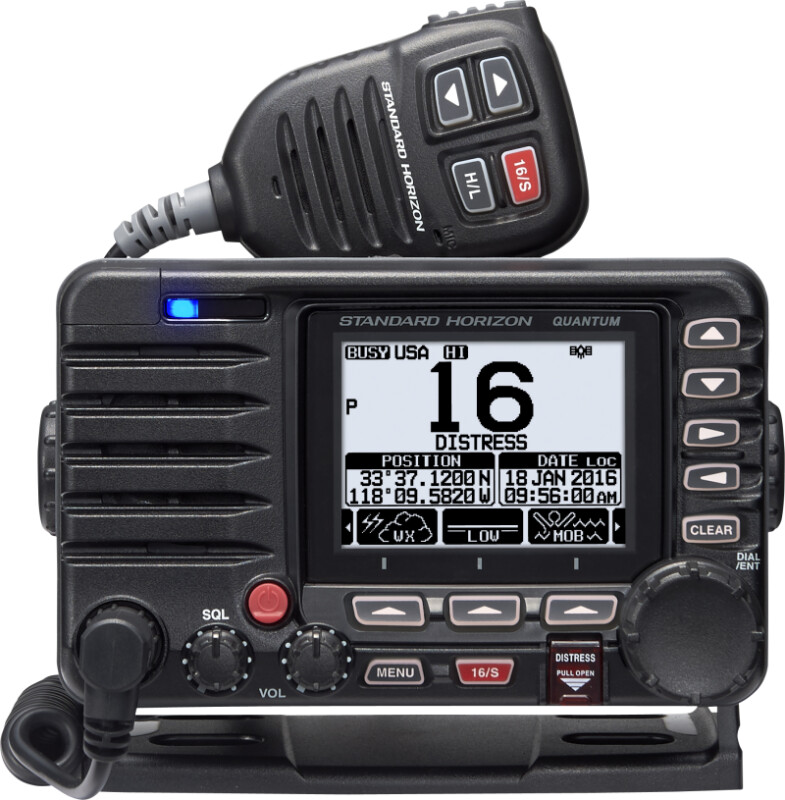
All marine VHF radios for any vessel that goes 10 miles offshore must have the Automatic Identification System. Most ships have a standalone AIS transponder. Standard Horizon units have an AIS-receive function that can interface with a NMEA 2000 network.
Bentley said that commercial clients look for VHF radios with redundant GPS, AIS-receive, and other built-in functions. Handhelds need to be shock resistant. “They value a rugged product,” Bentley said of the handhelds. “It’s going to get abused. It’s going to get dropped. They want it to last.”
