



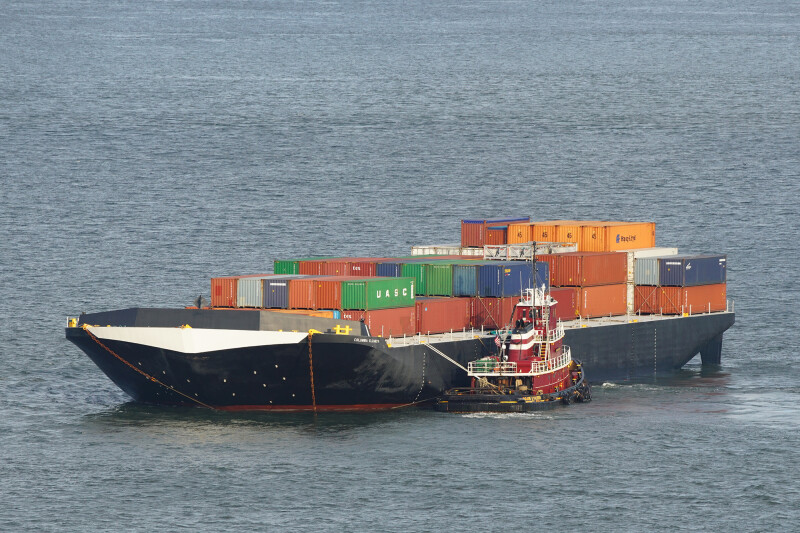
One of my maritime passion projects has been exploring the potential of short-sea shipping as a viable solution to reduce roadway congestion and emissions while capitalizing on the strengths of maritime transport. Nearly 25 years ago, as a new SUNY Maritime graduate, I found a creative way to attend a Manhattan conference on the subject, and ended up discussing its future with Maritime Administration (Marad) leaders. Now, two and a half decades later, we’re still striving to make short-sea shipping an alternative to road and rail.
Earlier this year, Marad expanded its Marine Highway Program to include 35 designated routes in an encouraging step forward for the United States and maritime operators, particularly those in the tug-and-barge sector. This expansion supports efforts to evolve traditional practices and better utilize our waterways. The U.S. still lags regions like Europe, where 40% of freight moves by short-sea shipping, compared with just 6–7% here due to our reliance on road and rail.
I believe two longstanding challenges continue to hinder the effective implementation and expansion of short-sea shipping: speed and politics.
First, the need for speed. To support a shift from commercial trucking, both vessel speeds and supporting infrastructure need to improve. Tug and barge operations have long proven their ability to move containers and dry and liquid cargos efficiently across domestic waterways. But we haven’t seen speed improvements that let operators consistently compete with trucking, even on the most congested highways. In a world filled with same-day and overnight home shipments from Amazon Prime, our society thrives on speedy delivery, and shipping must keep pace.
Second, politics. This goes beyond the typical four-year shifts in Washington. This includes government policies like the Harbor Maintenance Tax, which unfairly taxes waterborne cargo while exempting goods moved by road. There’s also a persistent lack of federal and state investment to drive the structural changes needed for short-sea shipping to thrive. Compounding this is the complex political landscape surrounding labor, where maritime, trucking, and rail unions each advocate fiercely for their members’ jobs, livelihoods, and dues, often making compromise difficult.
Until these challenges are met with modern solutions, U.S. short-sea shipping will keep coming up… short.
