



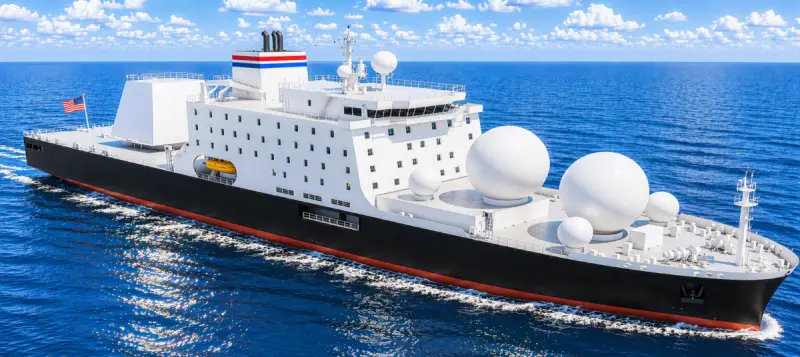
Two new U.S. missile range tracking ships, to replace vessels built a half-century ago, will be built by TOTE Marine Services LLC and Hanwha Philly Shipyard, the companies and federal officials announced July 17.
To deliver the Missile Defense Agency's next Missile Range Instrumentation Vessels (MRIV). TOTE Services will serve as vessel construction manager, and Hanwha will build the ships in Philadelphia. The MRIV will replace the Pacific Tracker and Pacific Collector constructed in 1965 and 1970, respectively.
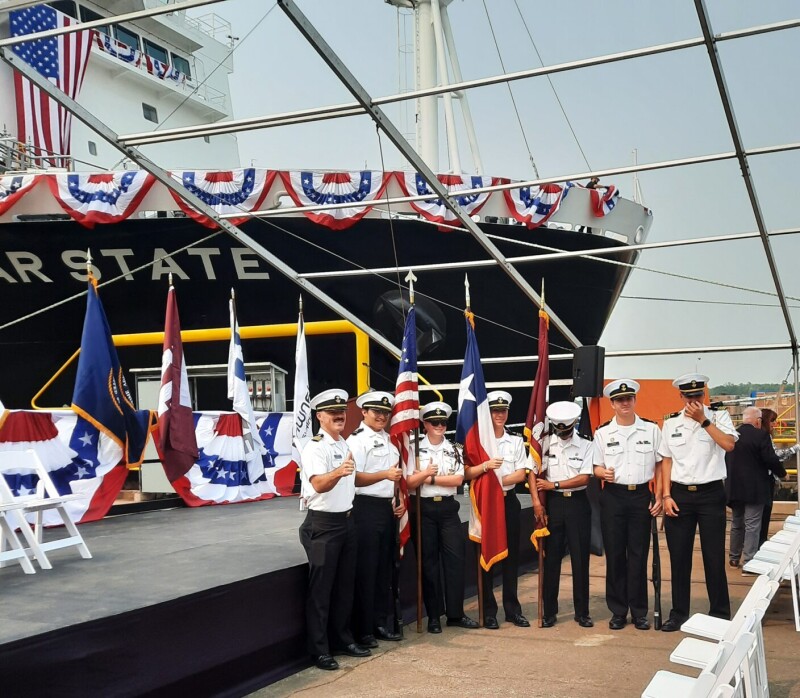
TOTE Services and HPSI will use the same commercially managed Vessel Construction Manager (VCM) model as in the National Security Multi-Mission Vessel (NSMV) program for the U.S. Maritime Administration. That five-vessel program had already delivered three ships, and the fourth, Lone Star State, was christened Friday at Hanwha, with the fifth and final vessel expected in mid-2027.
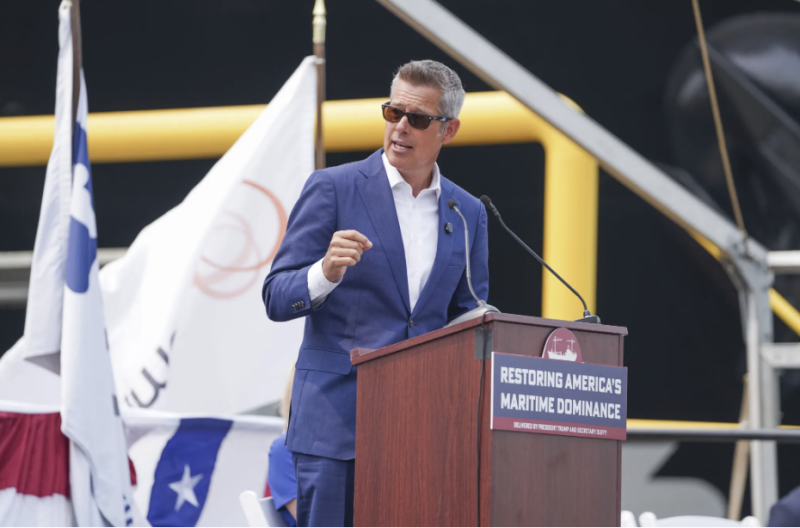
“In christening the Lone Star State, we are sending a message that the next generation of maritime leaders are worth investing in,” said Transportation Secretary Sean P. Duffy.
The MRIV ships will provide “advanced tracking capabilities to observe missile interception tests over the Pacific Ocean, gather mission-critical data, and support range safety operations,” according to the shipbuilders.
The first ship is to be dubbed Golden Defender.
“This new ship will not only support the President’s policy of restoring America’s Maritime Dominance, but also support the President’s ‘Golden Dome’ missile defense system over the entirety of our nation,” said Russell Vought, director of the White House Office of Management and Budget. “Golden Defender will serve the Missile Defense Agency in this mission.”
“The Missile Range Instrumentation Vessel advances our national security as a centerpiece of the Administration's Golden Dome for America initiative. TOTE Services' Vessel Construction Management model has proven to be a success in the National Security Multi-mission Vessel program from the Department of Transportation and Marad. Our team will bring that same skill, urgency, and process to meet the moment and the mission,” said Jeff Dixon, President of TOTE Services.
“The MRIV program is a direct result of the ingenuity and coordination of the federal interagency team from the Department of War, Missile Defense Agency, Office of Management and Budget, Department of Transportation, MARAD, and all of the government leaders who have championed this approach,” said Dixon. “Together, we will deliver the next generation of U.S. defense capability, and we are honored to be selected for this critical shipbuilding program.”
The MRIVs will use the proven hull form, active production line, existing supply chain, and skilled workforce already in place at the Philadelphia yard, under the existing VCM contract vehicle between Marad and TOTE. The first MRIV is scheduled for delivery in 2030.
“With these new ships, Hanwha Philly Shipyard is continuing to evolve in complexity as we look to deliver on our ambition to become a premier U.S. shipbuilder,” said Michael Coulter, President and CEO of Hanwha Defense USA. “As we celebrate our nation’s 250th anniversary, we are building the next generation of our nation’s ships in the same city where America built its first Navy ships.”
“Philadelphia has a long history of building ships that serve our nation, and our team is proud to carry that legacy forward,” . “This program demonstrates what is possible when proven designs, a skilled workforce, and strong government-industry collaboration come together,” said David Kim, CEO of Hanwha Philly Shipyard. ‘We look forward to delivering these vessels with the quality, reliability, and commitment our customers expect.”
“The VCM approach used in this program offers significant advantages over traditional government acquisition strategies, reducing acquisition costs by at least 50%,” the TOTE and Hanwha partners said in a statement after the Friday announcements in Philadelphia. “By defining requirements upfront and approving change orders quickly, the model also accelerates delivery timelines and ensures the vessels are mission-ready upon delivery.
“That success extends beyond the vessels themselves. The NSMV program transformed Hanwha Philly Shipyard from a dormant yard with a few dozen workers into a robust national security asset now employing more than 2,000 production workers. The MRIV award builds directly on that momentum, bringing new defense construction work to the yard and positioning it for continued growth as the nation rebuilds its shipbuilding capacity.”
