


.png.medium.800x800.png)
Danish nuclear developer Saltfoss has submitted a letter of intent to the U.S. Nuclear Regulatory Commission to begin pre-application discussions for its floating nuclear power platform, with plans to combine South Korean barge construction with reactor assembly and integration at U.S. facilities.
The company announced the move Nov. 3 and plans to submit a Regulatory Engagement Plan in the first quarter of 2027 for its Molten Salt Power Barge and seaMSR-100 reactor.
Samsung Heavy Industries, Saltfoss’ shipbuilding partner, would manufacture the power barges in South Korea. Reactor assembly, fuel loading and final power plant integration would take place at U.S. facilities. Saltfoss said it plans to expand its U.S. operations to support that work, drawing on existing partnerships with Idaho National Laboratory, the American Bureau of Shipping and other U.S. organizations.
Saltfoss intends to pursue licensing under 10 CFR Part 53, the NRC’s new regulatory framework issued in March 2026. The company said it expects to become the first advanced reactor developer licensed under the framework and the first to obtain a license for an advanced maritime small modular reactor. The letter initiates pre-application engagement; it does not constitute a license application or regulatory approval.
“We are combining a U.S. reactor design heritage proven at Oak Ridge National Laboratory with the world-class shipbuilding and nuclear supply chain of South Korea. This combination ensures that Saltfoss can credibly deliver the first-of-a-kind plant under the new Part 53 framework,” said Klaus Nyengaard, CEO of Saltfoss.
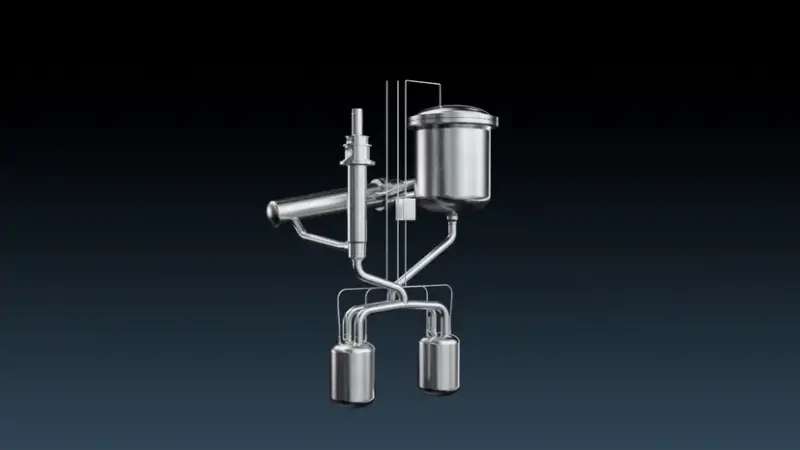
The seaMSR-100 is a loop-type molten salt reactor designed around standardized modules producing 100 MW of electricity each. Multiple modules would allow a single barge to provide up to 600 MW. Potential applications include power and heat for coastal industries, baseload electricity for grids and power for large data centers.
Saltfoss finalized the platform’s conceptual design in 2025 following more than six years of development. Its Danish research and development organization works with U.S. partners on development programs, according to the company.
The reactor is designed to operate near atmospheric pressure at approximately 1,112 to 1,292 degrees Fahrenheit, using low-enriched uranium from existing commercial supply chains.
According to Saltfoss, the reactor can shut down and drain its fuel salt by gravity without operator action or external power. The company said the salt solidifies below approximately 932 degrees Fahrenheit, trapping radioactive material.
ABS is evaluating the floating power barge’s maritime safety aspects through its New Technology Qualification process.
Saltfoss is also coordinating its application approach with South Korea’s Nuclear Safety and Security Commission under that country’s SMR Special Act. The company expects South Korea to host some of the platform’s first commercial deployments outside the United States.
