



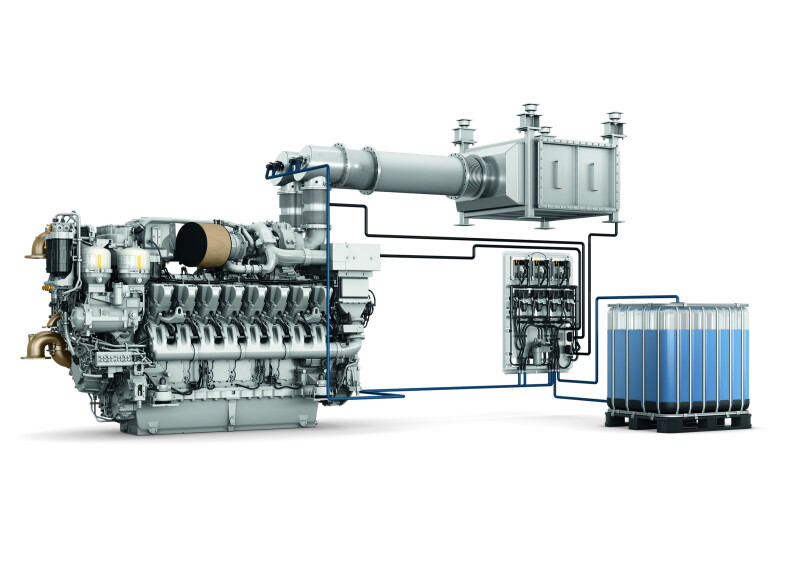
Rolls-Royce has introduced a new generation of compact and modular selective catalytic reduction (SCR) exhaust aftertreatment systems for its 16-cylinder mtu Series 4000 engines, targeting use in tugs, ferries, and yachts operating in emission-controlled areas.
Designed to meet the International Maritime Organization's (IMO) Tier III emissions standards, the updated mtu Flex SCR system is suitable for ships with propulsion systems in the 2,176- to 2,560-kW range and cuts nitrogen oxide emissions by 75% compared to IMO II limits.
The new system reduces required installation space by up to 42% and is nearly 40% lighter than its predecessor, the manufacturer said in a press release. To enhance installation flexibility, the new components can be mounted in various orientations — horizontal, vertical, upright, or suspended — allowing shipbuilders to optimize space within engine rooms.
“This modular new exhaust aftertreatment system can be even better tailored to the specific needs of our customers and offers them many advantages for their voyages in emission-controlled areas,” said Denise Kurtulus, senior vice president global marine at Rolls-Royce Power Systems.
The new SCR system also offers an increased service life for the ceramic substrate — up to 18,000 operating hours depending on load profile — and a 15% reduction in lifecycle costs. Rolls-Royce plans to roll out the new technology across other mtu engine platforms in stages.
Further, the dosing of the urea-based reducing agent can be actively controlled and switched on or off depending on the vessel’s location relative to emission control areas. The system continuously monitors emissions before and after treatment to ensure optimal operation and compliance, Rolls-Royce said.
