



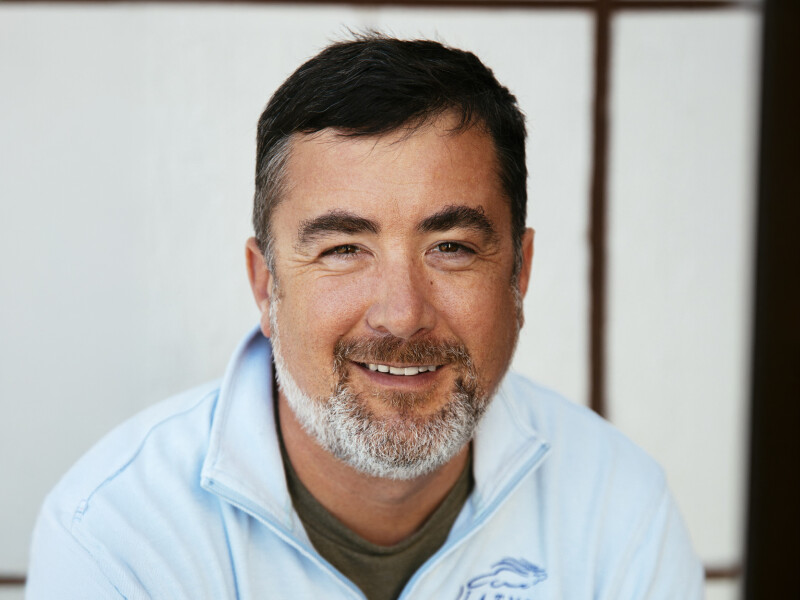
WorkBoat sat down with Chris Feffer, president of Platypus Marine Inc., to discuss how the Port Angeles, Wash., shipyard grew from half of a rented building into a repair and new-construction operation working across superyachts, commercial fishing vessels, tugs, ferries, and government craft. Feffer discusses the yard’s new facilities, an unconventional approach to hiring, and what it takes to serve every maritime sector at once. This interview has been edited for length and clarity.
Would you please give a brief history of Platypus Marine?
Platypus started as a mobile shipyard working around the Pacific Northwest, moving between other yards and renting space. About 27 years ago, the company saw the need for a facility of its own and moved out to Port Angeles. In the beginning, we were a yacht paint and interior refit company, managing subcontractors. That is where the need was seen — to bring the trades we were subcontracting and managing under one roof.
We started with half of a building, essentially renting half of one of the buildings we are in today. We have grown to more than 130,000 square feet of covered workspace, and we just opened our new Pacific Building, which expands our capabilities for both refit and new construction.
How did you get involved with the company?
I came across Platypus around 2001. I was a boat captain and brought a vessel here for some projects. I got to know the leadership, and we started talking about my future with the company once I was done working at sea. Those conversations stayed alive. I was involved with Platypus in different ways over the years before coming out here full time in 2017.
Platypus serves several markets. What does the split look like today, and how has it changed?
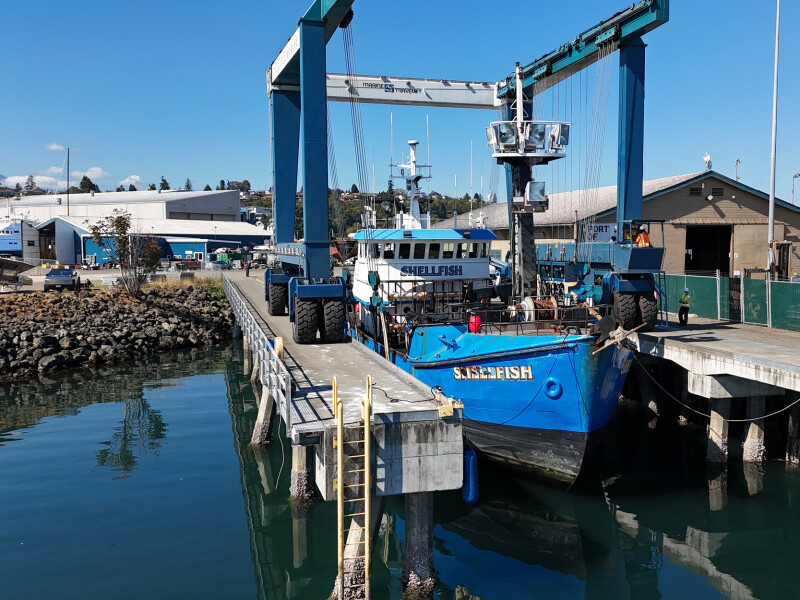
We work in all of them now — superyachts, government, commercial fishing, tugboats, and the fast ferries and passenger vessels that support Washington waters. Our early days were in the pleasure industry, doing high-end paint and interior refits, along with commercial fishing vessels. Between the pleasure boats and the fishing boats, we filled the gaps between the different seasons.
Around 2009, we started looking seriously at expanding into other maritime sectors in the region. That is when we added commercial and government tugs, ferries, and passenger vessels to the facility’s capabilities. Today we work across all of it with a diverse team on the floor. We are not limited to one sector or another. It is a challenge, because each sector has its own uniqueness, but at the end of the day it comes down to high quality and listening to what the client expects.
How do you balance those different parts of the business?
Some of our teams specialize, but many of them work across the trades. On the management side, we have one group focused on commercial and government work and another focused on yachts, so the end user gets exactly what they want.
Each sector brings a high level of quality and expectation in a different part of the vessel. On yachts it is the paint and the finish work. On the commercial and government side it is the welding specs and the sandblast specs. When you blend those together, you deliver a high level of quality across the board, and it keeps a good working machine out on the floor.
We also have diversity in the yard itself. With indoor facilities and exterior yard space, the job that requires the indoor space is the job that gets placed there. A lot of it is just working with your customers, listening to them, and making sure everyone has a clear understanding of the expectation and the end result.
Where do you see the greatest opportunities today?
It is not in one market. It is being able to serve all of them, because their needs are different at different times, and being able to adapt to that. Bringing the Pacific Building online alongside the Commander Building and our other facilities gives us the ability to support newbuilds, refits, and projects. We also build parts for larger vessels for other shipyards and load them onto barges.
We see the opportunity in having a strong workforce and being able to look at a broad scope of work — not just projects we can haul out at the yard, but pierside projects and local projects, really anything our skilled workforce can handle and we can manage. Having that much of the workforce in house gives us a real advantage.
Do you have any notable new construction underway?
We have a 60-foot dive boat for the U.S. Navy under construction, and it is due to launch in the very near future for sea trials. It will be delivered to the local naval shipyard here in Puget Sound.
What does your workforce look like?
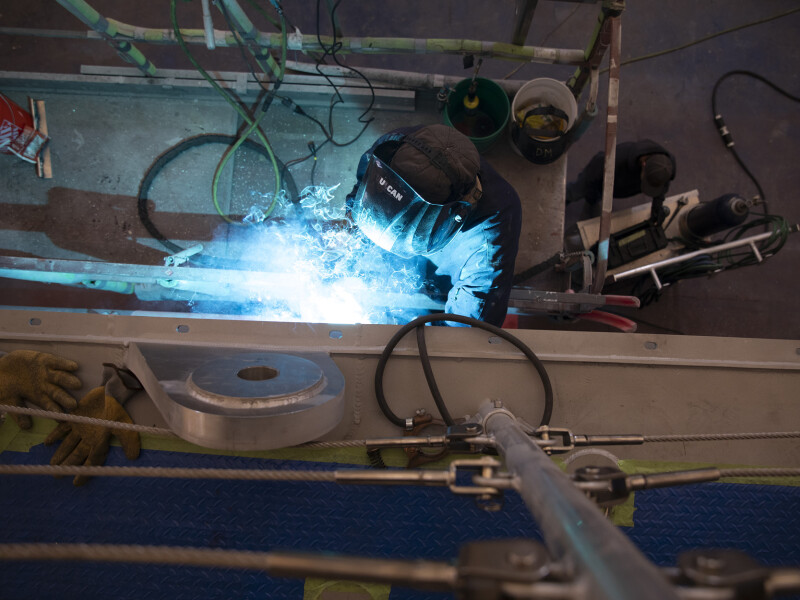
We have more than 100 in house. When jobs ramp up, we contract out, and we work closely with key subcontracting companies to supplement labor — but that labor gets folded into our workforce, with our department heads and managers running it. We also have strong relationships with subcontractors for specialized work we do not need full time: sandblasting, electronics, different mechanical companies. They are at the yard all the time. On any given day, there are a lot of people at the yard servicing vessels.
What is the largest challenge facing your business?
Labor is one, but labor is a challenge across the whole industry. It is one you just keep working on every single day, and as long as you do that, you have ways to keep pushing through. And with workforce comes housing. You can find workers, but can you find housing for them? We are a rural community, not a major city. So, as we recruit and bring people in, we help with housing and with understanding the community.
Beyond that, the challenge is keeping the stream of vessels coming in, managing people — and they are people — and keeping the focus on high-quality work on every project. Once our vessels leave here, there are people’s lives on them. Whether it is a pleasure vessel, a commercial fisherman supporting a family and an industry, or a government vessel protecting the waterways around here, we have to have the checks and balances in place so that when a boat goes back out to sea, everyone knows it is good to go.
How is the company investing to ensure future success?
Number one is the safety of the employees and the safety and cleanliness of the yard. The building we just put in is state of the art and fully heated. Up here in the Pacific Northwest, being able to work indoors in an environmentally controlled building with the filtration systems in place, instead of working outside under shrink-wrap containment, is significant. We are focused on bringing our other buildings up to modern standards as well.
We are also investing in the workforce — sending teams out to training, bringing training in, and keeping up with all of the standards across the board, whether it is welding, paint, or mechanical. We want to show people there is a real path in the maritime industry on the shipyard side.
You created a general services department. What is that, and how does it work?
That is one of the more interesting things we have done, and it came out of the 2020 era. We knew we needed to invest in more people. But we needed people to apply, and a lot of them did not know what they wanted to do. So, we created a department that essentially takes care of the facilities and supports everyone else. Another department can say, ‘I need an extra fire watch. I need this. I need that.’
What happens is that people join general services and find out, I am a painter, or I grew up doing mechanics with my family. They move into a trade, we get them training, and they go from there. It has been a strong way to bring in people who have a good work ethic and are willing to show up but do not quite know where they fit. Some of them apply for one position and then realize they really like something else, and they flourish. That is the nice part about a shipyard — paint, mechanical, welding, electrical, carpentry. It is not one skill set. It is multiple.
How would you describe your leadership style?
It stems back to when I was a captain at sea. When you are out there, your decision is your decision. There is nothing else to fall back on, whether it is mechanical or environmental, and you have to live with it. Bringing that onto land means making decisions methodically, from safety all the way through to the final outcome, and in a way everybody understands.
I am hands-on. I spend a lot of time out on the floor every day, going through the vessels and walking through things. It is important to be face to face with the employees, the clients, and the subcontractors, and to work through an issue that way rather than spending time in endless emails. Keep it simple, come to an outcome with everybody, then make the decision and put it out there.
Is there a project that stands out as unique or memorable?
The unique projects are often the ones that come to us after somebody has looked around and said, ‘I have this very difficult project.’ We will take a deep look at it. This is part of who we are. The most challenging are the full refits — a 30- or 40-year-old vessel that you are bringing all the way back and up to modern standards.
We have a client in Alaska with a fleet of tour boats, and they have been sending one down to us every year for the last four years. I get to go up to Alaska and see the boats we have refreshed sitting next to the six or seven still in line to come down. You hear the feedback from the operators, the crew, and the ownership, and you see the comments passengers leave about how much better their experience was. Being able to take that back and share it with the workforce here means a lot. We like to follow up on every project — even a government tug overhaul, getting comments back from the men and women driving the vessel and feeding that to the floor.
What do you want readers to know about Platypus Marine?
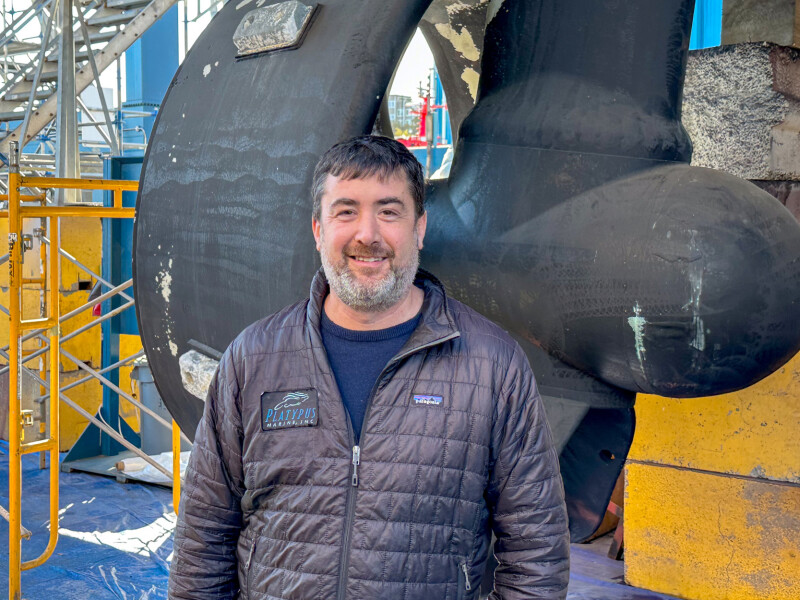
I would like readers to come away knowing we work across all of the maritime sectors. Some people think we are in one industry or another. We are sitting at the entrance of Puget Sound, strategically located, and we can be your refit and new construction partner — or just your maintenance stop.
We view ourselves as a service industry first and foremost. We are here to serve all of the maritime fields. When something goes wrong on a vessel, we are your partner to help fix it and get you on your way, whether it was a planned stop or an unplanned one. All vessels have to be on the water doing what they do, and at some point, they need to come into a shipyard.
