



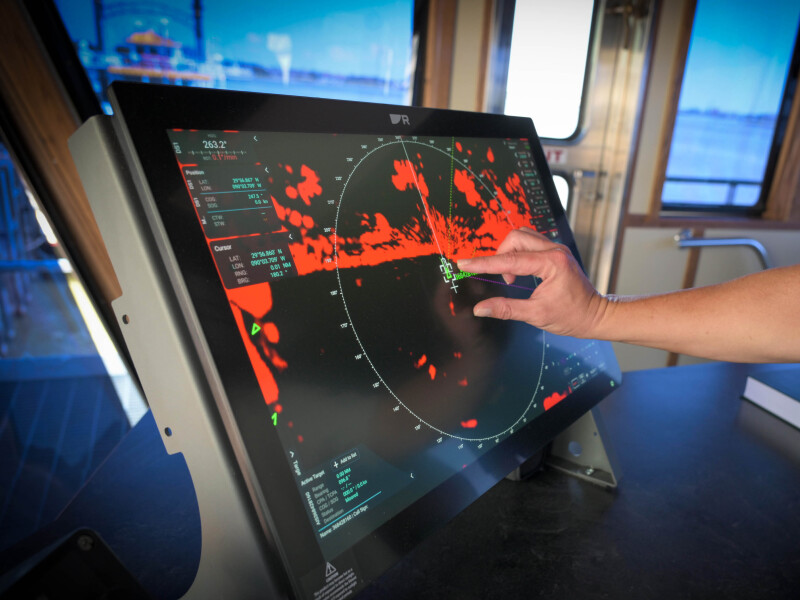
In 2025, the operator of Sea-Tow Shinnecock/Moriches on New York’s Long Island was having a problem with the radar on one of his boats. The unit was a Koden, which is supplied by Si-Tex Marine in nearby Riverhead.
“He had one of our T-180 radars on his boat, and it’s his favorite radar,” said Allen Schneider, vice president of sales and marketing at Si-Tex. “He said, ‘The picture is fading out.’”
Si-Tex hadn’t sold that radar since the 1990s, but Schneider said he would look at it. He had a replacement magnetron for the unit in stock and installed it. “He took it back and called me and said, ‘It’s like when it was brand spanking new.’ That’s at least a 30-year-old product,” said Schneider.
That, in a nutshell, is the dilemma faced by marine electronics suppliers and dealers in the workboat and commercial vessel market. While marine electronics seem to be constantly evolving with new technology, many operators and small-company owners either resist learning new technology or can’t afford to upgrade every three to five years.
“Some older guys who’ve been running boats forever don’t want to learn new stuff,” said Kevin Smith, vice president of Smith Shipyard, Curtis Bay, Md.
The company runs a fleet ranging from smaller crewboats in the 25' range to Subchapter M tugboats in the 60' range. Regarding new technology, he said, “It’s cool when it works, but it seems like you need to spend so much time tuning it.”
Added Chris Sullivan, head of sales, marketing, and strategic partnerships for Navtronix in York, Maine, “You can tell the age of who’s running the boat by the number of screens. Old-school guys still like dedicated displays for a given function. With standalone radar, the odds of losing more than one are slim and none.”
ESTABLISHED NAMES
While Garmin and Raymarine are arguably the most popular electronics suppliers for the recreational side of the marine industry, for the workboat crowd, Furuno and Si-Tex/Koden are most often seen in the pilothouses.
“When we get a request for a commercial boat, it’s usually Furuno,” said Sullivan. “That’s what the guys know.”
The brothers who founded Furuno in Japan started on commercial fishing vessels. To earn a captain’s trust, they would go fishing with him and bring their gear. Once they proved their equipment was successful at locating fish and could hold up under offshore conditions, word of mouth took it from there.
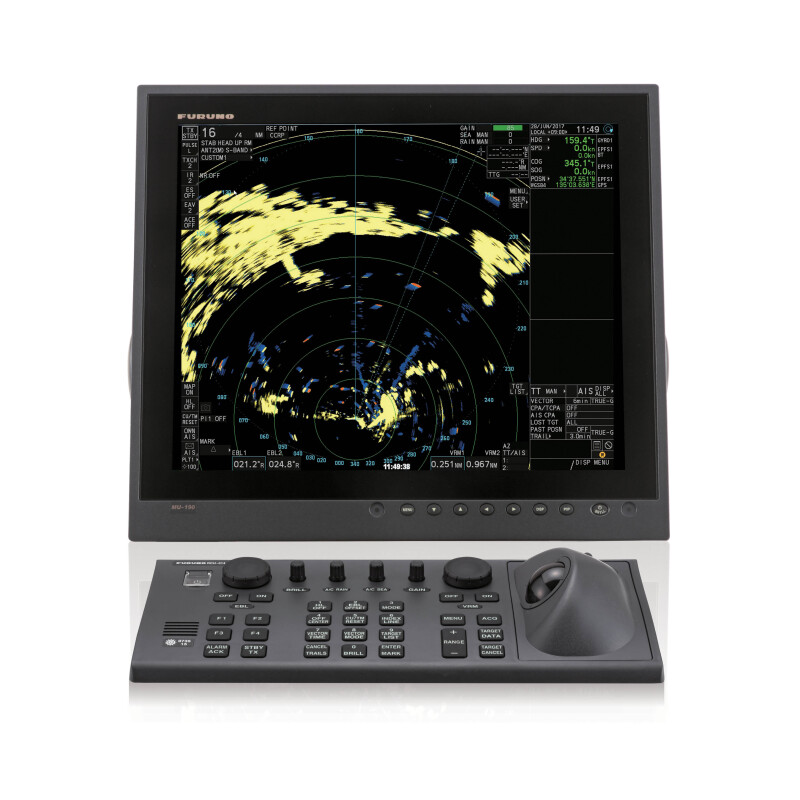
“They went boat to boat proving their technology could do what they said,” said Bart Disher, commercial business development manager at Furuno USA, Camas, Wash. “We’ve proven our commercial products could withstand the harshest environments, that they will be serviceable, and parts will be available.”
New Furuno products for the workboat market focus on radar and electronic chart display and information systems (ECDIS).
When paper charts were phased out, vessel operators needed to have updated information for their ECDIS systems. Until recently, a customer would need to use a CD or flash drive to upload updates. Now the updates take place automatically online through a chart server.
Among Furuno’s most popular radar systems is the FAR2127, an X-band unit that was introduced around 2005 and has been sold worldwide for 20 years. “That’s a radar I can still service and I have spare parts for,” said Disher. “If you came to one of our facilities, you would find racks and racks and racks of spare parts.”
Most operators use two radar units for redundancy. In many cases, the electronics are not networked into one or two displays.
Furuno’s Risk Visualizer is integrated into its radar systems and provides 360°, real-time representation of potential collision risks around a vessel.
“It’s been out for about one and a half years, and it’s under-marketed,” said Sullivan. “It knows where it’s going to be in the next X number of minutes, and anything that comes into its circle, it’s sending an alert.”
Within the workboat segment, Furuno has carved a niche among towing and push vessels. “We love that there is a repeatable and known package because the Subchapter M has specific requirements,” Disher explained.
The requirements include X-band radar with an open array, a specified display screen size, an AIS system, a transmitting heading sensor, a satellite compass, a means to display depth, a pilothouse alert system and a bridge navigation watch alarm system and more.
To help an owner or captain keep track of the health of a Furuno system, the company developed HermAce, a black-box-style tool capable of detecting, diagnosing, and predicting errors. For a company operating 12 vessels, four engineers can be responsible for three ships each, with a dashboard for each vessel on his/her computer that shows the status of onboard Furuno systems. If a warning sounds, it notifies the engineer, who communicates with the ship to schedule maintenance as soon as it arrives at its next destination. This allows the owner to plan ahead, rather than waiting for the ship to arrive in port and forcing the crew to scramble to find a repair service.
“This is especially true on rivers with workboats,” said Disher. On some rivers, it’s an hours-long trip between ports, so scheduling maintenance in advance can keep downtime to a minimum.
NEW RELEASES
Si-Tex Marine Electronics is a subsidiary of Koden Electronics Co. Ltd., which is based in Japan. In the United States, Si-Tex products are sold through marine dealers and suppliers, and Koden products are only sold to approved servicing dealers.
At the International WorkBoat Show last December, Koden introduced its Information Display System, a series of small screens that connect in a strip above a boat’s windshield. They show course, speed, rate of turn, and righting in one location. “They just have to glance up, and they’re looking at it,” said Schneider.
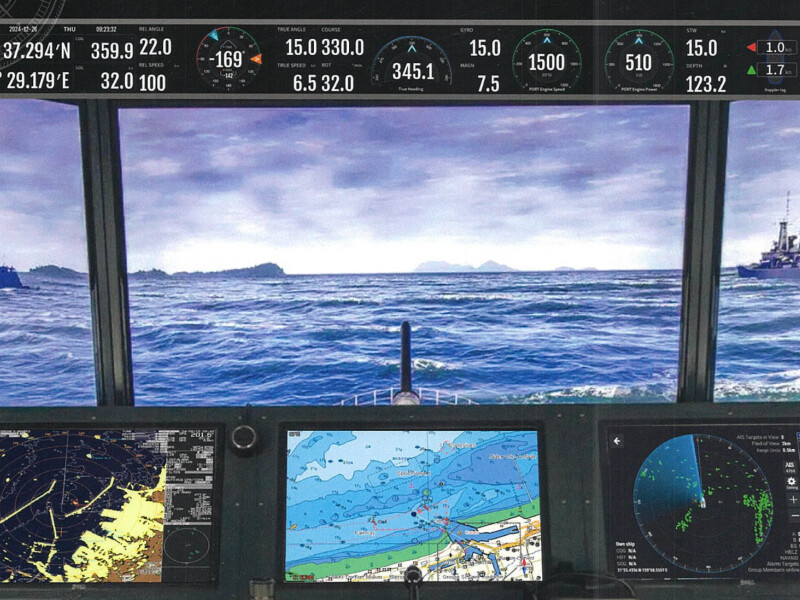
This year, Koden introduced an International Maritime Organization (IMO)-approved GPS, the KGP 922, that also meets the U.S. Coast Guard requirements for electronic charting systems. Also new, Koden’s KRS solid-state radar series has a 6' open array, and the power rating is equivalent to 12 kW. The new models have 110 watts of output power and radar range from 0.125 to 96 nautical miles. Available screen sizes range from 16" to 24".
Schneider said that Si-Tex/Koden satellite compasses are also popular because they don’t need to be calibrated. They are accurate as soon as they are installed. Commercial fishermen also like the CVS-126 fishfinder, which tugboat operators sometimes use as a depth sounder.
Later this year, Koden will be introducing AIS search-and-rescue transmitters and emergency personal indicator radio beacons.
While mainstream electronics suppliers like to network numerous components into a single display, Si-Tex/Koden caters to operators who prefer stand-alone devices. “We don’t do much networking,” said Schneider. “The commercial guys prefer that most of the time.”
Like Furuno, Si-Tex/Koden has an extensive collection of spare parts for older units on hand in Riverhead.
MAKING INROADS
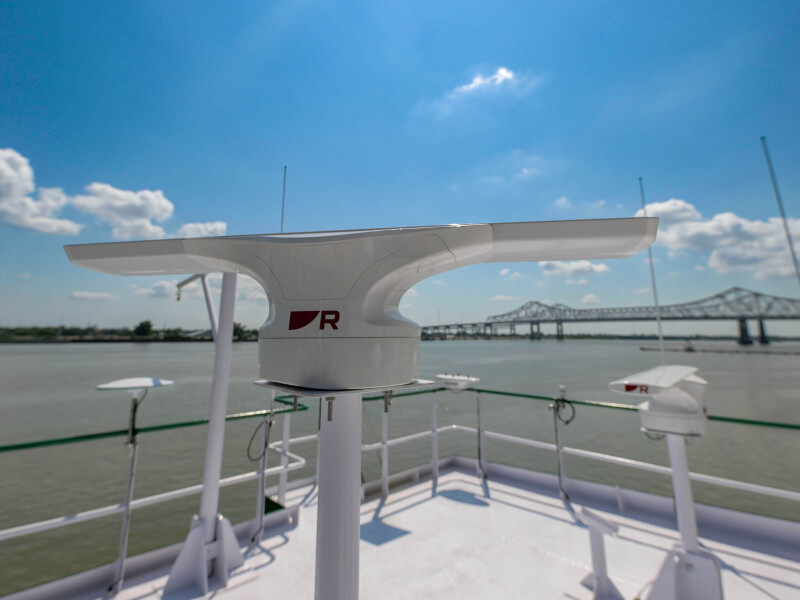
Two years ago, Raymarine brought back a name that it had previously used for commercial marine radar. The Pathfinder radar has a solid-state transmitter instead of a magnetron unit and operates in vessels in the SOLAS 1, 2, and 3 categories.
“We had been out of the commercial space for quite some time,” said Jim McGowan, Americas marketing manager for Flir and Raymarine. “We didn’t have a commercial presence until about two years ago when we decided to get back in.”
Pathfinder units come with a 4' or 6' antenna and a solid-state 110-watt transmitter. Range extends to 96 miles. At the end of last year, Raymarine partnered with Blessey Marine, a towboat operator in Elmwood, La., that works on the Mississippi and Ohio rivers. The company has 80 towboats and has ordered two Pathfinder radars per vessel.
Raymarine’s parent, Teledyne in 2023 acquired a German company called Chartworld International Ltd., an ECDIS subscription service. “Instead of a shipowner buying an ECDIS and maintaining and upgrading it, [the company] can subscribe, and Chartworld provides them the charts they need,” said McGowan.
Raymarine has upgraded the Chartworld hardware and expanded the footprint to include SOLAS and non-SOLAS systems. The new electronic chart system complies with Coast Guard Radio Technical Commission for Maritime Services regulations.
Another product that helped Raymarine gain commercial business is a platform the company developed for the Coast Guard called Scalable Integrated Navigation System II (SINS). The Coast Guard is encouraging law-enforcement agencies, fire departments, and similar organizations to adopt the technology.
AIS SINS II can send encrypted data for secure vessel-to-vessel messaging. If the Coast Guard is coordinating a rescue or similar situation, it can securely send tasks and orders to cooperating agencies. One area where it’s already been adopted is New York Harbor.
For larger mapping projects, Teledyne offers Caris software that is used for taking oceanographic data and processing it for charts. They use sonar and lidar — remote sensing using laser — to create marine surveys and charts.
For cameras, Flir’s most popular products in the workboat realm are the M364C and M300C, which can also commonly be found on patrol boats and ferries. They are dual-axis stabilized cameras that can pan-tilt and zoom. The M364C has a 30x optical zoom and ultra-low-light capability. If it’s night and a crewmember is working on deck, the camera only needs starlight to be able to show the person on camera. The M364C adds thermal vision as well.
