


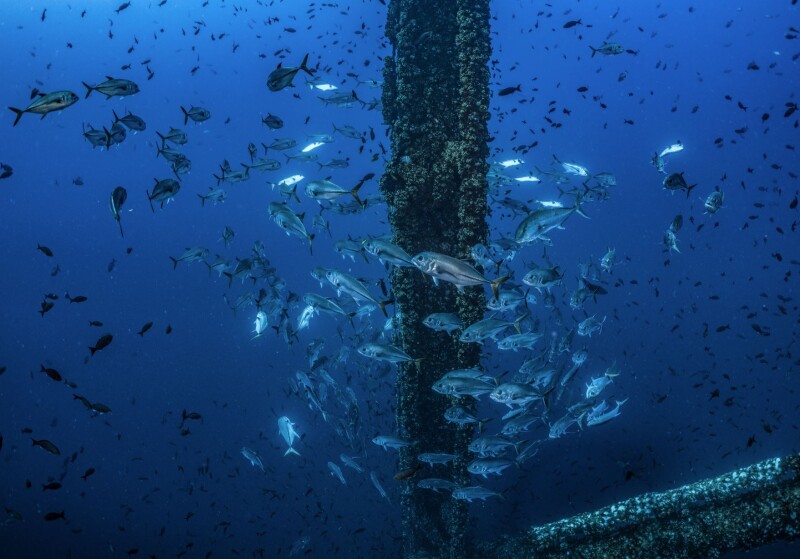
The Marine Minerals Administration announced it will propose a “Federal Outer Continental Shelf Reef-in-Place Program that could convert eligible decommissioned offshore structures into permanent artificial reefs.”
For decades coastal states along the Gulf of Mexico have incorporated some decommissioned oil and gas platforms into their artificial reef programs, aimed at increasing biological productivity in the Gulf and supporting the recreational fishing industry.
The Marine Minerals Administration officials say they will seek to gather information on how a program for federal waters farther offshore could augment the long-running existing state programs, “while providing a consistent framework across the Outer Continental Shelf.”
The agency will open a public comment period once it announces the proposal in the Federal Register.
“Eligible offshore structures can continue to serve our coastal communities as artificial reefs that support marine habitat and expand fishing and recreational opportunities,” said MMA acting director Mike Olsen in announcing the plan. “We want to hear from states, tribes, fishermen, offshore operators and scientists as we develop a federal program that builds on successful state efforts and addresses the unique conditions of the Outer Continental Shelf.”
The agency’s forthcoming “request for information” is tied to the Trump administration’s executive order “Restoring American Saltwater Angling and Recreation” issued Sept. 17.
The order directs MMA to establish a federal program to enable conversion of decommissioned offshore oil and gas infrastructure into artificial reefs through “reef-in-place, topple-in-place or other approved methods.”
“The program aims to expand artificial reefs in federal waters to enhance marine habitat, fishing and other recreational opportunities.”
Among the topics MMA is exploring are program eligibility and structure; environmental and ecological considerations; navigation, safety and national security safeguards; permitting; liability; coordination with existing state programs; and partnership opportunities.
However, structures associated with offshore wind energy are disqualified – a moot point in the Gulf, where offshore wind development had been little advanced under the Biden administration, even before the second Trump administration arrived with its campaign against renewable energy projects..
